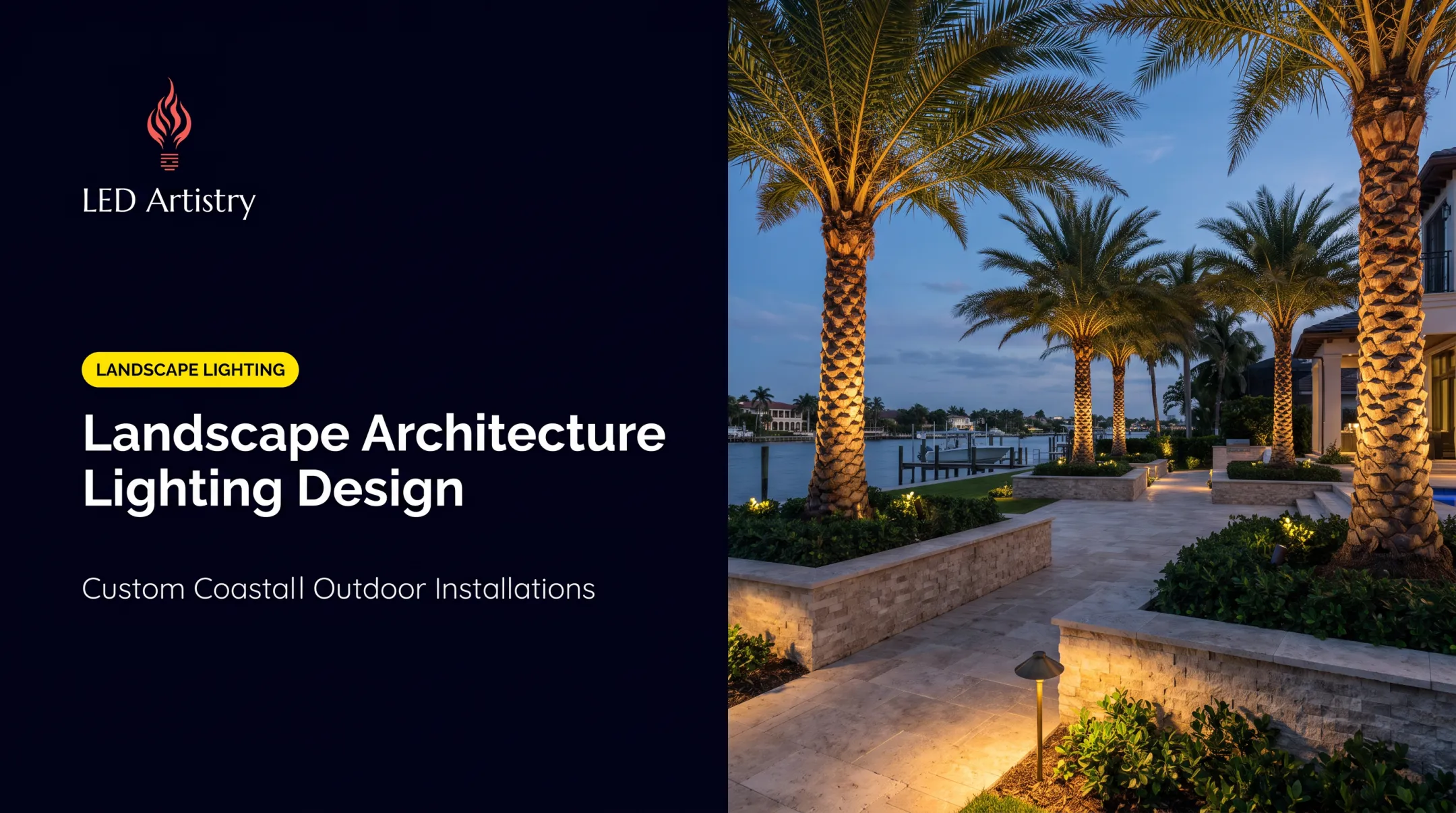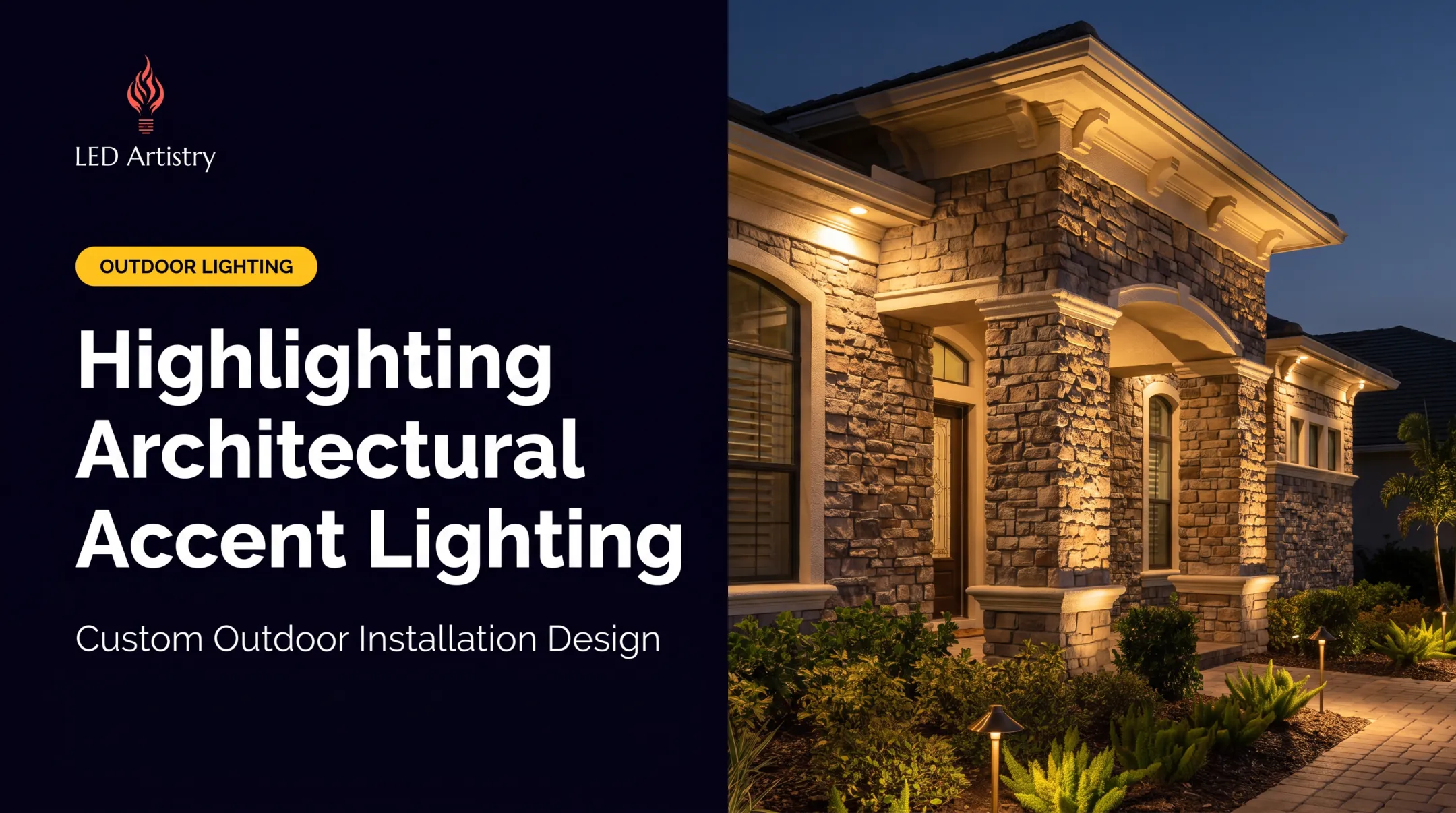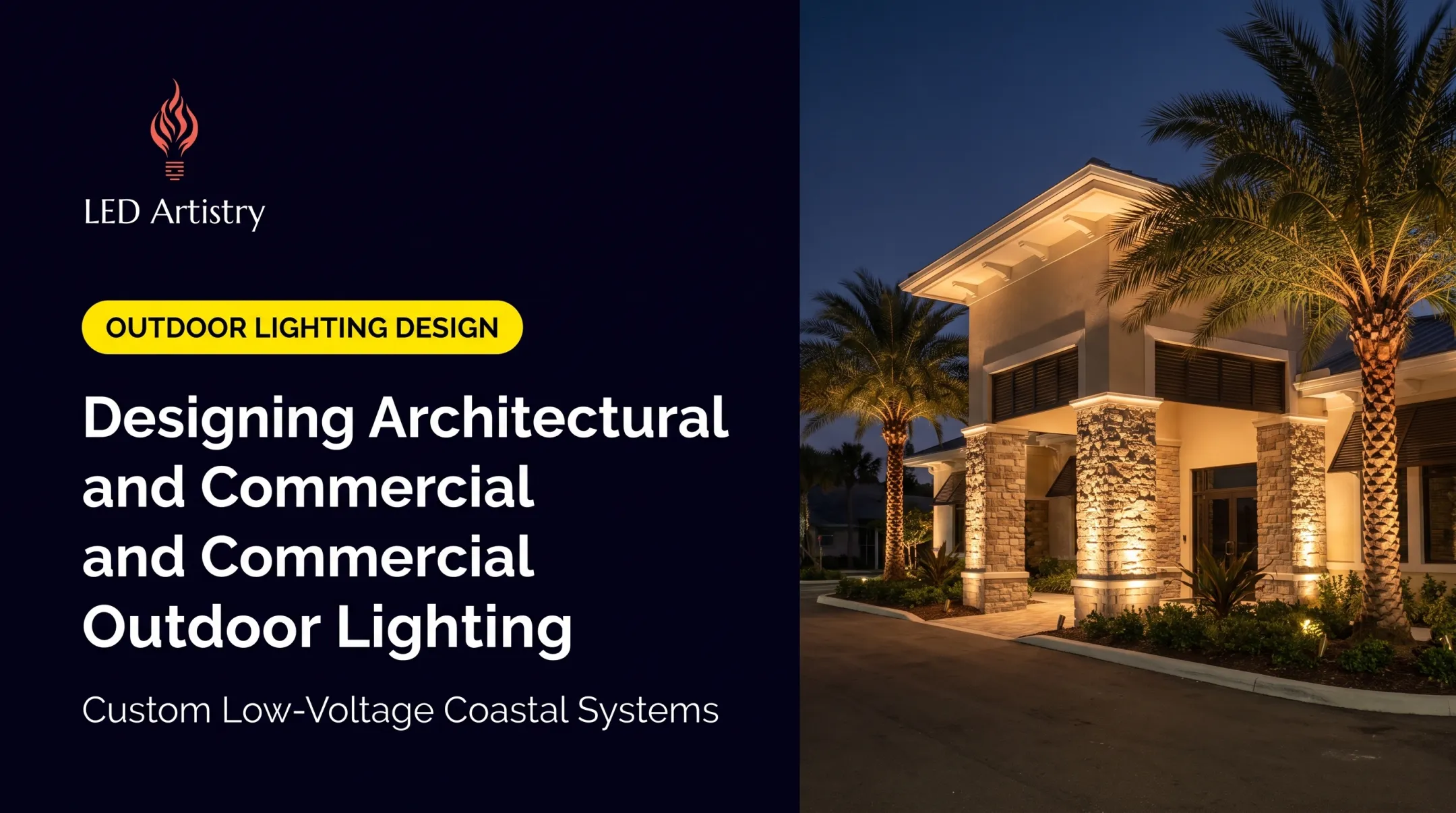

For Tampa Bay homeowners and businesses, that distinction matters. Warm weather means outdoor spaces get used year-round, and dark walkways, pools, and docks create real safety concerns once the sun goes down. Curb appeal, security, and extended evening living all hinge on getting the lighting right.
This article breaks down what architectural lighting design actually is, why it matters for Florida properties, the main types you'll encounter, and how to choose the right approach for your space.
TL;DR
- Architectural lighting design builds light into structure, safety, and mood—not standalone decorative fixtures
- Main types are ambient, task, and accent/facade lighting, usually layered together
- The right mix depends on your property's architecture, purpose, and after-dark use
- Coastal Florida properties need climate-resistant, marine-grade fixtures for lasting performance
- A free nighttime demo, like LED Artistry’s, lets you preview placement before anything permanent goes in
What Is Architectural Lighting Design?
Architectural lighting design is the intentional use of light to enhance a building's structure, function, and mood. Designers plan it alongside the architecture, accounting for how columns, textures, rooflines, and outdoor living spaces will read once the sun sets.
A string of patio lights adds ambiance. Architectural lighting is engineered around the building itself, using techniques like uplighting and grazing to highlight specific features.
In practice, this covers a wide range of residential and commercial applications:
- Home facades, columns, and gables
- Pool cages and screened enclosures
- Waterfront docks and seawalls
- Retail storefronts and restaurant patios
- HOA entrances and common areas
Whether it's a single-family home in Palm Harbor or a restaurant patio in Clearwater, the goal stays the same: use light to reveal architecture, not just illuminate it.
Why Is Architectural Lighting Design Important?
Poorly lit exteriors create real problems. Dark walkways and pool decks are trip hazards. Shadowed entries and side yards give trespassers places to hide. And a home or business that goes flat and lifeless after dark loses curb appeal fast.
Safety is the starting point. Well-placed lighting improves visibility around walkways, entrances, pools, and docks, the areas where families, guests, and pets are most likely to stumble after dark.
The FHWA reports that nighttime fatality rates run three times higher than daytime rates. That gap is a clear reminder that visibility shapes risk once natural light is gone.
Beyond safety, lighting extends how long a property actually gets used. Patios, pool decks, and outdoor kitchens stay usable well past sunset instead of shutting down at dusk.
Without proper design, you typically see:
- Uneven lighting with harsh glare in some spots and total darkness in others
- Safety hazards around stairs, docks, and pool edges
- A flat, uninviting exterior that undersells the property
Durability is part of design performance too, especially on coastal Florida properties. LED Artistry has seen non-marine-grade fixtures develop pitting, peeling, and corrosion within 18-24 months of salt-air exposure. One aluminum path light in Tampa Bay deteriorated into white powder after just 28 months. Marine-grade materials matter as much as layout.

Types of Architectural Lighting Design
Architectural lighting isn't one-size-fits-all. Different types solve different problems, and most well-lit properties layer several together rather than relying on just one.
Ambient Lighting
Ambient lighting provides overall, even illumination that sets the baseline mood of a space. It works through broad, low-intensity sources like wall washes, downlights, and soft perimeter lighting rather than sharp, focused beams. Unlike task or accent lighting, ambient light prioritizes uniform coverage over drama. LED Artistry typically achieves this through integrated beam fixtures mounted on pool-enclosure frames, perimeter LEDs along cage structures, and moonlighting from mature tree canopies at 20-30 feet high. Best suited for:
- Patios and pool decks
- General outdoor living areas needing baseline visibility
- Screened lanais and gathering spaces Ambient lighting creates a comfortable, safe foundation for the whole property, usually in warm 2700K-3000K tones. Its limitation: on its own, it can feel flat without accent layers on top.
Task Lighting
Task lighting delivers focused illumination for specific activities. It works through directional fixtures aimed at exactly where you need visibility, not the whole yard. Where ambient lighting spreads evenly, task lighting concentrates. Think overhead downlights above a grill, under-counter LED strips along a prep counter, or recessed step lights integrated into stair risers. Best suited for:
- Outdoor kitchens and grilling stations
- Stairways and entryways
- Dock work areas like fish-cleaning stations and boat lifts Cool-white light in the 3000K-4000K range works well for cooking and prep surfaces, supporting full usability after dark. The tradeoff: too much task lighting in the wrong spot creates harsh contrast or glare, so placement matters as much as fixture choice.
Accent & Facade Lighting
Accent and facade lighting highlights architectural features, textures, and landscaping to create visual drama. It works through uplighting, spotlighting, and grazing rather than flat, general illumination. This type is designed to draw the eye. It creates emotional impact, turning a plain wall or column into a nighttime focal point. Techniques include:
- Uplighting from the base of walls or columns, with narrow 15-25 degree beams for tall features and wider 60-degree floods for broader surfaces
- Grazing for textured stucco, stone, or coquina, with fixtures positioned 2-6 inches from the surface
- Wall washing for smooth stucco, using fixtures set 2-3 feet back for an even glow Best suited for:
- Home facades and luxury residences
- Waterfront properties
- Commercial storefronts seeking a distinct nighttime identity NAR's 2025 report on landscape lighting notes that uplighting, downlighting, and accent lighting all support the curb-appeal and style benefits homeowners want. The catch: overuse looks busy or unnatural, and placement requires real judgment. This is where LED Artistry's free nighttime demonstration helps. A specialist installs a temporary system on the actual property after dark, letting homeowners preview uplighting and grazing effects and request adjustments before any permanent wiring goes in.

How to Choose the Right Type of Architectural Lighting
The right combination depends on the property itself, not the latest trend. A 1920s Mediterranean-style home in South Tampa needs a different approach than a modern waterfront build in Clearwater.
Key factors to weigh:
- Architectural style and features — Columns, textured stucco, rooflines, and other details worth highlighting
- Primary use of the space — Safety, entertaining, security, or a mix of all three
- Budget and maintenance — Upfront cost balanced against long-term fixture performance
- Climate durability — Salt air, humidity, and coastal exposure that shorten fixture life
- Energy efficiency — Modern LEDs can exceed 200 lumens per watt versus older halogen systems
- Flexibility for future changes — Room to expand as landscaping matures or plans shift
On coastal and waterfront properties, durability often outweighs every other factor. Material and rating choices matter more than most homeowners expect:
- Solid brass and copper — Resist pitting and corrosion; develop a protective patina instead of failing like standard powder-coated aluminum
- IP65 or higher — Solid baseline for general exterior use
- IP67 — Better fit for waterfront and dock work where temporary submersion is possible

A design consultation and nighttime demo help lock in fixture type, placement, and marine-grade materials before you spend on a full install—cutting expensive trial and error.
Conclusion
Architectural lighting design shapes how a property looks, functions, and feels after dark. Ambient, task, and accent lighting each serve distinct purposes, and they work best layered together rather than treated as separate decisions.
For Tampa Bay properties facing salt air, humidity, and intense storms, durability isn't optional. Professional guidance, like LED Artistry's consultation and free nighttime demo process, helps homeowners and businesses choose a system that holds up in coastal conditions and looks intentional—not just adequate.
Frequently Asked Questions
What does an architectural lighting designer do?
An architectural lighting designer assesses a property's architecture and lifestyle needs, then creates a lighting plan that balances safety, function, and aesthetics. This includes selecting fixtures, planning placement, and often testing the design with a nighttime demonstration before installation.
What is architectural lighting design?
It's the intentional, integrated use of light to enhance a building's structure, function, and mood. Unlike standalone decorative fixtures, it's planned as part of the architecture itself, from facades to pool cages to waterfront docks.
What are the main types of lighting used in architecture?
The three main types are ambient (broad, even coverage), task (focused illumination for specific activities), and accent/facade lighting (dramatic highlighting of architectural features). Most properties combine all three for the best results.
What is the difference between architectural lighting and decorative lighting?
Architectural lighting is integrated into a building's structure and function, designed alongside the architecture itself. Decorative lighting is largely ornamental, added for style without necessarily supporting safety or structural emphasis.
What are the five major lighting effects?
The five common effects are uplighting, downlighting, wall washing, grazing, and silhouetting. Uplighting sends light upward; downlighting mimics natural light; wall washing covers flat surfaces evenly; grazing brings out texture; silhouetting backlights an object to show its shape.
How much does it cost to hire a lighting designer?
Cost varies based on property size, fixture count, and design complexity. Many companies, including LED Artistry, offer free consultations and nighttime demos so property owners can get a customized quote before committing to any work.