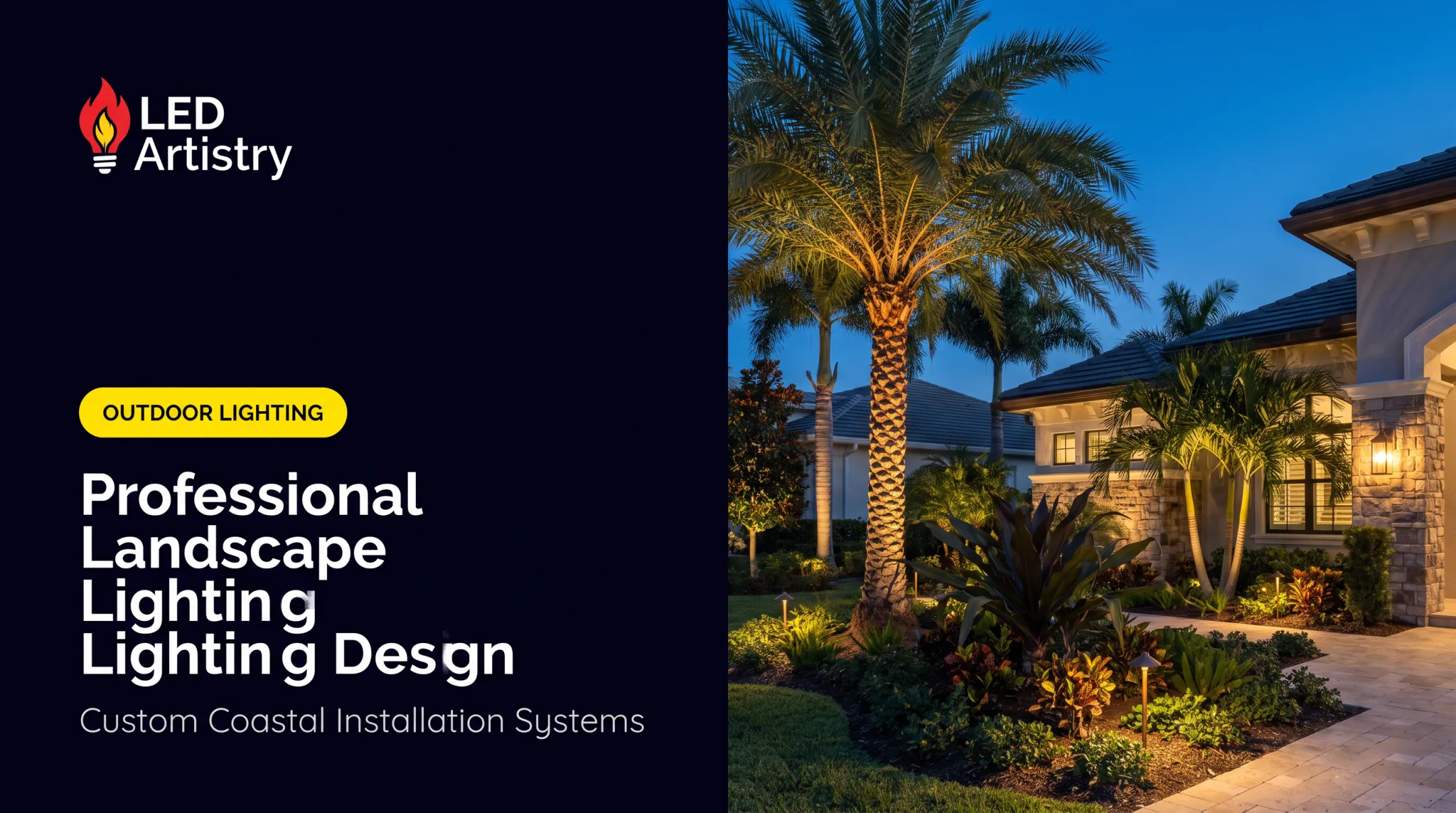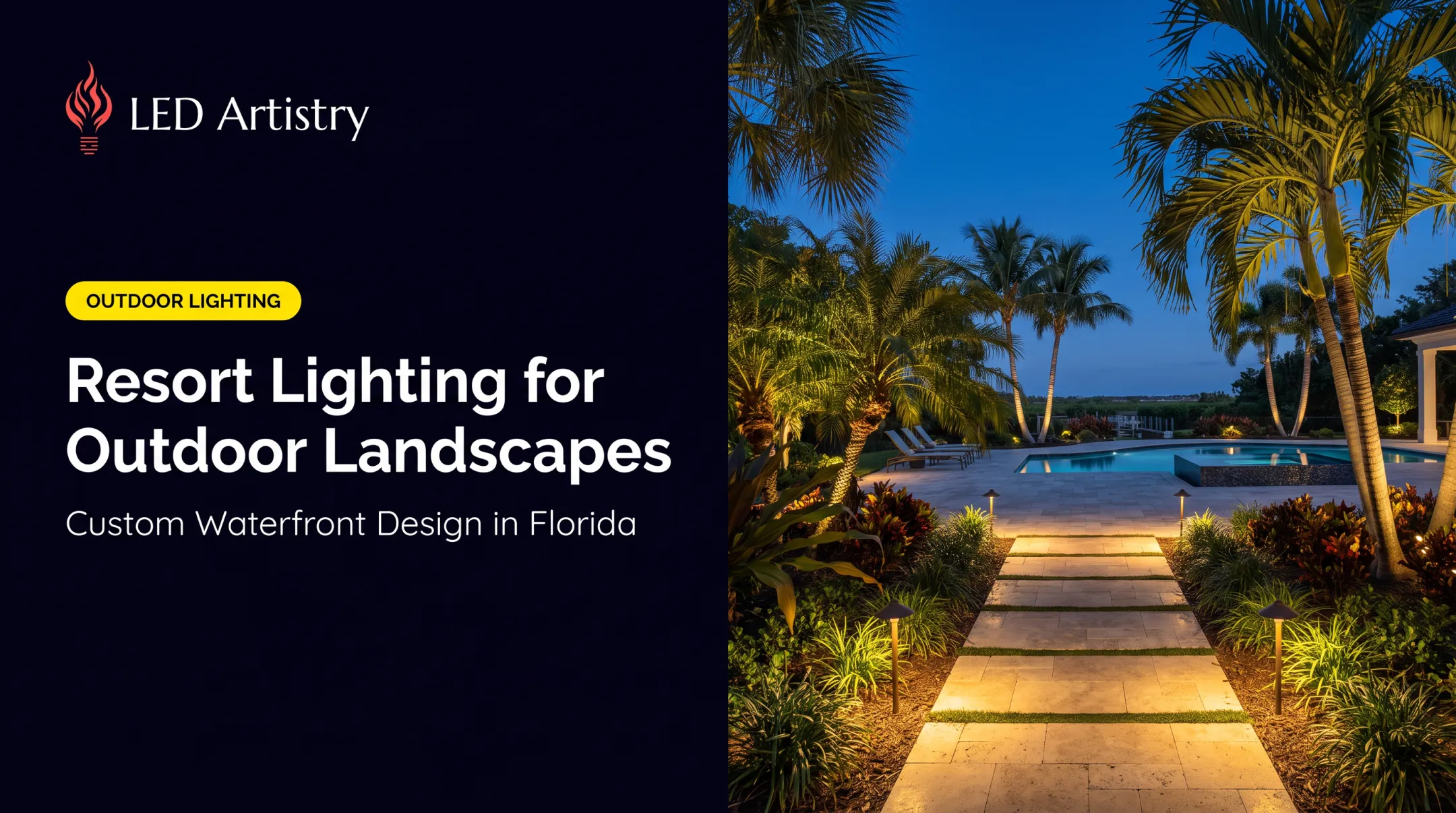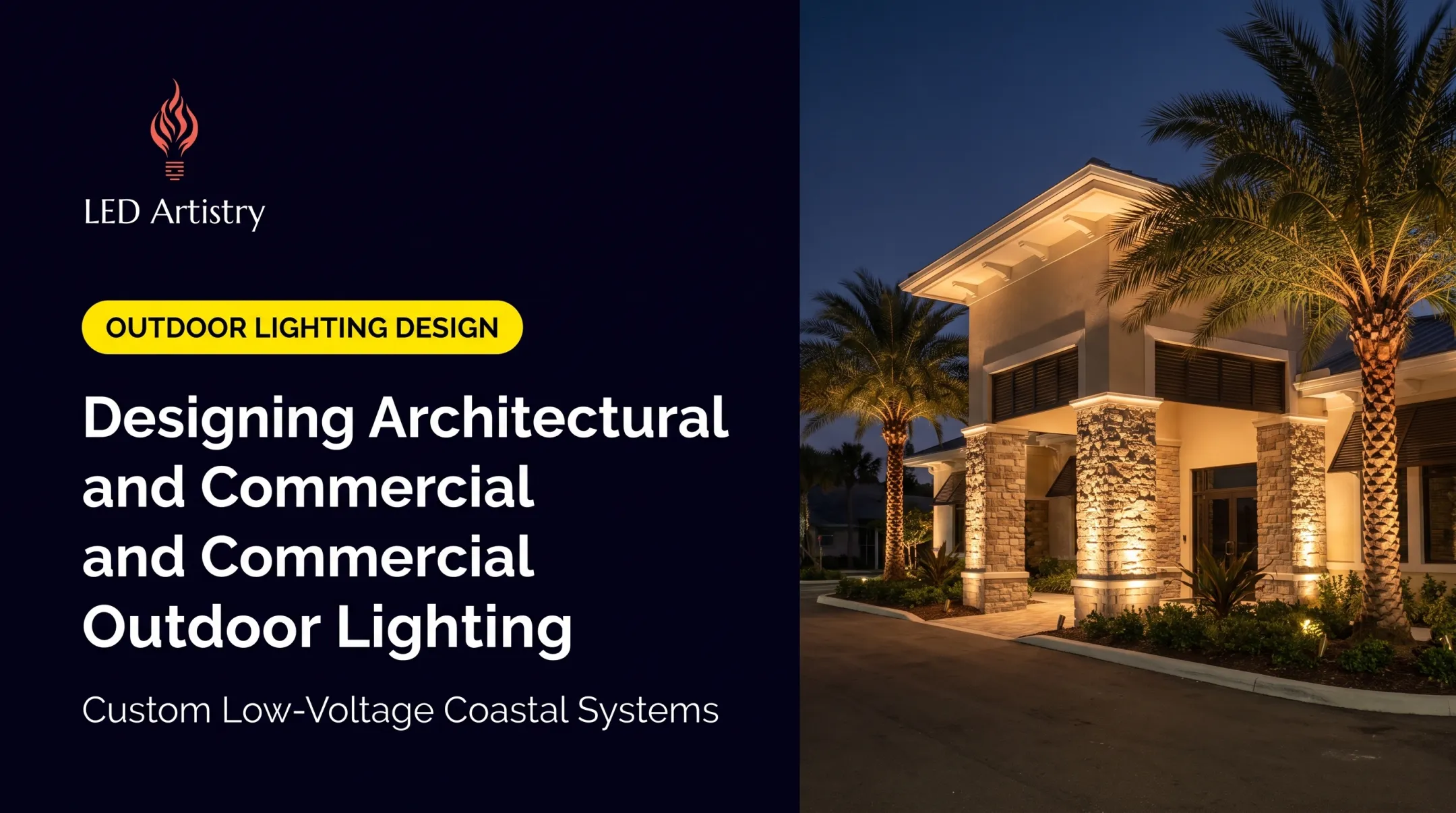

Hotels along Florida's west coast face a specific set of problems: fixtures that corrode in salt air, uneven lighting that makes a property feel either underwhelming or garish, and energy bills that climb every summer. This guide covers the design principles, key zones, fixture types, and climate considerations that matter most for Tampa Bay hotels and resorts.
Key Takeaways
- Layered lighting at entrances and pools shapes guest perception before check-in
- Florida's salt air and humidity demand marine-grade, low-voltage LED fixtures
- LED conversions cut exterior energy use versus older lighting systems
- Smart controls and shielded fixtures prevent overlighting, glare, and wasted spend
- A nighttime demo lets managers preview placement and adjust before committing
Why Hotel Outdoor Lighting Design Matters
Travelers rely heavily on reviews before booking. TrustYou's 2025 research found that 95% of travelers read reviews before making a decision, and a memorable arrival experience is often what guests describe first.
Warm, well-placed lighting at the porte cochère signals comfort. Harsh floodlights or dark gaps signal the opposite.
Guest psychology shows up fast:
- Warm 2700K tones read as welcoming and premium
- Cool, glaring light creates unease before a guest even checks in
- Dark walkways and parking areas raise safety concerns and liability exposure
Beyond first impressions, lighting has practical revenue effects:
- Illuminated pools, docks, and patios extend usable hours for F&B and events
- Lit facades, gardens, and pools become guest-photo backdrops that out-travel any ad
- Consistent path and parking lighting reduces trip-and-fall risk around walkways and drop-off zones
None of this requires guesswork. It requires a layered plan for each zone of the property.
Essential Outdoor Lighting Zones for Hotels
Entrances and Porte Cochère
This is the handshake moment. Layered lighting here should do three things at once: highlight architecture, guide vehicle flow, and make pedestrians feel oriented.
A workable approach combines:
- Accent/wall lighting: grazing or uplighting on stone, masonry, or columns; on buildings over three stories, a ~15-degree beam keeps texture crisp without washout
- Path lighting: low-level fixtures every 8–12 feet from car to lobby, with no dark gaps
- Color and level: warm 2700K at a comfortable entrance level—bright enough for safety, not a parking-garage glare
Pathways, Pools, and Courtyards
Pool decks carry a real regulatory floor. Florida's Department of Health requires a minimum of 3 foot-candles at the pool water surface and wet deck for outdoor pools.
For pool and courtyard lighting:
- Underwater LEDs (single-color or color-changing) every 8–12 feet along the long axis for water texture and evening-swim visibility
- Perimeter LEDs mounted along pool cage frames create soft washes that reduce dark corners and glare off screens
- Bollards and low-level path lights define courtyard walkways without spilling harsh light into seating areas
Coastal hotels with marinas or seawalls have an added layer: dock and waterfront lighting. Piling cap lights, cleat lighting, and recessed step lights keep boaters and guests safe at night while defining the property's edge against the water.
Parking Areas and Gardens
Not every zone needs the same brightness. Parking lots and drop-off areas need functional, higher output:
- About 20 lumens per square foot across the lot
- Pole lighting that sustains at least 1 foot-candle
- Glare-controlled bollards (30–42 inches) at pedestrian level
Gardens and landscape paths call for something softer:
- Lower-output fixtures (roughly 50-150 lumens) that preserve the character of plantings
- Fewer, more deliberate accents rather than blanket coverage
- A clear visual distinction between "functional" and "ambient" zones, so guests instinctively know where to walk versus where to admire

Fixture Types and Design Techniques for Hospitality Exteriors
Different zones call for different fixtures:
- Uplighting/in-ground fixtures — best for palm trees, columns, and facade features, casting light upward to create rhythm and height
- Wall-mounted and bollard fixtures — define walkways and entryways at a human scale, without towering pole lights
- Low-voltage LED landscape systems — the hospitality standard, with flexibility to add zones later and lower running costs than older systems
Facade Lighting Techniques
Facades benefit from a layered look rather than a single flat wash:
- Floodlighting — covers broad wall surfaces but can flatten architectural detail if not aimed carefully
- Contour/outline lighting — traces edges and vertical columns to emphasize height and multi-story presence; a common premium look for hotel exteriors at night
- Backlighting — creates depth around signage or architectural features guests often photograph

Why a Nighttime Demo Matters
Renderings only tell part of the story. Seeing actual fixtures on the actual building, at night, is different.
LED Artistry's complimentary nighttime demo places temporary fixtures on-site so hotel management can walk the grounds, compare color temperatures, and request adjustments before any contract is signed. Moving a spotlight a few inches, changing an angle, or swapping 3000K for 2700K in real time avoids costly rework after installation.
Designing for Florida's Climate and Coastal Conditions
Tampa Bay's climate is unforgiving on exterior fixtures. Salt air, humidity, and storm exposure accelerate corrosion on anything not built for it.
What holds up:
- Solid brass and copper fixtures, which develop a protective patina instead of pitting or peeling
- Marine-grade aluminum as an alternative in select applications
- IP67-rated components that stay dust-tight and handle water jets or temporary submersion on pool decks, docks, and storm-prone areas
Properties within 10 miles of saltwater should default to marine-grade brass rather than standard powder-coated aluminum, which tends to corrode and can void the warranty in coastal conditions.

Coastal hotels also face wildlife lighting rules. Florida's sea-turtle guidelines require long-wavelength light (amber, orange, or red) and fully shielded, downward-facing fixtures near nesting beaches during nesting season.
Local ordinances, like Clearwater's, restrict direct beach illumination from wall-mounted and parking-lot fixtures.
LED Artistry has spent over 12 years designing coastal lighting systems for Tampa Bay properties and backs installations with a 20-year warranty. That track record is a useful benchmark when evaluating any contractor's durability claims for Florida conditions.
Energy Efficiency and Sustainability Considerations
Switching from older exterior lighting to LED isn't a marginal upgrade. The U.S. Department of Energy has found that top-performing LED products use up to 80% less energy than traditional incandescent options, a meaningful difference across a property with dozens of exterior fixtures running nightly.
Smart controls compound those LED savings:
- Astronomical timers adjust automatically to Florida's shifting sunset times, so lights activate at dusk without manual resets
- Zone dimming keeps perimeter and pathway lighting bright after hours while architectural accents run lower
- Independent zones let an outdoor bar stay brighter while garden seating stays soft, all on one system

Maintenance protects those efficiency gains over time. Routine inspections catch failing connections and corrosion early, before they force full fixture replacements. Skipping upkeep on a coastal system usually means emergency repairs later, plus shorter fixture life and more waste than planned service would have required.
Common Outdoor Lighting Mistakes Hotels Should Avoid
Overlighting. More fixtures and higher output don't equal luxury. Excess light increases energy costs and often makes a property feel institutional rather than upscale. DarkSky International's guidance for responsible outdoor lighting is clear: keep light useful, targeted, low-level, controlled, and warm-toned.
Glare from poorly aimed fixtures. Unshielded lights aimed at guest eye level create discomfort, not ambiance. The fix is usually simple:
- Lower mounting heights for path and bollard fixtures
- Use shielded housings that direct light down and forward, not outward
- Aim fixtures during a nighttime walkthrough—not a one-time install-and-leave job
Residential-grade fixtures in commercial settings. A fixture built for a suburban front yard won't hold up to nightly commercial use. Duty cycle alone wears out light-duty parts; near the coast, aluminum and plastic can fail within 18–24 months, while marine-grade brass or copper can last decades with minimal upkeep.
Frequently Asked Questions
How bright should hotel pathway lighting be?
Pathways need enough light for safe, comfortable walking without creating glare or hot spots. Fixtures spaced every 8-12 feet with warm, low-level output achieve this balance.
What is the best type of outdoor lighting for hotel walkways?
Path lights and bollards are the standard choice. They provide consistent, low-glare illumination at a human scale, guiding guests without overpowering the surrounding landscape.
How can hotels reduce outdoor lighting energy costs?
Converting to low-voltage LED fixtures is the most effective step and can cut energy use by 75-80% versus older systems. Astronomical timers and zone dimming add further savings by preventing unnecessary run time.
What lighting fixtures work best in coastal hotel environments?
Marine-grade brass, copper, or stainless-steel fixtures with IP67 ratings hold up best against salt air and humidity. Standard aluminum or plastic fixtures corrode much faster near the water.
How long do commercial outdoor LED fixtures typically last?
Quality LED components are rated for 50,000+ hours, translating to roughly 15-20 years of typical use. Quality marine-grade systems often carry warranties up to 20 years, matching that expected durability.
Why is a lighting demo important before installation?
A nighttime demo lets hotel decision-makers see actual fixture placement, brightness, and color temperature on their property before signing a contract. Adjustments happen in real time, avoiding costly changes after installation.