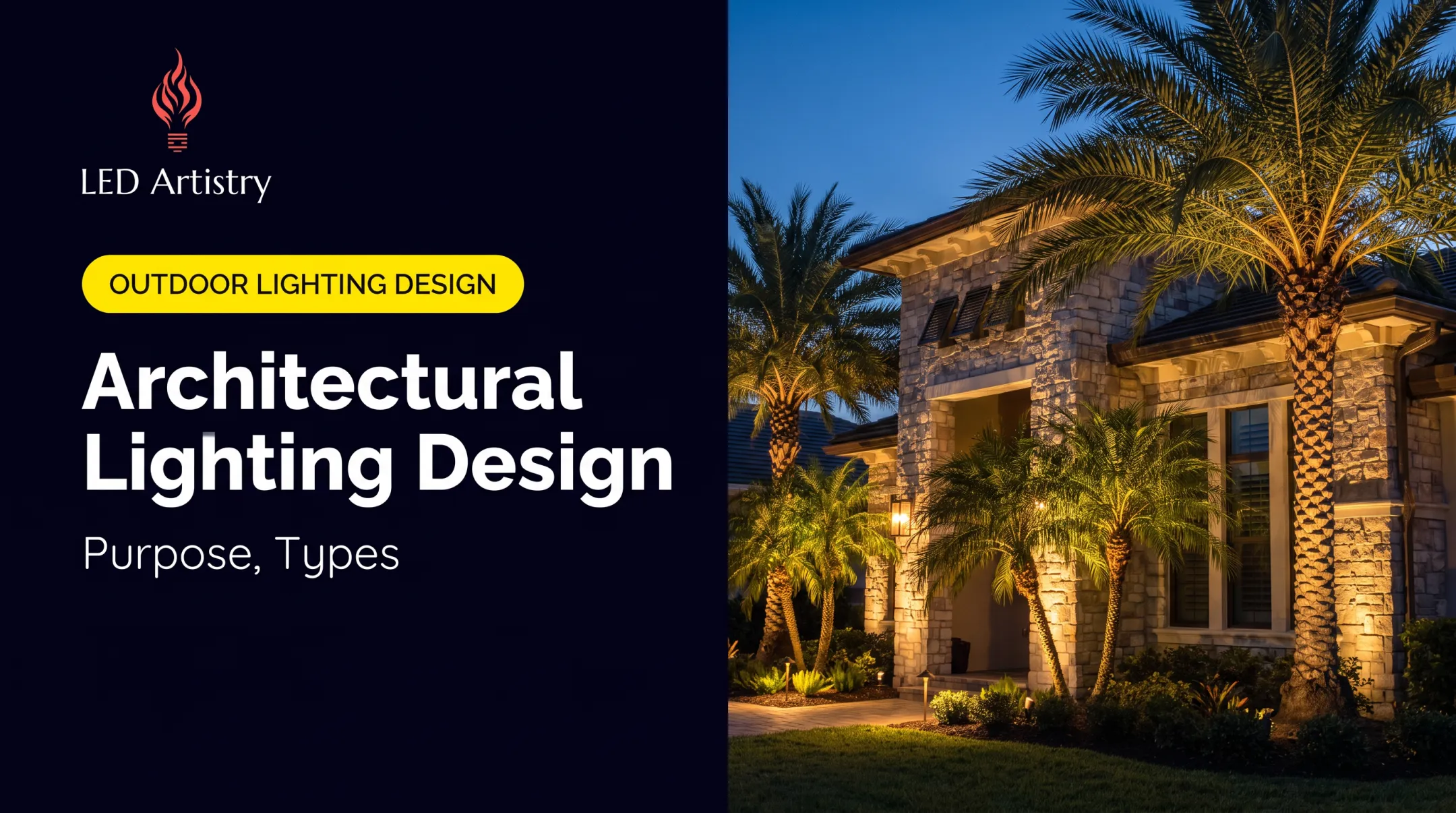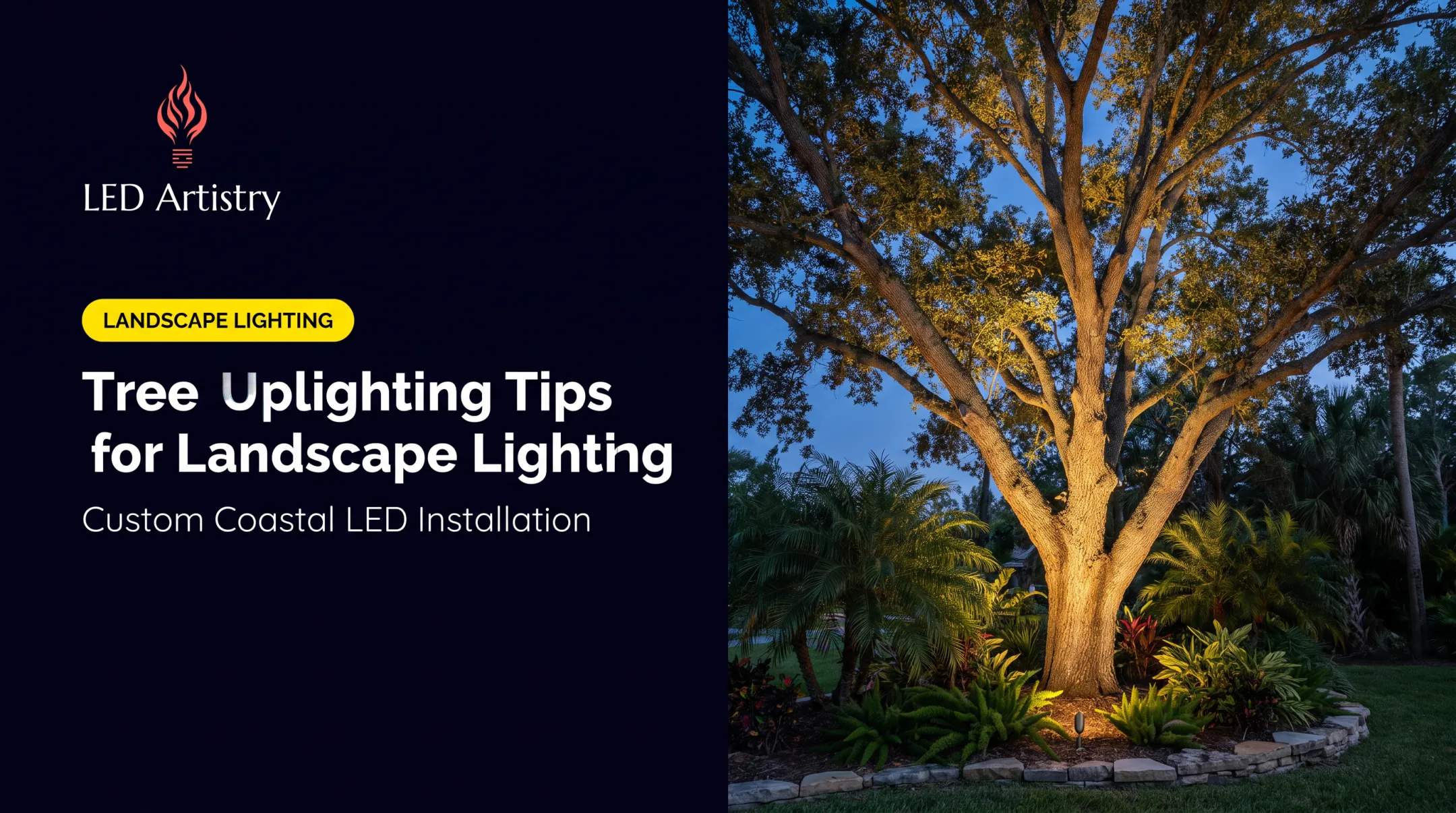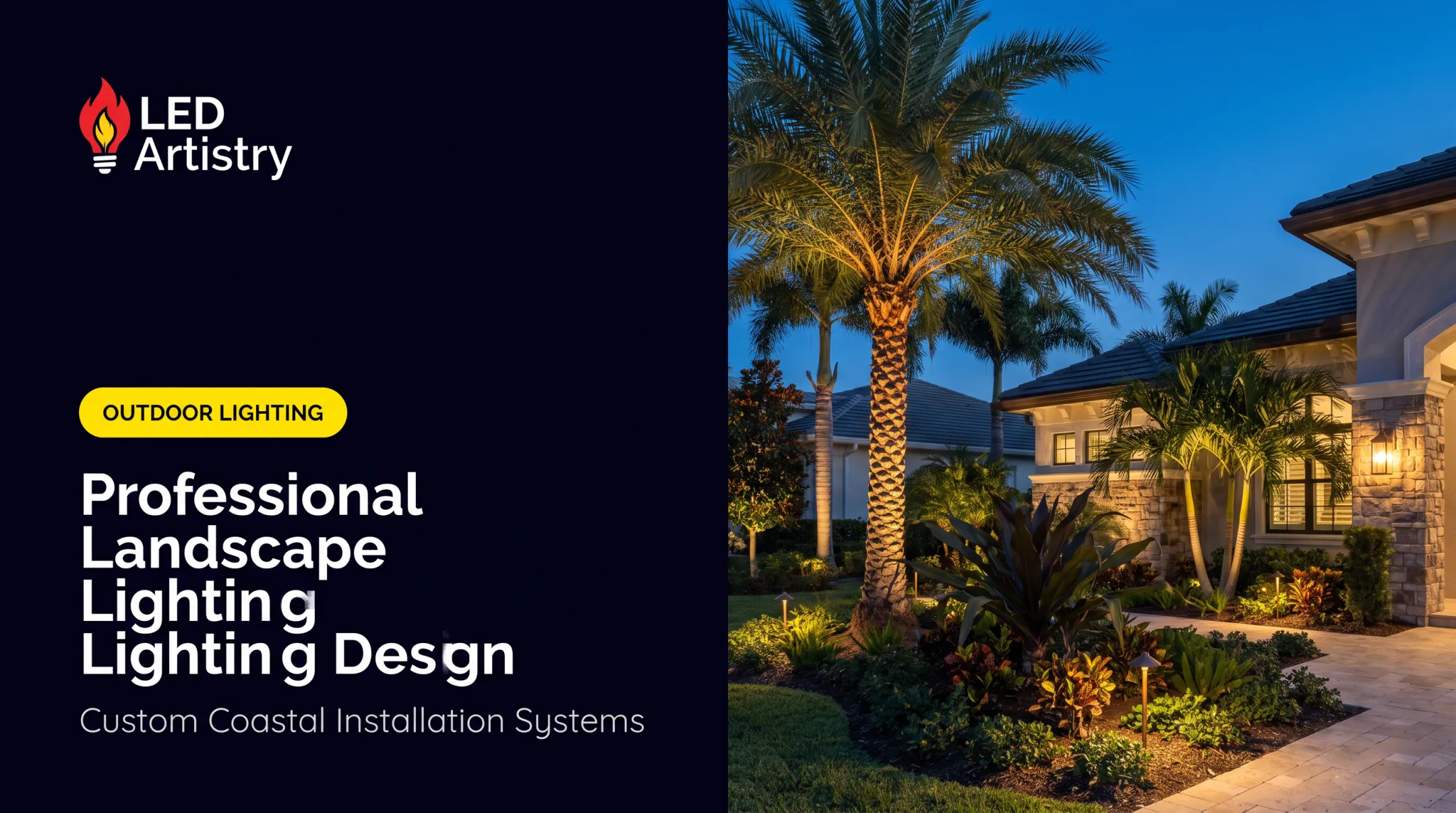

That's the pain point almost every homeowner runs into. You invest thousands in daytime curb appeal, then lose access to it for roughly half the day. Meanwhile, unlit walkways and shadowed corners create real safety concerns, not just missed aesthetic opportunities.
The fix is landscape lighting design done right: layered fixtures, thoughtful zoning, and hardware built for Florida's climate. This guide covers fixture types, core design principles, current trends, and how to vet a qualified lighting designer, including what to expect from a company like LED Artistry.
Key Takeaways
- Layered path, spot, flood, and up/down lights create depth no single source can match
- Zoning, glare control, and room to expand separate pro designs from DIY kits
- Warm LEDs (2700K–3000K) plus app-based controls are the go-to design choices today
- A free nighttime demo lets you preview results before you commit to installation
- Marine-grade materials matter more in Tampa Bay than almost anywhere else
Types of Landscape Lighting Fixtures
Professional lighting schemes rarely rely on one fixture type. They layer several, each doing a specific job.
Common fixture categories:
- Path lights – low, downward-facing fixtures that guide movement along walkways
- Spotlights/accent lights – narrow beams that highlight trees, statues, or architectural details
- Floodlights – wider beams for illuminating facades or large plantings
- Up/down lights – mounted on trees or walls to wash light in both directions
- In-ground/well lights – flush-mounted fixtures for uplighting without visible hardware
- Step lights – recessed into stairs or risers for safety
- LED strip lighting – continuous linear light for railings, under-cap dock edges, or architectural lines

Why LED Is the Default, Not the Upgrade
Low-voltage LED fixtures have replaced halogen and incandescent as the standard. ENERGY STAR-qualified LEDs use 75-80% less energy and last roughly 25 times longer than incandescent bulbs, according to the U.S. Department of Energy. Manufacturer data from FX Luminaire reports similar gains against halogen: up to 77% less power draw with comparable lifespan improvements.
Marine-Grade Fixtures for Waterfront Properties
Tampa Bay's docks, seawalls, and pool cages demand more than a standard big-box fixture. LED Artistry typically specifies solid brass and copper hardware, which develops a protective patina instead of corroding like powder-coated aluminum. Every fixture carries an IP67 rating at minimum. That means dust-tight construction that can handle temporary submersion, which is standard practice for Florida's storm season.
For submerged applications such as seawall edge lighting, IP68-rated fixtures are specified for continuous immersion.

Fixture choice is deliberate, not decorative filler. Strong designs layer path lights for safe movement, accents for focal drama, and broader washes for architecture so each zone has a clear job after dark.
Core Lighting Design Techniques and Principles
Good lighting design isn't about adding more fixtures. It's about restraint, planning, and technique.
Keep It Simple, Zone It Smart
Choose durable, easy-to-maintain fixtures over trendy hardware you can't replace in five years. Then zone the property so each area runs on its own schedule and brightness:
- Pool and entertaining zones (can run bright for gatherings, dim for quiet nights)
- Pathway and walkway zones (consistent, glare-free)
- Security and perimeter zones (motion-activated, full brightness on demand)
For a late dinner, keep the pool at 100% and drop surrounding palms to 20%. Independent dimming delivers both moods without flipping the same switch twice.
Techniques That Add Depth
Depth comes from how you aim light, not how many fixtures you add:
- Uplighting: washes light up trees or columns for drama
- Downlighting / moonlighting: mimics natural light filtering through a canopy
- Silhouetting: backlights a plant or structure so only the outline reads
- Wall-washing: spreads even light across facades or architectural surfaces
Layer foreground, midground, and background light so the scene has dimension instead of the flat, overlit look common in rushed DIY installs.

Glare Control and Local Rules
Good aiming still fails if glare hits eyes or spills off the property. Full-cutoff fixtures send light down and inward only, with no upward spill adding to sky glow. Hex-louver inserts can cut glare by up to 95% when concealment alone isn't enough. Angle uplights about 45 degrees or more away from seating areas.
In Florida, coastal work adds compliance on top of comfort:
| Consideration | Detail |
|---|---|
| Sea turtle nesting season | Amber/red LEDs, shielded and downward-facing, May 1–October 31 (FWC guidance) |
| Coastal wavelength rule | 560 nm or greater in turtle-sensitive zones |
| Local ordinances | Vary by municipality; Clearwater Beach and St. Petersburg both restrict glare and beach illumination |
Check with your municipality before finalizing a coastal design. Ordinances differ block by block near the water.
Build in Room to Grow
Plan the system so it can expand as the landscape matures:
- Size the transformer with about 20–30% spare capacity so you can add fixtures later without replacing core equipment
- Leave service loops of extra wire at each fixture so lights can move as trees and shrubs grow, instead of rewiring from scratch
Latest Trends in Landscape Lighting
Landscape lighting has shifted from "install and forget" to an integrated, controllable system.
What's driving 2025-2026 design choices:
- Smart, app-controlled systems – scheduling, motion sensors, and remote zone adjustment through platforms like Control4, Lutron, and Home Assistant
- Warm color temperatures – 2700K-3000K remains the everyday standard, with tunable and RGBW fixtures available for events or holidays
- Energy efficiency – precision dimming and astronomical timers cut runtime and draw on multi-zone systems
- Outdoor living integration – lighting extending into pool cages, docks, and seawalls as part of one connected system
A recent Houzz outdoor trends survey found that 66% of homeowners use outdoor lighting specifically to extend evening use of lounge areas, and 71% hired a professional for the project. That professional involvement matters more as systems get more integrated; a poorly zoned smart system is still a poorly zoned system, just with an app attached.
What are the latest trends in landscaping lights?
Smart controls and warm LEDs are table stakes. The bigger change is designing paths, water, architecture, and living areas as one layered system—planned by zone before any app schedule is set.
Where to Focus Your Landscape Lighting
Not every square foot deserves equal attention. Prioritize by function and impact.
- Walkways and driveways – safety first; consistent, glare-free path lighting reduces trip hazards
- Focal points – specimen trees, water features, or architectural details benefit from accent lighting that creates drama after dark
- Entertaining zones – patios and pool cages need layered, dimmable ambiance, not a single harsh floodlight
Waterfront specialty lighting is where Tampa Bay properties differ from inland homes:
- Piling-cap lights define the dock edge for boaters
- Seawall wash lighting marks the shoreline
- Marine-grade fixtures (brass, copper, 316 stainless steel) hold up to salt spray where standard aluminum fails
Commercial applications follow the same priorities. LED Artistry's portfolio includes storefront lighting for restaurants like Eat Fresh Kitchen and CALI, where illuminated facades and signage stay visible past closing. HOA entrances, monument signs, and common areas use the same approach for curb appeal and after-dark safety.

Maintenance and Choosing a Lighting Professional
Even the best-designed system needs upkeep, especially in Florida.
Routine Maintenance Checklist
- Inspect voltages at each fixture (optimal range: 11.5-12 volts)
- Clean salt, calcium, and mineral deposits from lenses
- Re-aim fixtures shifted by growth, storms, or landscaping work
- Test transformer performance and check connections
- Rinse fixtures with fresh water every 30 days if within five miles of the coast
Most systems benefit from professional service every 6-12 months, more frequently in demanding coastal conditions. That same coastal stress is why fixture quality and professional design matter as much as the service schedule.
Why Hire a Specialist Over a DIY Kit
Big-box kits use powder-coated aluminum that can bubble, pit, or corrode within a season or two in salt air. A specialized designer plans for zoning, glare compliance, and future flexibility—work a generic kit cannot match.
LED Artistry backs its installations with a 20-year warranty, a free nighttime demonstration, and ongoing maintenance support. Temporary fixtures go up first so you can give feedback and see adjustments in real time. Nothing is installed until you're satisfied with the result.
Frequently Asked Questions
What are the different types of lighting used in landscape design?
Path lights, spotlights, floodlights, up/downlights, and step or in-ground lights make up the core categories. Professional designs typically layer several types rather than relying on just one.
What are the latest trends in landscaping lights?
Smart app-controlled systems, warm 2700K-3000K LEDs, and integration with pools, docks, and outdoor kitchens are the biggest current trends. Energy-efficient dimming and scheduling are close behind.
How much does professional landscape lighting typically cost?
Cost depends on property size, fixture count, and zone complexity. A modest front-yard design might use 8–12 fixtures; layered properties often need 20 or more. A consultation gives you an accurate quote.
Can landscape lighting increase my property's value?
Landscape lighting supports curb appeal and extends usable evening space, both of which attract buyers. NAR's 2023 outdoor features report estimated roughly 59% cost recovery on lighting projects, though actual results vary by property.
How long do LED landscape lighting fixtures last?
LEDs can last 50,000 hours or more depending on the application, driver quality, and maintenance. Proper aiming and routine cleaning extend that lifespan further.
Is landscape lighting difficult to maintain in Florida's climate?
Not with the right materials. Marine-grade brass, copper, and IP67-rated sealed housings resist salt spray and humidity, and routine service catches problems early.