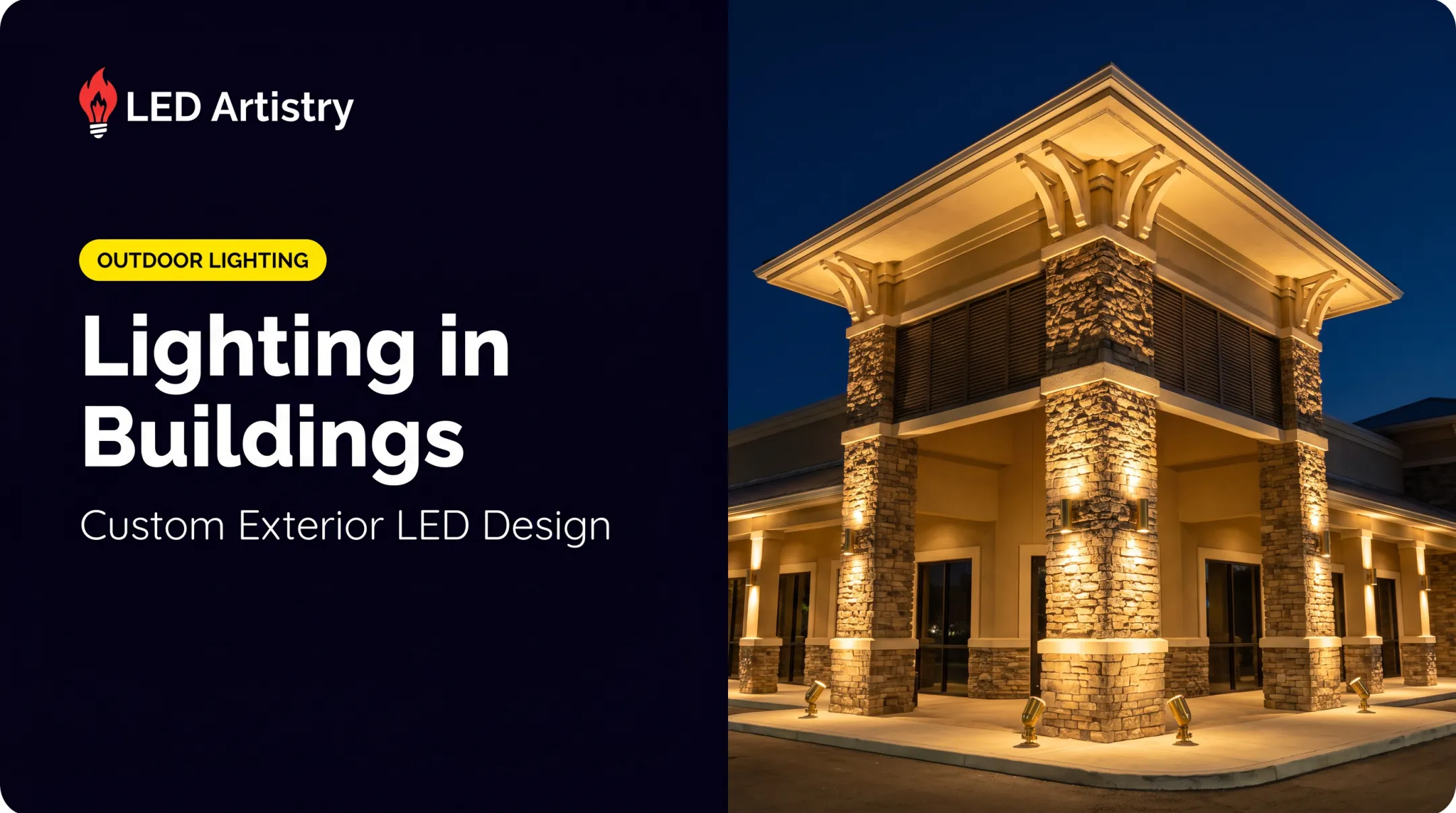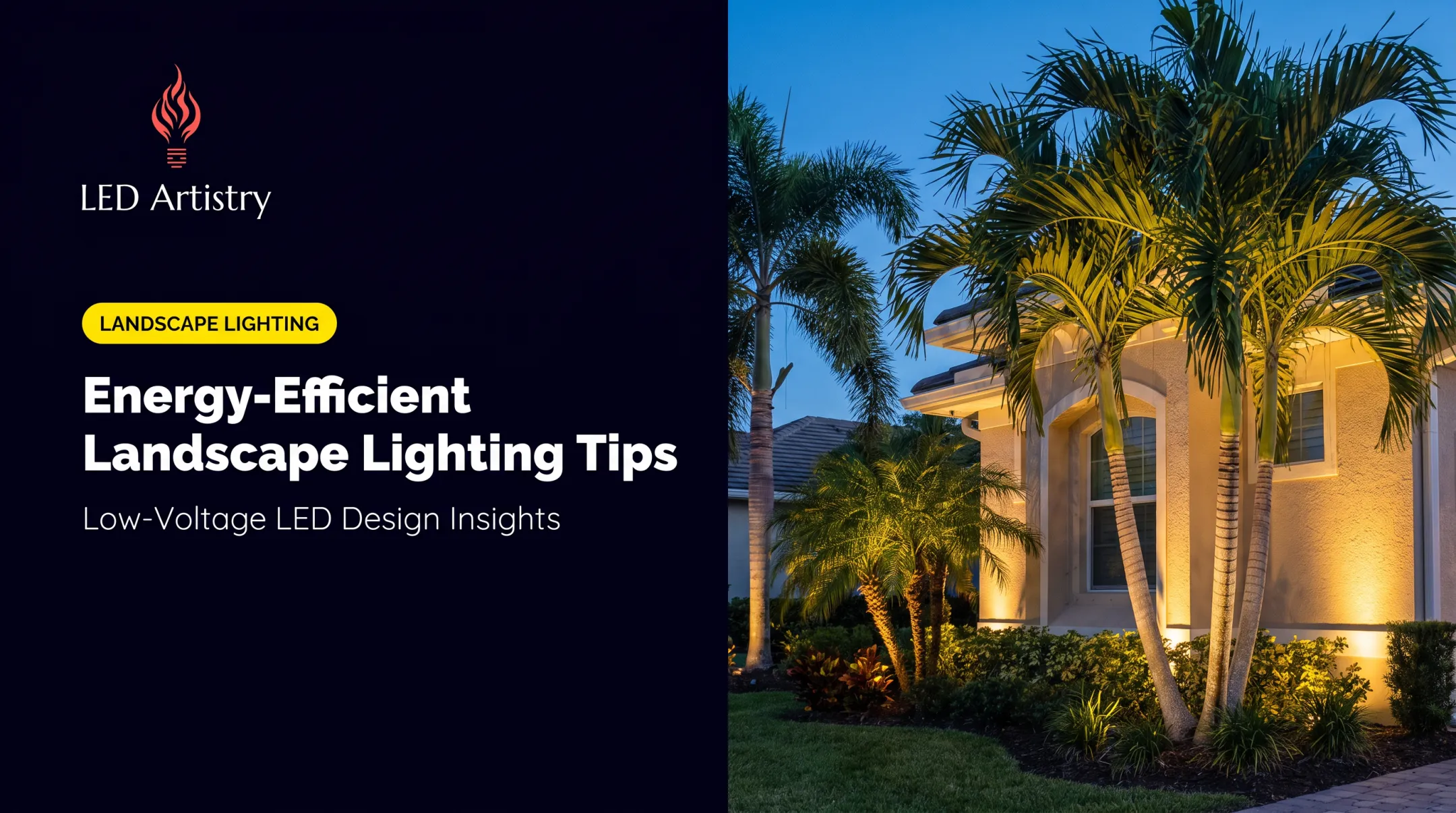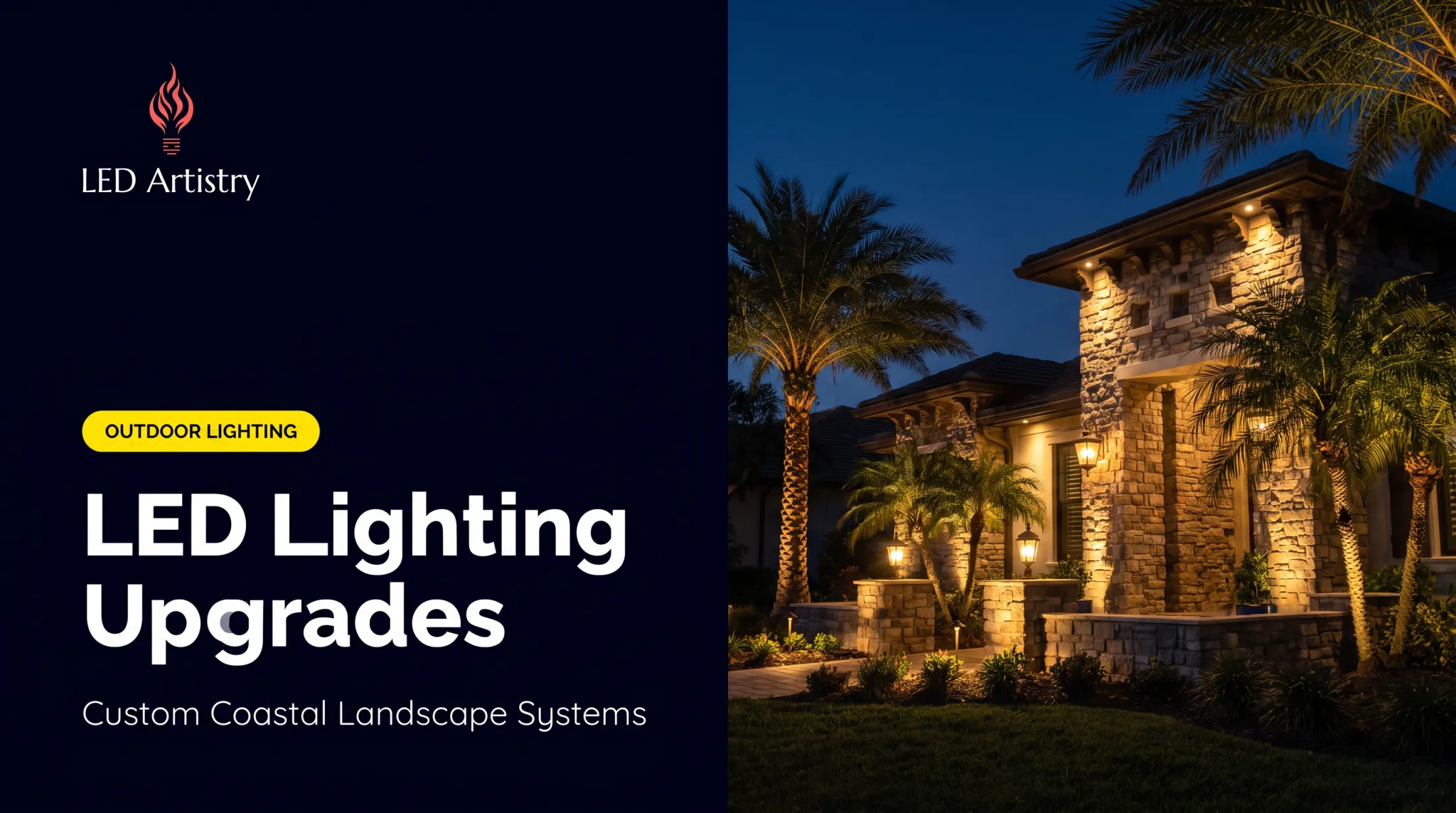

Many homeowners and business operators struggle to tell the difference between "lighting up a building" and actual facade lighting design. Terms like grazing, washing, and uplighting get thrown around without clear definitions, which makes it hard to know what you're actually paying for.
This guide breaks down what facade lighting means, the techniques professionals use, core design principles, realistic costs, and how to choose a partner who understands Florida's coastal demands.
Key Takeaways
- Facade lighting targets vertical exterior walls; landscape lighting covers ground-level features
- Match the technique to the architecture—grazing, washing, uplighting, linear, or accent
- Use marine-grade materials within 10 miles of Florida’s coast to prevent premature corrosion
- Residential facade packages typically start at $2,500–$4,000; commercial cost scales with scope
- A free nighttime demo lets you preview effects before committing to a design
What Is Facade Lighting? (And What Does "Facade" Mean?)
Understanding the Term "Facade"
"Facade" comes from architecture and refers to the exterior face of a building, according to Britannica's definition. Most people picture the front elevation. In lighting practice, though, the term stretches to cover any visible exterior wall, front, side, or rear that contributes to how a building reads at night.
For property owners, that wider definition matters. A restaurant's side wall facing a parking lot still counts as facade if it's visible and worth lighting.
What Is LED Facade Lighting?
LED facade lighting uses energy-efficient fixtures to illuminate a building's exterior surfaces. It typically serves three goals:
- Aesthetic: highlighting architectural character, texture, and design
- Safety: improving visibility around entry points and perimeters
- Branding: making commercial properties recognizable and inviting after dark
Here's the key contrast: landscape lighting handles the ground plane (pathways, trees, gardens), while facade lighting handles the vertical building plane. A well-designed exterior lighting system usually needs both, but they solve different problems.
Types of Facade Systems and Lighting Techniques
Different building materials call for different lighting approaches. Here's how the main techniques work.
Grazing
Grazing mounts fixtures close to the wall, typically within 12 inches, casting light at a sharp angle. This technique accentuates texture, making it ideal for:
- Stucco with heavy texture
- Brick and stacked stone
- Coquina or coral stone accents common in older Florida construction
Wall Washing
Wall washing spreads light evenly across a surface, smoothing it out visually. A clean, uniform glow works better than dramatic shadow play on:
- Smooth or painted facades
- HOA entrance monuments
- Commercial storefronts
Uplighting and Ground-Mounted Systems
Fixtures at the base direct light upward toward columns, palm trees, or architectural peaks. On Florida properties, this is still one of the most common approaches—especially where mature landscaping frames the building.
Linear LED Strip and Profile Lighting
Continuous lines of light along rooflines, eaves, or window trim create a modern, architectural silhouette. This technique works particularly well on contemporary homes with strong horizontal lines.
Accent and Spotlighting
Narrow-beam fixtures highlight signage, entryways, or one focal detail—a column, a carved door, or a business logo.
Most successful systems combine two or more techniques. On Tampa Bay stucco, brick, and stone facades, LED Artistry often uses a 70/30 split between washing and grazing for a natural look on modern residential builds.

Placement is simple: washing fixtures sit about 2–3 feet from smooth stucco; grazing fixtures move in to 2–6 inches on textured surfaces.
Design Principles for Effective LED Facade Lighting
Establishing Lighting Hierarchy
Not every square foot of a building deserves equal light. Effective design prioritizes:
- Entrances — the first thing a visitor or customer sees
- Signage — critical for commercial visibility
- Architectural focal points — columns, gables, unique textures
Everything else supports these priorities rather than competing with them.
Choosing the Right Color Temperature
Color temperature shapes mood as much as it shapes visibility:
- Warm white (2700–3000K) suits residential and coastal properties, complementing natural stone, cedar, and stucco
- Neutral white (3500–4000K) fits commercial storefronts that want a crisper, more modern look
- Cool white (4000–5000K) works for contemporary glass-and-steel facades when higher contrast is the goal
Controlling Glare and Fixture Placement
Poorly aimed fixtures create discomfort for neighbors, pedestrians, and drivers. Design principles that reduce glare include:
- Keeping the light source concealed or shielded from direct view
- Aiming uplights at roughly 45 degrees or more away from primary seating and walking areas
- Fine-tuning beam angles during an after-dark walkthrough, not a daytime sketch
Aim and beam choice only hold up if the fixtures survive the climate they sit in.
Weather Resistance for Florida Conditions
Florida's humidity, salt air, and storm exposure accelerate corrosion. DMF Lighting notes that accelerated corrosion can occur 5–10 miles inland, which means most of Tampa Bay sits within the risk zone. Marine-grade, weather-resistant fixtures aren't optional here—they're the baseline.
LED Artistry addresses this with 316 marine-grade stainless steel, solid brass, copper, and marine-grade aluminum fixtures rated IP67 or higher, built to handle temporary water exposure without failing.
See it before you commit. LED Artistry's complimentary nighttime demonstration places temporary fixtures on your property so you can compare grazing, washing, and accent effects live—including side-by-side 2700K vs. 3000K.
Benefits of Investing in LED Facade Lighting
Curb Appeal and Nighttime Visibility
A building that disappears at dusk loses half its impact. Facade lighting keeps homes, restaurants, and HOA entrances visually present after dark, when a large share of visitors and passersby actually see the property. LED Artistry's commercial work illustrates this directly. Purple LED accents on a MetroPCS storefront highlight the building and entrance from a distance, while red and purple facade lighting at a retail location makes the storefront visible well before customers reach the parking lot.

Security and Safety Benefits
Illuminated entry points, walkways, and perimeters reduce hazards and discourage unwanted activity. A 2021 survey-based study on street lighting found that enhanced lighting correlates with meaningful gains in perceived safety. Prior street-lighting research cited in that study points to crime reductions averaging around 20%, with some targeted deployments doing better. Facade lighting supports the same layered safety approach at the building level.
Energy Efficiency Advantages
LED technology draws a fraction of the power older halogen or incandescent systems require, while lasting far longer. That combination translates into:
- Lower monthly operating costs versus halogen or incandescent facade systems
- Fewer fixture replacements and service calls over the life of the install
- Less ongoing maintenance for multi-story or hard-to-reach elevations For property owners, those savings compound year after year—especially on larger commercial or multi-building sites.
How Much Does Facade Lighting Cost?
Costs vary based on building size, fixture count, technique complexity, and control systems. There's no single flat rate. Every property is different.
Residential Accent Lighting
Basic residential facade packages typically start around $2,500-$4,000. This usually covers 8-12 premium fixtures highlighting the front facade and select architectural features.
Comprehensive Commercial or Architectural Systems
Commercial storefront projects commonly range from $2,500-$15,000, while large-scale architectural installations can exceed $50,000 depending on scope.
| Cost Driver | Impact |
|---|---|
| Building size | Larger structures need more wiring and coverage |
| Fixture count | Entry packages use 8-12 fixtures; full estates may use 20-50 |
| Technique complexity | Grazing and multi-story work require specialized installation |
| Control systems | Smart-home integration increases system cost |

Professional installation runs approximately $350-$550 per fixture, covering design, transformer, wiring, and labor. LED Artistry provides free nighttime demos and consultations so clients can see projected results before finalizing a budget.
Choosing the Right Facade Lighting Partner in Tampa Bay
Florida's coastal climate punishes lighting systems that weren't built for it. Salt air, humidity, and storm exposure will find every weak point in a cheaply made fixture within a few seasons.
What to look for in a facade lighting partner:
- Experience specifically with coastal, marine-grade materials (not just general landscape lighting)
- A warranty that reflects confidence in long-term performance
- Ongoing maintenance support, not a one-time install-and-walk-away
- A design process that lets you preview results before paying for installation
LED Artistry brings **over 12 years of Tampa Bay outdoor lighting experience**, backed by a 20-year warranty. Ongoing maintenance programs include a documented 10-point inspection, voltage testing, fixture realignment, and post-storm re-aiming.
Ready to see how facade lighting could transform your property? Schedule a free nighttime demonstration and see real-time adjustments on your own building.
Frequently Asked Questions
What is an LED facade?
An LED facade is a building exterior lit with energy-efficient LED fixtures to highlight architecture. The systems replace older exterior lighting while meeting the same aesthetic and safety goals.
What is facade lighting?
Facade lighting is the practice of illuminating a building's exterior for aesthetics, safety, and identity. It targets vertical wall surfaces rather than ground-level landscape features.
What does facade mean?
In architecture, "facade" refers to the exterior face of a structure, most often the front elevation. In lighting design, it extends to any visible exterior wall worth illuminating.
What are the different types of facade lighting techniques?
The main techniques are grazing (texture emphasis), washing (even illumination), uplighting (base-mounted upward light), linear lighting (continuous lines along edges), and accent lighting (narrow-beam highlights). Most projects combine two or more.
What are the types of facade systems?
Facade systems are generally categorized by fixture type: linear profile fixtures for rooflines and trim, spotlights for accents, and ground-mounted uplights for columns and vertical features.
How much does facade lighting cost?
Basic residential facade lighting typically starts around $2,500-$4,000, while commercial systems range from $2,500 to over $50,000 depending on scope. A free consultation and nighttime demo helps establish accurate project pricing for your specific property.