
Many Tampa Bay homeowners and HOAs struggle with the same issues: gates that look great by day but disappear at night, keypads nobody can read, or fixtures that corrode within a couple of years in our salt air and humidity.
This guide walks through placement techniques, fixture styles, sizing guidelines, and maintenance tips built specifically for Florida's climate.
Key Takeaways
- Layered gate lighting boosts safety, security, and curb appeal at once
- Post-mounted, wall-mounted, and in-ground uplighting are the three core placement styles
- Marine-grade, low-voltage LED systems outlast standard fixtures in coastal humidity
- Free nighttime demos let you preview gate lighting before you commit
Why Entry Gate Lighting Matters
A dark, poorly lit gate isn't just unattractive. It's a trip hazard, a security gap, and a missed opportunity to showcase your property.
Lighting affects how safe people feel outdoors. A survey experiment on ambient outdoor lighting found that 37% of people in unlit conditions felt unsafe at night, compared to 29% under ambient lighting. That's a meaningful gap for something as simple as a well-placed fixture.
Curb appeal matters too. The National Association of Realtors' 2023 Remodeling Impact Report lists landscape lighting among the outdoor projects homeowners rate most satisfying—a strong signal that a well-lit entry pays off in how a property reads from the street.
Florida's climate adds a wrinkle most lighting guides ignore:
- Humidity averaging around 74% accelerates corrosion in cheap fixtures
- Salt air near coastal and waterfront properties eats through standard aluminum in as little as 18-24 months
- Storms and heavy rain demand sealed, wet-location-rated housings
That's why LED Artistry specifies marine-grade brass and copper, sealed IP67-rated housings, and a 20-year warranty on entry gate systems built for Tampa Bay's coastal conditions.
Best Placement Techniques for Entry Gate Lighting
Good gate lighting layers light with purpose: identification, safety, and architectural emphasis. Maximum brightness alone rarely delivers any of those results.
Post and Pillar-Top Lighting
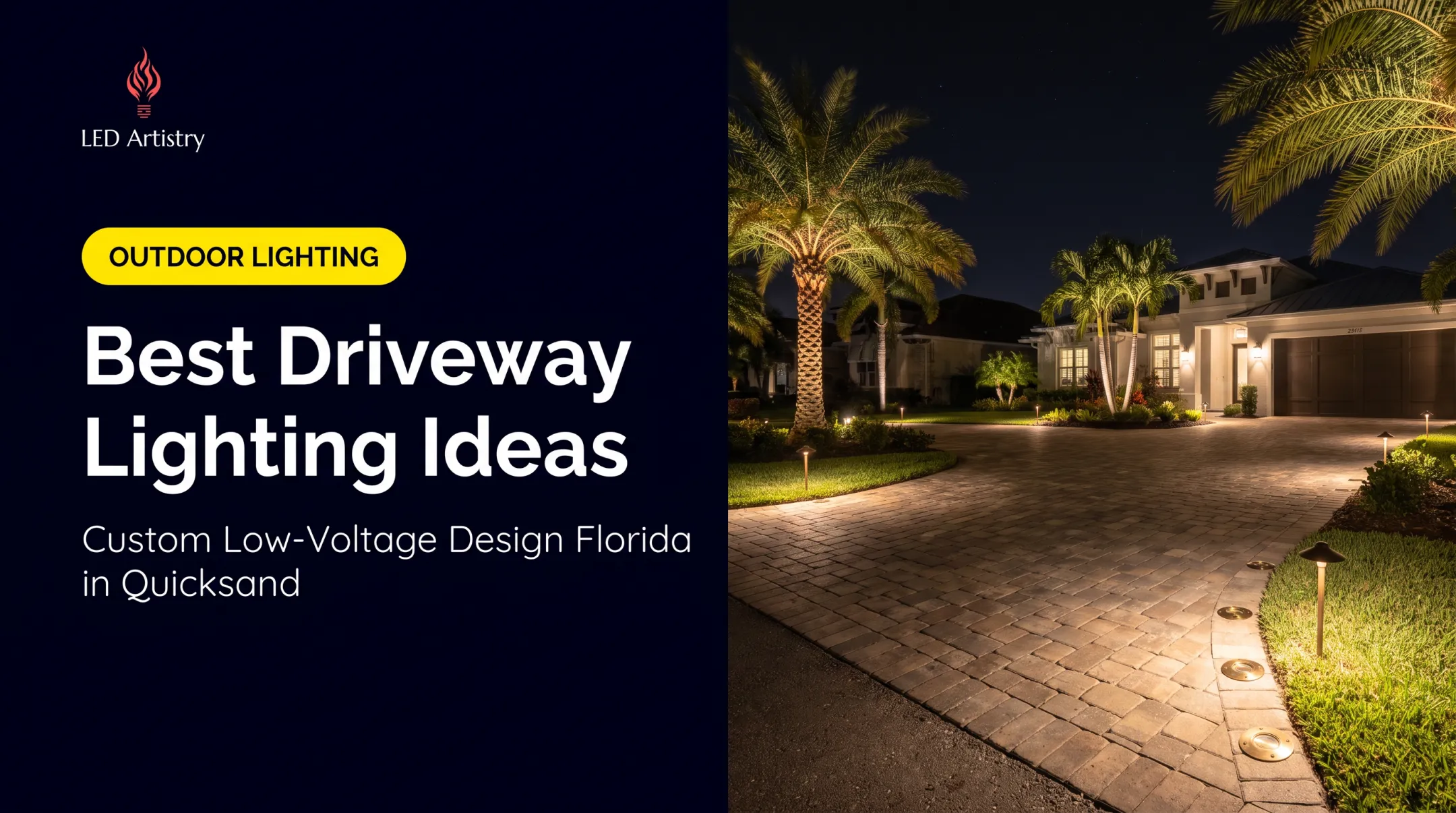
Mounting fixtures atop gate pillars gives instant orientation and architectural elegance, especially for traditional or estate-style entrances. Aim the optics downward so drivers and neighbors aren't blinded by glare.
Wall-Mounted Fixtures
Sconces or downlights mounted on pillar faces put strong, usable light exactly where it counts: keypads, call boxes, and the walkway leading up to the gate. This keeps codes readable and hardware visible after sunset.
In-Ground Uplighting
Recessed well lights at the base of columns or stonework create a dramatic, modern glow. They're less visually intrusive than above-grade fixtures, though they're harder to reposition once installed, so placement matters.

Additional Placement Priorities
- Keypad and call-box illumination: Downlight from a nearby post or tree so codes stay visible at night
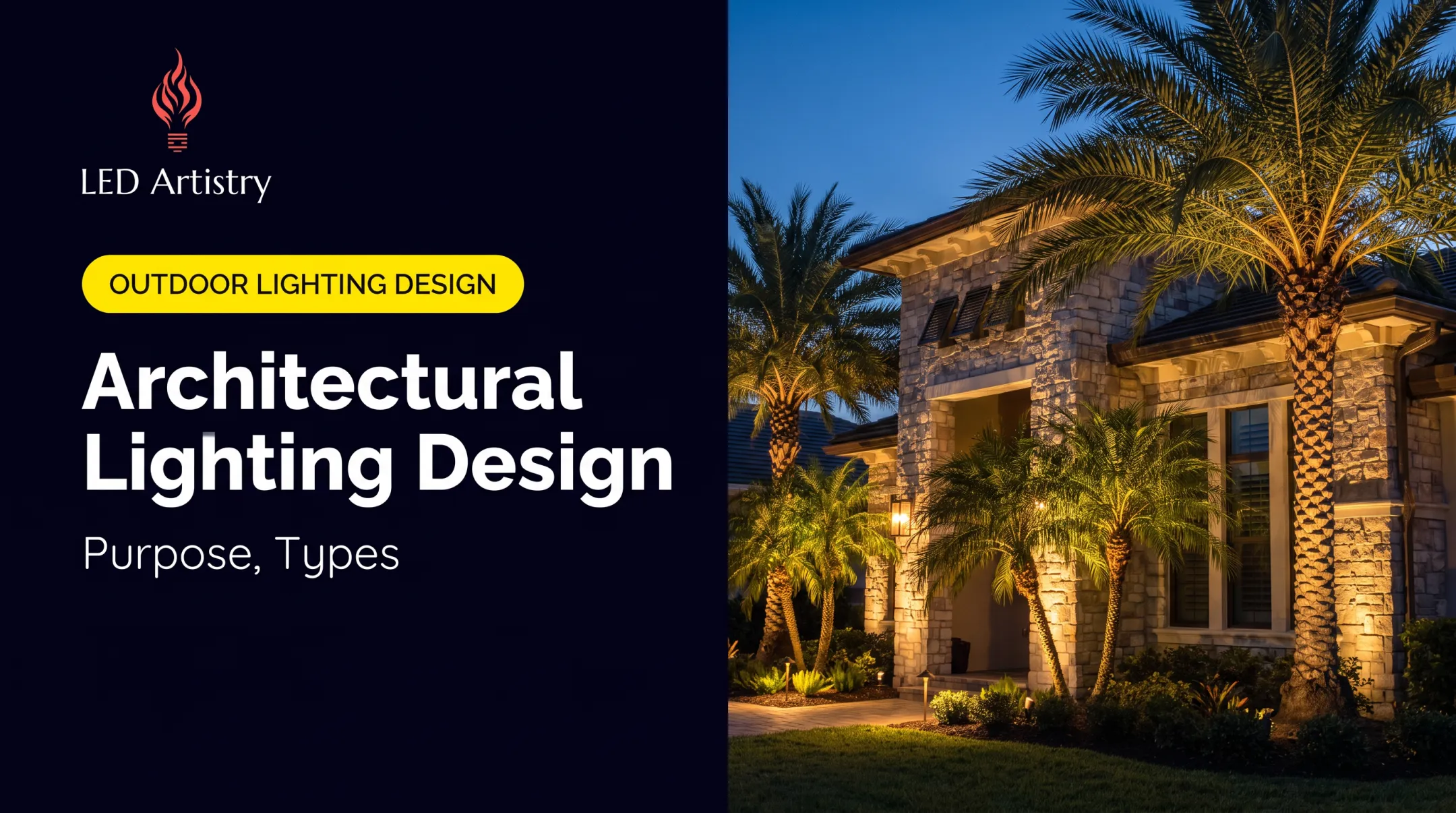
- Wall washing and uplighting: Highlight stonework, columns, or surrounding landscaping for a layered glow
- Spotlighting the gate itself: Illuminate from both sides so movement and operation are visible after dark
LED Artistry's free nighttime demo evaluates your gate from the street, not just the driveway, and from both directions of arrival. That catches glare, blocked house numbers, and dark spots before anything is permanently installed.
Popular Entry Gate Lighting Styles and Fixture Ideas
Style should follow function. Decide whether the light's job is identification, path guidance, or architectural drama, then pick the fixture form that fits your gate's architecture.
Classic and Traditional:
- Lantern-style fixtures for pillars, suited to estate and ranch-style gates
- Warm, timeless sconces that complement Mediterranean or colonial architecture
Modern and Minimalist:
- Globe or frosted-glass fixtures for clean, contemporary gates
- Recessed well lights for a seamless, low-profile look
Approach and Path Lighting:
- Bollard and path lights lining the driveway, spaced to avoid a "runway" effect
- Paired task and accent layouts that light the keypad and path while wall-washing or uplighting adds depth
Fixture form is only half the decision. Color temperature and control shape how the gate reads after dark. HOAs, restaurants, and hotels that want a branded look often add color-changing LED systems for that flexibility. LED Artistry designs and installs RGBW systems with access to more than 16 million colors and zoned programming, so the perimeter stays refined while an entrance or dining area shifts to a brand-specific hue for events.
Most residential and community gates, though, look best with warm white light in the 2700K-3000K range. It's inviting rather than clinical, and it's the default even on color-changing systems for everyday use.

Sizing, Spacing, and Wattage Guidelines
Oversized fixtures overwhelm a gate's proportions; undersized ones disappear entirely. Match fixture scale to your pillar or post size, and lean on brightness (lumens) rather than wattage alone when comparing options.
Use these benchmarks as a starting point for entry and approach lighting:
| Application | Benchmark | Notes |
|---|---|---|
| Path lighting | 10-14 ft spacing | Prevents a "runway" look along driveways |
| Residential walkway | 85-150 lumens | Kichler's example range for typical homes |
| Commercial approach | Up to 250 lumens | Brighter for higher-traffic entrances |
| In-ground accent | 350-850 lumens, 15°/35°/60° beams | Match beam angle to traffic exposure |

A practical rule: Don't chase wattage numbers from generic online charts. Low-voltage LED fixtures often run on just a few watts each while producing plenty of usable light. Beam spread, glare control, and placement matter far more than the number on the bulb.
Choosing Lighting for Different Property Types
Your gate's purpose shapes its lighting plan.
Residential and Luxury Homes
Emphasize warm ambiance and architectural highlights. Think uplighting on stone pillars, soft path lights, and a welcoming glow that feels intentional rather than institutional.
HOAs and Community Entrances
Consistency and durability matter most here. Standardized fixtures, color temperature, and low-maintenance systems keep shared entrances looking uniform across every gate.
LED Artistry's HOA designs typically default to warm white (2700-3000K), with a free nighttime demo so board members can approve placement before installation.
Commercial Properties, Restaurants, and Hotels
Visibility and brand presence take priority. Hotels often use 2700K warm-white fixtures at 5-10 footcandles for a balance of safety and premium feel. Restaurants lean into brand colors and signage lighting to create a memorable arrival experience.
Maintenance Tips for Long-Lasting Gate Lighting
Florida's climate is hard on outdoor fixtures. A little routine care keeps gate lighting bright, safe, and reliable for years.
- Choose LED over incandescent. LEDs can produce light up to 90% more efficiently and dim gradually instead of burning out suddenly.
- Inspect for corrosion, loose wiring, or moisture, especially on coastal and waterfront properties.
- Clean lenses and housings to remove salt film, mineral deposits, and debris that dull output.
- Check after storms. Heavy rain and wind can shift fixtures or expose wiring.
When you want that upkeep handled for you, professional service fills the gaps DIY checks miss.
LED Artistry's maintenance program starts with twice-yearly inspections, with quarterly checks recommended for high-profile coastal properties. Technicians test fixture voltage, re-aim lights shifted by landscaping growth, and typically respond to service requests within 48 hours.

Why Work With a Local Lighting Professional
Gate lighting looks straightforward until you're standing in your driveway at 9 p.m. wondering why the keypad is invisible or the fixture you loved in the catalog throws harsh glare at oncoming cars.
A free nighttime demonstration solves that problem before it becomes permanent. LED Artistry brings temporary fixtures to your property at dusk and walks the gate and approach with you. On site, the team:
- Places fixtures at the gate, posts, and driveway approach
- Tunes beam spread, brightness, and aim from your live feedback
- Shows how the keypad, path, and street view read after dark
No obligation and no catalog guesswork.
Cory Glenn, LED Artistry's owner and lead Lighting Artist, has spent over 12 years designing custom low-voltage systems for Tampa Bay homes and businesses, backed by a 20-year warranty on installed systems.
If your entry gate needs more than a single floodlight bolted to a post, schedule a consultation and see a properly designed lighting plan on your own property after dark, before you commit.
Frequently Asked Questions
What are the best types of lighting for an entryway?
Post-top lights, wall-mounted downlights, and in-ground uplighting are the most effective entryway options, often used together for layered depth. Warm LED light, typically 2700-3000K, creates the most welcoming feel.
How far apart should entry gate lights be spaced?
Roughly 10-14 feet is a solid starting guideline for path and driveway lighting, though it varies based on fixture brightness and property layout. A nighttime demo helps confirm the right spacing for your specific gate.
What wattage is best for gate and driveway lighting?
Low-voltage LED fixtures typically use just a few watts each while producing 80-850 lumens depending on the application. Focus on lumens and beam spread rather than wattage alone for the best results.
Are LED lights better than solar for gate entrances?
Yes, for consistent reliability. Consumer Reports testing found solar output varies with sunlight and battery charge, while wired low-voltage LED systems deliver steady brightness regardless of weather.
How much does professional entry gate lighting installation cost?
Cost varies based on fixture count, materials, and property size. A free consultation and nighttime demo give you an accurate, property-specific quote rather than a generic estimate.
Do I need special lighting for a waterfront or coastal entry gate?
Yes. Marine-grade, corrosion-resistant fixtures made from solid brass or copper hold up far better against salt air and humidity than standard aluminum, which can pit or fail within 18-24 months in coastal conditions.