
Many homeowners try this themselves and end up disappointed. Fixtures aimed straight up wash out the canopy. Lights placed too close create harsh hot spots. The result looks harsh, not magical.
This guide breaks down fixture selection, beam angles, placement rules, and the mistakes that separate amateur results from professional ones.
Key Takeaways
- Uplighting reveals bark texture and canopy shape, adding vertical drama after dark
- Fixture distance, beam angle, and brightness must match your tree's size and species
- Warm white (2700K-3000K) is the standard for natural-looking results
- Center-front aiming and fixtures placed too close are the most common mistakes
- Nighttime demos let you test placement before committing to permanent installation
What Is Tree Uplighting and Why It Matters
Tree uplighting means placing fixtures at ground level and aiming them upward into the trunk, branches, or canopy. Instead of a flat, dark shape, your tree becomes a lit sculpture.
Kichler describes uplighting as a foundational landscape-lighting technique used to create focal points across trees, home exteriors, and other landscape features. Done well, it delivers clear outdoor benefits:
- Adds depth and dimension after dark
- Draws the eye upward to canopy and branch structure
- Creates strong focal points in the landscape
- Extends usable time on patios, pools, and walkways
There's a financial case as well. According to the National Association of REALTORS' 2023 Remodeling Impact Report, landscape lighting projects averaged around $6,800 with roughly 59% cost recovery at resale.
Homeowners also gave the project a perfect Joy Score of 10/10, and 97% of REALTORS say curb appeal matters to buyers.
That impact still depends on the tree. Not every specimen is a strong uplighting candidate. The best results come from species with:
- Textured or furrowed bark (live oaks, palms)
- Interesting branch structure
- Wide or dramatic canopies
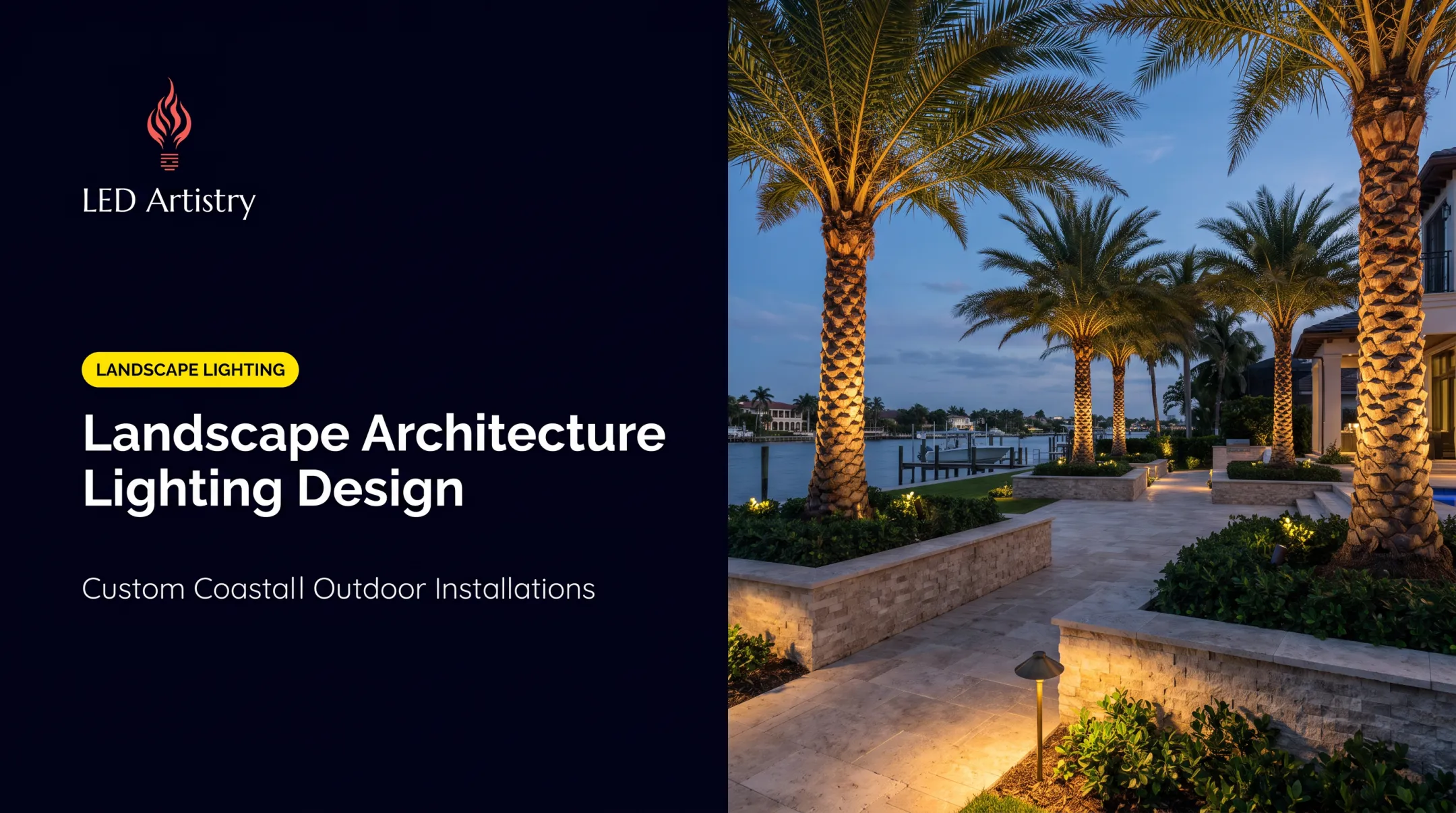
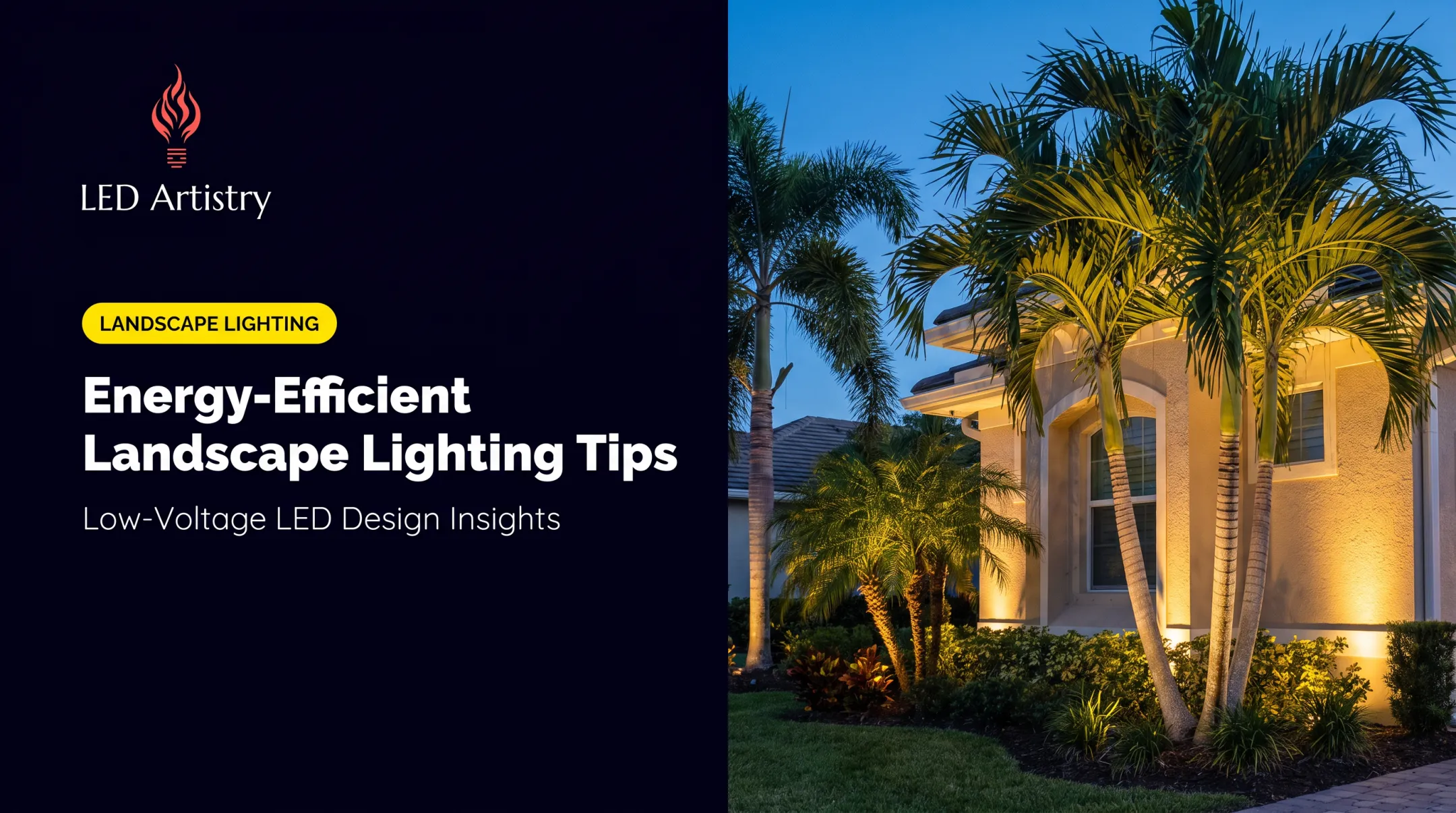
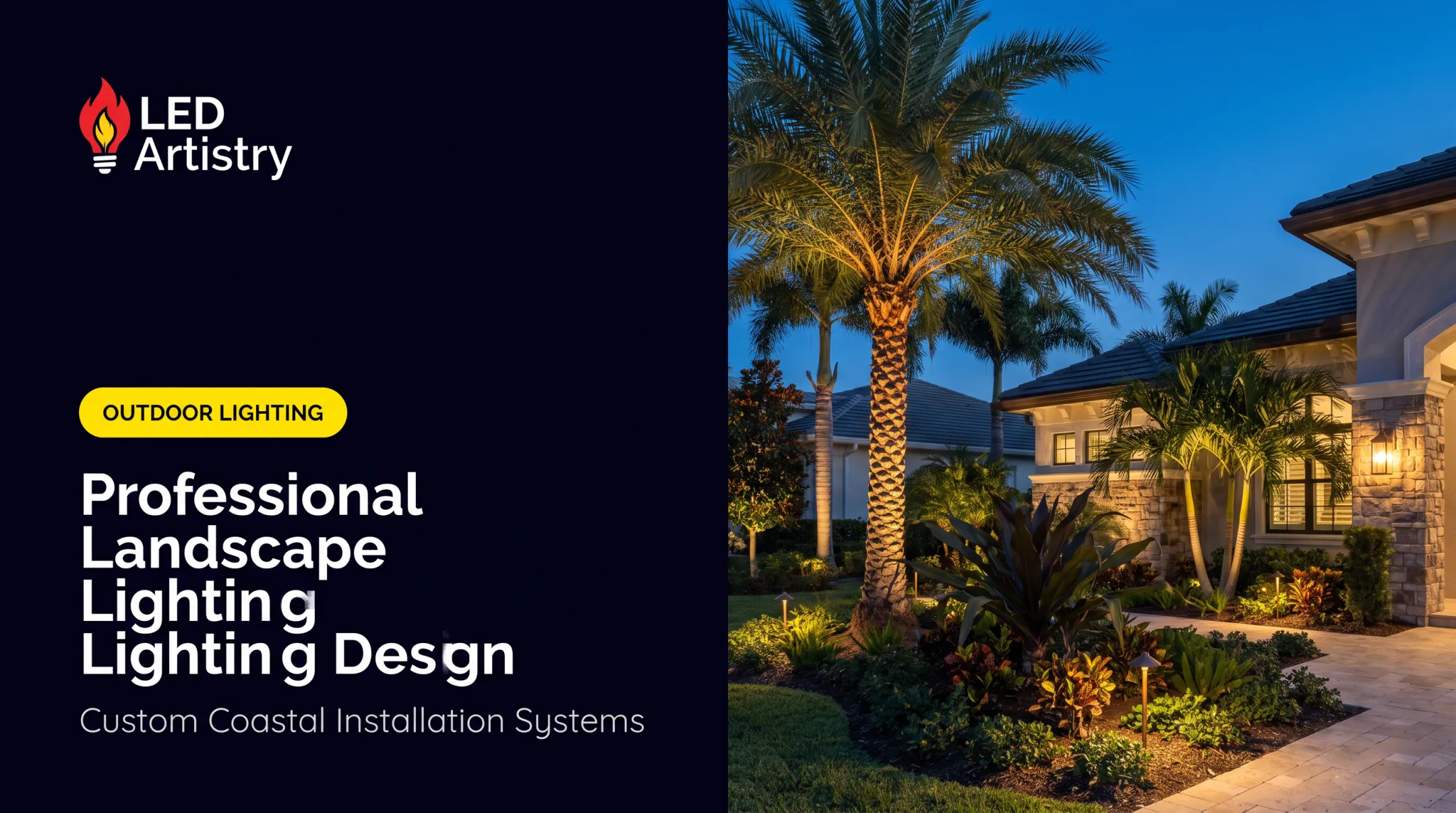
In Florida specifically, Sabal, Royal, and Sylvester palms uplight beautifully thanks to their vertical trunks and crown silhouettes. Mature live oaks work well too, since their heavy limbs and broad canopies give designers room to layer light from multiple angles.

Choosing the Right Fixtures and Beam Angle for Your Tree
Matching Fixture Type to Tree
Not every fixture works for every tree. Match the fixture to the tree's shape and how you want it to read at night:
- Narrow spotlights — best for trunk detail on palms and columnar trees; emphasize bark texture and shadow
- Well lights — flush-mounted in open lawn or walkable areas for a clean daytime look and upward wash on the canopy
- Flood fixtures — cover wide canopies like mature live oaks in one even wash
Beam Angle and Lumens by Tree Size
Kichler's own guidance uses 10-degree beams for narrow highlighting, a 35-degree angle as a general starting point, and 60-degree beams for wide subjects like conifers with broad canopies. Beam diameter grows with distance, so angle and fixture placement always work together.
As a rough starting point for design:
| Tree size | Beam angle | Typical lumens |
|---|---|---|
| Small ornamental (10-15 ft) | ~40° wide | ~200 |
| Medium canopy (20-30 ft) | ~35° medium | ~400 |
| Large estate tree (40+ ft) | ~15° narrow | 600+ |
These numbers are starting points, not fixed rules. Final output depends on canopy density, obstructions, and how the tree is viewed from the house or street.
Getting those lumen targets to hold all night is why fixture type matters as much as beam angle. Low-voltage LED fixtures typically produce 150-500+ lumens with steady output until dawn, while solar stakes often manage only 1-30 lumens and fade as the battery drains. That gap shows up fast when you are lighting a 40-foot oak, not marking a garden path.

LED Artistry's free nighttime demonstration lets homeowners compare beam angle, brightness, and fixture placement on their own tree before approving a design.
How Many Lights and Where to Place Them
Fixture placement makes or breaks the effect. As a general rule, LED Artistry positions uplights 12 to 24 inches from the trunk, adjusting for the tree's girth and root structure.
How many lights does a 7-foot tree need? Usually just one accent fixture. Small and medium trees under 12 feet typically look best with a single, well-aimed light rather than multiple fixtures competing for the same canopy.
Scale fixture count to the tree:
- Small trees: One 35-degree accent fixture, grazing the trunk into the canopy
- Medium trees: Two 35-degree accents instead of one wide 60-degree light, so more light reaches the canopy
- Large trees (60+ ft): One narrow fixture at the base, two to three wider accents away from the trunk, plus one or two fixtures higher in the canopy
Aiming Angle and Viewer Position
Aim fixtures toward the first branch split at roughly 45-60 degrees, not straight up the trunk. Straight-up aiming creates a flat, tunnel-like beam with no dimension.
Position fixtures slightly off-center, near the 4 and 8 o'clock positions relative to the trunk. This avoids glare from common viewing angles and keeps hardware out of sight during the day.

Top vs. Bottom: When to Combine Techniques
Uplighting alone can leave a tree feeling bottom-heavy, with all the drama at ground level and nothing happening above. That's when moonlighting (or downlighting) earns its place.
Moonlighting mounts fixtures 20-30 feet high in the tree and aims them down through the branches, casting soft, dappled shadows on the ground. Combine uplighting and moonlighting when:
- The canopy is dense enough to cast interesting shadow patterns
- The space below (patio, lawn, seating area) needs functional light too
- You want a full 360-degree lit effect rather than a single dramatic beam
Common Tree Uplighting Mistakes to Avoid
Even well-intentioned DIY installs run into the same handful of problems.
- Overlighting. A tree lit too brightly for its size overwhelms the rest of the yard. Kichler notes that contrast between light and shadow creates depth, not maximum brightness.
- Fixtures placed too close to the trunk. Harsh hot spots form at the base while the canopy fades into darkness. Start 12 to 24 inches from the trunk for most trees.
- Mixing color temperatures. Running 2700K on one tree and 4000K on another looks disjointed. Stick with 2700K to 3000K across the property.
Installation and Maintenance Basics
A clean install starts with the right transformer. Technicians calculate total fixture wattage and select a transformer with enough capacity, leaving a 20% buffer for future additions.
Standard process includes:
- Running direct-burial cable in trenches roughly 6-8 inches deep, keeping wiring protected from lawn equipment and root growth.
- Testing each fixture individually before backfilling trenches.
- Checking voltage at each fixture with a digital multimeter (aim for readings around 10.5-12 volts).
- Conducting a final nighttime walkthrough to fine-tune aiming, beam spread, and glare.

Maintenance matters more in Florida than most places. Salt air, humidity, and irrigation systems accelerate wear on connectors and fixture finishes. Ongoing service should include:
- Cleaning lenses so output stays bright and even
- Checking seals and connections for corrosion
- Re-aiming fixtures as trees grow and canopies fill in
LED Artistry backs its installs with ongoing maintenance support and 20-year warranty coverage, so re-aiming and corrosion checks happen on a schedule rather than after something fails.
Frequently Asked Questions
What is the purpose of tree uplighting?
Tree uplighting creates a nighttime focal point by highlighting bark texture, branch structure, and canopy shape. It also adds depth to a landscape design and improves both curb appeal and after-dark security.
What is the best type of uplighting for outdoor trees?
Low-voltage LED spotlights and well lights are the best choice. They deliver consistent brightness, precise beam control, and far better durability than solar alternatives.
What are the best outdoor LED uplights for trees?
Look for corrosion-resistant metal housings (brass or copper), sealed IP67 construction, adjustable beam angles, and warm white color temperature (2700K–3000K) for natural-looking results.
Are outdoor solar uplights good for trees?
Solar can handle small decorative accents, but it lacks the brightness and beam control needed for serious tree uplighting. Output typically fades within a few hours as the battery drains.
How many lumens do you need to uplight a tree?
As a starting point: around 200 lumens for small ornamental trees, 400 lumens for medium canopy trees, and 600+ lumens for large estate trees over 40 feet.
Is it better to put lights on a tree from the top or bottom?
Bottom-mounted uplighting creates dramatic focal points and reveals trunk texture. Top-mounted downlighting (moonlighting) produces a softer, natural glow. Many mature trees benefit from combining both.