
That single-fixture approach leaves prep counters overlit while the dining table sits in shadow. Homeowners renovating outdoor spaces know lighting matters. Houzz's 2026 Outdoor Trends Study found that 66% of renovated lounge areas included outdoor lighting as part of the plan, not an afterthought.
This guide covers the three lighting layers your outdoor kitchen needs, specific fixture ideas for Florida's climate, and how a nighttime demo can help you see the design before committing to it.
Key Takeaways
- Layer task, ambient, and accent light—one overhead fixture leaves prep zones dark and dining flat
- Warm white (2700K–3000K) flatters food and skin; reserve cooler light for task zones only
- Florida's humidity and salt air demand marine-grade, low-voltage LED systems
- A nighttime demo before install lets you judge levels and shadows before you commit
Why Layered Lighting Matters for Tampa Bay Outdoor Kitchens
Florida's outdoor-living culture means kitchens get used most after dark, when the heat breaks and the mosquitoes (mostly) settle down. Lighting is what determines whether that evening window actually gets used. A single floodlight rarely does the job. Layered lighting covers three roles:
- Task — focused light on grills, counters, and prep zones
- Ambient — softer glow for dining and conversation
- Accent — highlights on texture, plants, or architecture Beyond usability, Tampa Bay adds a durability demand. Humidity, salt air, and sudden summer storms accelerate corrosion on standard fixtures. Marine research has shown that dew condensation reactivates salt deposits on metal surfaces rather than washing them away. A fixture built for Ohio winters won't hold up on a screened lanai three miles from the bay. Resale is a secondary upside, with a fair caveat. Zillow's 2024 analysis of nearly 1 million home listings found that homes mentioning an outdoor kitchen sold for 1.7% more than expected. That's an association between listing language and price, not proof that lighting alone drove the premium. Still, a well-lit, well-designed outdoor kitchen photographs better, shows better at night, and functions better for the people living there daily.

The Three Lighting Layers Every Outdoor Kitchen Needs
Task Lighting: Illuminating the Cooking Zone
Task lighting exists for one reason: so you can see what you're cutting, grilling, or plating without squinting or guessing.
- Under-cabinet LED strips along counter edges eliminate shadows on cutting boards
- Downlights over the grill keep flare-ups and doneness visible without glare in your eyes
- IP65 minimum (IP67 preferred near grade or sprinklers) for weather-exposed fixtures
- 3000K–4000K color temperature for clarity without washing out food color
Ambient Lighting: Setting the Evening Mood
Once the cooking's done, task lighting should step back and ambient lighting should take over.
Common ambient approaches include:
- String lights across a pergola
- Pendants over bar seating
- Integrated pergola lighting for an even, soft glow
Keep this layer at 2700K, the warm end of the spectrum that flatters skin tones and glassware. It’s also what invites people to linger instead of eating and leaving.
Accent Lighting: Adding Depth and Polish
This is the layer most homeowners skip, and it's the one that separates a functional kitchen from a finished one.
- Toe-kick or base lighting under grill islands creates a "floating" effect
- Uplighting on palms or landscaping surrounding the patio ties the kitchen into the yard
- Path lighting connects the cooking zone to the pool, dock, or house entry
Without accent lighting, an outdoor kitchen can look flat once the sun goes down, even with good task and ambient coverage in place.

7 Outdoor Kitchen Lighting Ideas for Florida Backyards
Florida outdoor kitchens work harder after dark when light is layered for cooking, gathering, and safe movement around the pool and lanai.
- Under-counter and toe-kick LED tape on grill islands, with IP67-rated protection, creates a floating-island look while defining walk paths after dark.
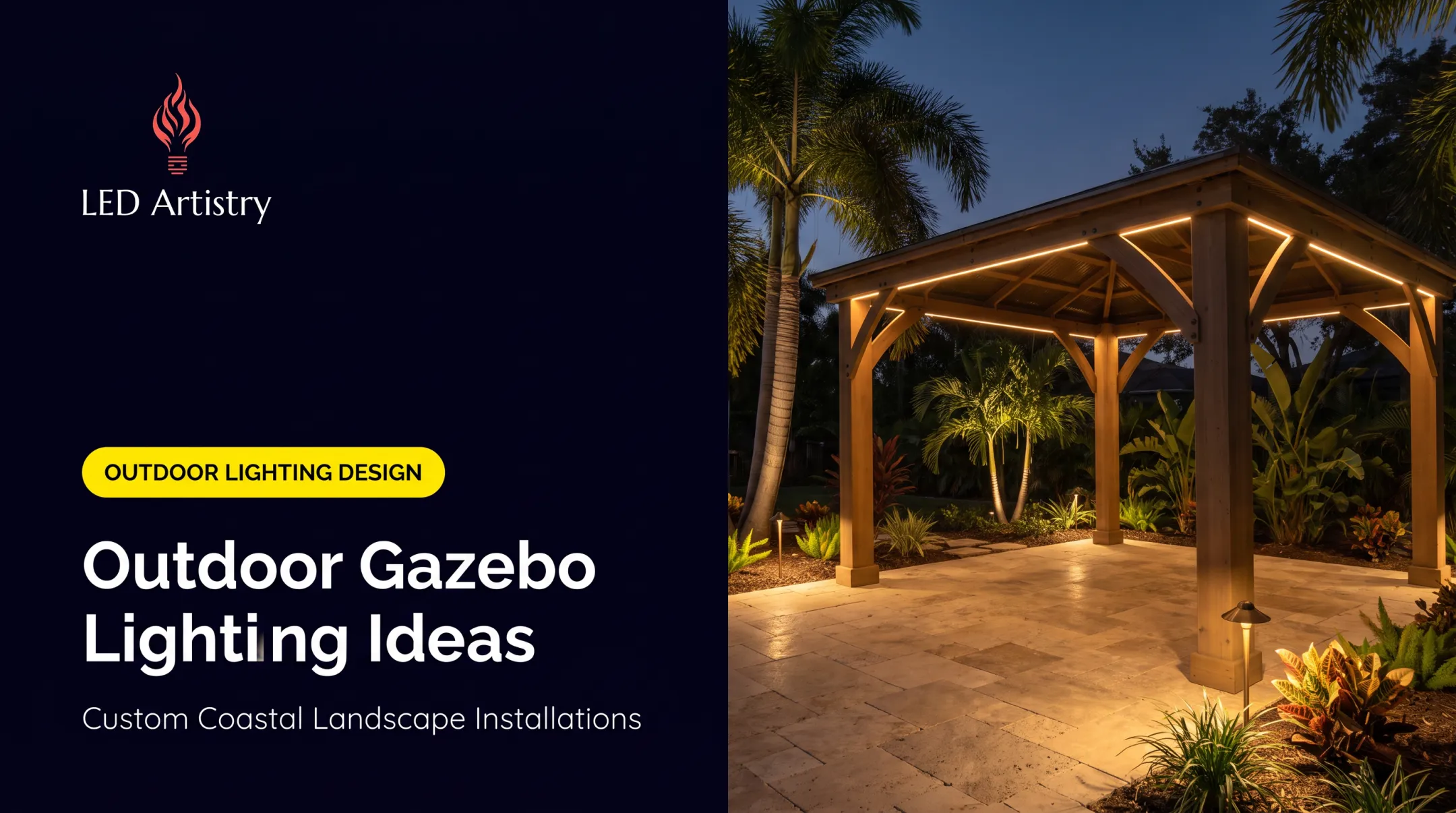
- Pergola or cove lighting with tunable white lets you switch between bright task light while cooking and a relaxed 2700K glow for dinner.
- Pendant or lantern lighting over bar seating, sized to match counter length, uses marine-grade brass or copper fixtures that won't corrode in coastal air.
- Open shelf and cabinet accent lighting helps you find glassware and grilling tools without a flashlight.
- Deck rail or dock-adjacent lighting on waterfront properties relies on coastal-rated fixtures built for salt spray.
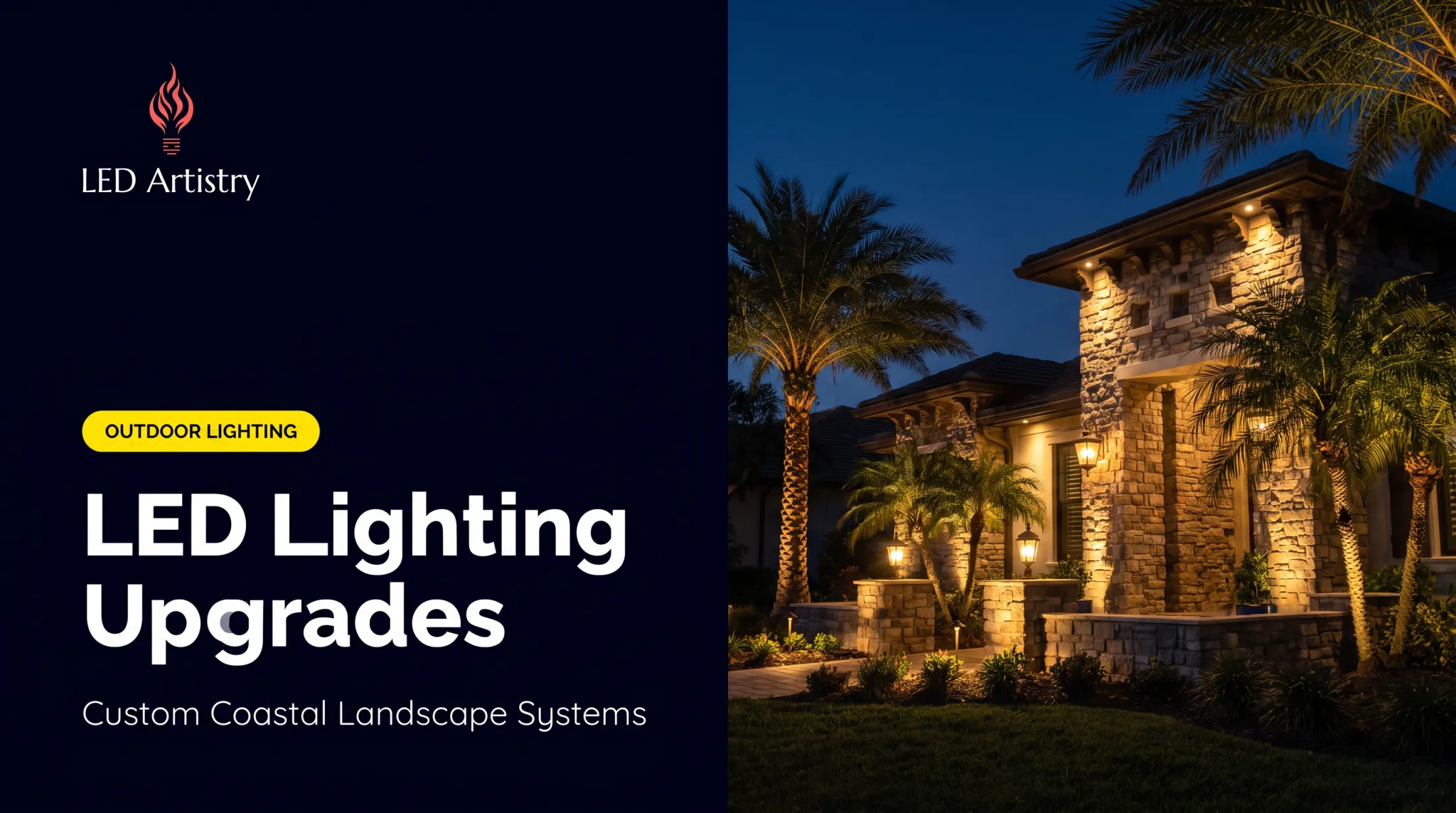
- Landscape uplighting on palms and pool cage structures around the kitchen ties the whole backyard into one nighttime look.
- Path and step lighting from the kitchen to the pool or house entry supports safety as much as style.
Choosing the Right Fixtures for Florida's Climate
Not all "outdoor rated" fixtures are built the same, and in coastal Florida, that distinction matters more than most homeowners realize.
IP ratings:
| Rating | Protects Against | Best Use |
|---|---|---|
| IP65 | Dust and water jets | Wall-mounted, covered fixtures |
| IP67 | Dust plus temporary submersion | Ground-level, near irrigation, low-lying areas |
Neither rating protects against salt corrosion or grease buildup on its own. Material selection matters just as much as the IP number, especially around an outdoor kitchen:
- Solid brass and copper resist rust and develop a protective patina over time
- Powder-coated aluminum and plastic housings peel, fade, and turn brittle faster under Florida sun and salt

Low-voltage LED systems are the safer, more efficient choice around pools, grills, and water features. ENERGY STAR notes LEDs use roughly 90% less energy than traditional bulbs and last far longer, though real-world lifespan still depends on enclosure quality and salt exposure.
At LED Artistry, we build systems specifically for Florida's heat, humidity, and coastal salt using marine-grade brass and copper, with select fixtures rated IP67. Our installations are backed by a 20-year warranty.
Planning Your Layout: See It Before You Commit
Before any wire goes in the ground, divide your outdoor kitchen into three zones:
- Cooking zone — task lighting, brightest during prep
- Bar and dining zone — ambient lighting, dimmable for evening meals
- Perimeter — accent lighting tying the space to the rest of the yard
Wiring these as independently controllable zones means you can run full brightness while grilling and dim everything down once dinner's served. Low-voltage systems typically run at 12V, with transformers loaded to about 80% capacity to leave headroom for future fixtures.

Planning ahead is easiest before construction starts, but retrofits on existing outdoor kitchens are common. Low-voltage LED systems don't require tearing up finished patios or countertops in most cases.
Seeing fixtures in place at night removes the guesswork. LED Artistry offers a complimentary nighttime demonstration. Our team brings temporary, battery-powered fixtures to your property after dark and places them where the permanent lights would go.
You watch the beam spread, adjust brightness, compare 2700K against 3000K, and even move a spotlight a few inches to kill glare, all before a single permanent wire is installed.
Frequently Asked Questions
What is the best type of lighting for outdoor use?
Low-voltage, IP65+ rated LED lighting is best for Florida outdoor kitchens. It resists humidity and rain damage while using far less energy than standard line-voltage fixtures.
What are some good lighting ideas for an outdoor kitchen?
Top picks include under-cabinet task lighting, pendant lights over the bar, toe-kick accents on the island, and landscape uplighting that ties the whole space together.
What is the best type of under-cabinet lighting for an outdoor kitchen?
Waterproof LED strip lighting in the 3000K-4000K range, mounted along the underside of cabinets or counters, gives shadow-free visibility for food prep.
Do outdoor kitchen lights need to be waterproof?
Yes. In Florida, all fixtures should carry at minimum an IP65 rating due to rain, humidity, and coastal salt exposure. IP67 is better for ground-level or splash-prone spots.
Can I add lighting to an existing outdoor kitchen?
Yes. Low-voltage LED retrofits are common and generally don't require major rewiring or demolition. A free on-site nighttime demo can show exactly how new lighting will look before you commit to installation.