
That extra runtime creates real pain points. Many Tampa Bay homeowners deal with:
- Electric bills that creep up every month
- Halogen bulbs burning out every few months
- Aluminum fixtures corroding into white powder within two years
This guide breaks down the technology, design strategy, and materials that keep outdoor lighting beautiful and efficient in Florida's coastal climate, including how LED Artistry approaches these systems for homeowners across Tampa Bay.
Key Takeaways
- Low-voltage LED systems replace power-hungry 120V halogen with far lower draw
- Astronomical timers and sensors shut lights off during daylight hours
- LEDs cut energy use by up to 90% versus halogen at matched brightness
- Smart fixture placement cuts fixture count instead of raising wattage
- Marine-grade brass and copper outlast cheap aluminum in Florida salt air
What Makes Landscape Lighting "Energy-Efficient"?
Low-Voltage Systems Start With the Transformer
Efficient landscape lighting starts with a transformer that steps standard 120V household power down to 12V. Lower voltage means less power draw, safer outdoor operation, and precise control over brightness across a property.
Longer wire runs lose voltage along the way, though. Professional installers manage this with multi-tap transformers (offering outputs from 12V to 15V), heavier-gauge wire on distant runs, and hub or loop wiring layouts. The target: keep every fixture between 10.5V and 12V for consistent color and brightness.
LEDs Beat Halogen on Every Metric That Matters
U.S. Department of Energy lumen-matched comparisons show LEDs use 75% to 90% less energy than traditional incandescent bulbs at the same brightness. ENERGY STAR reports LEDs use up to 90% less energy and last up to 15 times longer than conventional lighting, including halogen.
Swap a 50-watt halogen fixture for a comparable 5-watt LED and you can cut that fixture’s consumption by about 90%.

Shop Lumens Per Watt, Not Wattage Alone
Those savings only stick if you compare fixtures on light delivered, not watts on the label. Wattage tells you power consumed, not brightness. A fixture rated at 80 lumens per watt does far more work per dollar than one at 40 lm/W, even when both list similar wattage. Ask any installer for delivered lumens and efficacy—not just the number on the box.
Housing Material Determines Long-Term Efficiency
A fixture that corrodes stops being efficient the moment it fails. Common options include:
- Solid brass – resists rust, develops a protective patina over time
- Copper – similar corrosion resistance, ages to a natural patina
- Powder-coated or marine-grade aluminum – budget-friendlier but more vulnerable in salt air
- Standard aluminum – prone to pitting and flaking within 18-24 months near the coast
LED Artistry specifies marine-grade brass and copper fixtures with IP67-rated housings—dust-tight and able to handle temporary water immersion—so coastal systems keep performing after a Tampa Bay downpour.

Smart Controls: Timers, Sensors, and Automation
Photocells and Astronomical Timers Cut Daytime Waste
Basic photocells switch lights on at dusk and off at dawn using ambient light detection. Astronomical timers go a step further, using GPS coordinates and calendar data to track actual sunrise and sunset times for that specific property.
Florida's sunset shifts from roughly 5:30 p.m. in December to 8:15 p.m. in June. An astronomical timer adjusts automatically through those seasonal swings, so nobody has to reset a schedule every few months.
Motion Sensors Add Security Without Constant Runtime
Driveways, side yards, and gates benefit from motion-triggered lighting. Lights stay off until movement is detected, then activate at full brightness. A DOE field study on occupancy-sensor installations found additional energy savings ranging from nearly zero to 76%, depending heavily on site conditions and traffic patterns.
LEDs already sip power compared to halogen, but running fixtures 24/7 still burns unnecessary electricity. Turning lights off when nobody needs them—through timers or sensors—always beats leaving anything on continuously.
App-Based and Smart-Home Integration
Modern low-voltage systems integrate with Control4, Lutron, Crestron, Alexa, and Google Home. Homeowners can dim, schedule, or zone lighting from a phone. That control pays off in layered scenes, not just on/off:
- Pool area at 100% brightness for safety
- Surrounding palms dimmed to 20%
- Dining patio at 30% for evening ambiance

LED Artistry builds astronomical timers and zone dimming into every custom system at installation, so the automation isn't an afterthought bolted on later.
Designing a Lighting Layout That Minimizes Energy Waste
Layer Your Lighting Instead of Flooding It
Three layers work together without over-lighting a property:
- Ambient – soft wall washing or downlighting from trees, using warm 2700K-3000K light for a moonlight-like glow
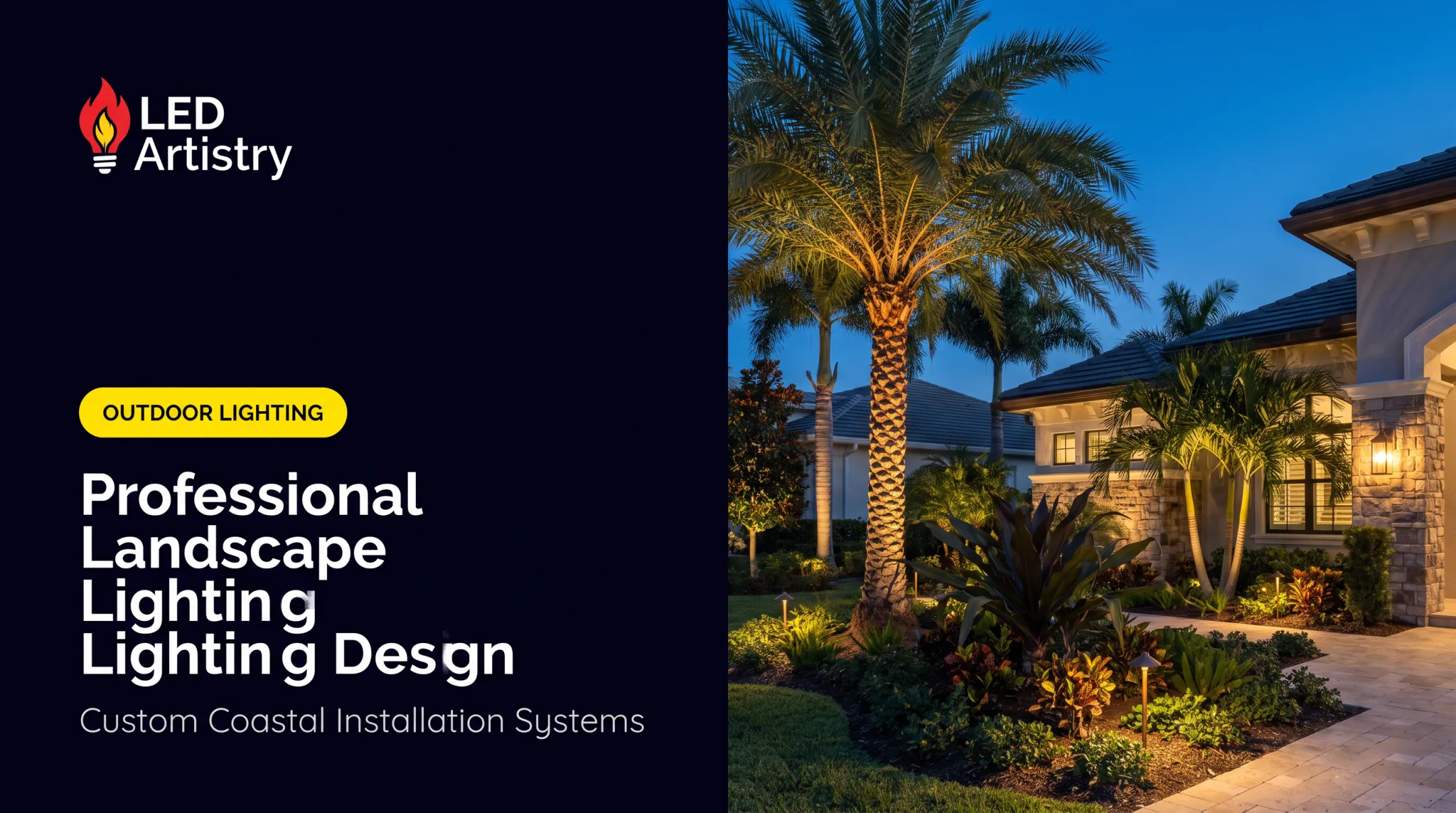
- Task – staggered, shielded fixtures along pathways, steps, and entries to guide movement safely
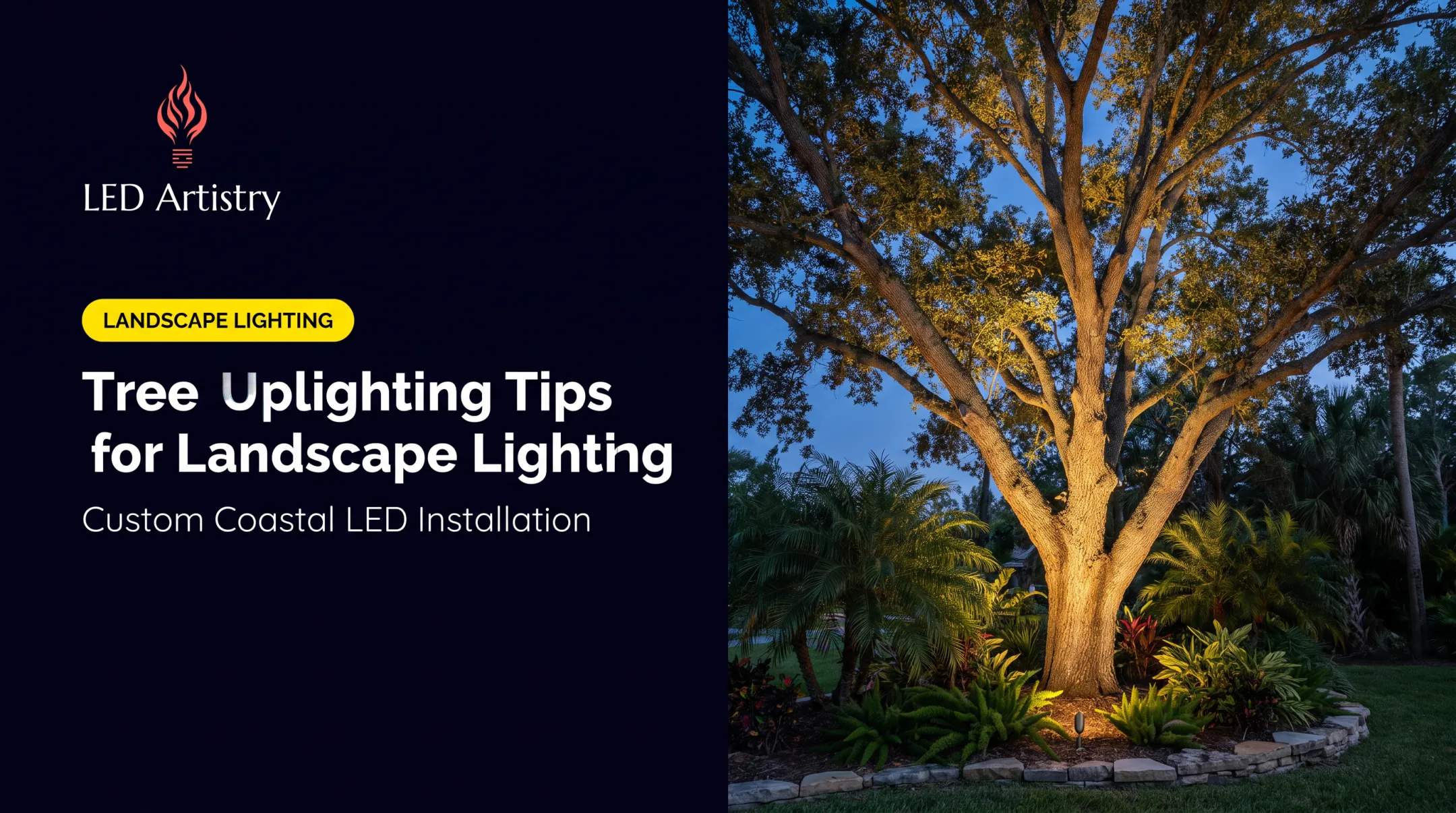
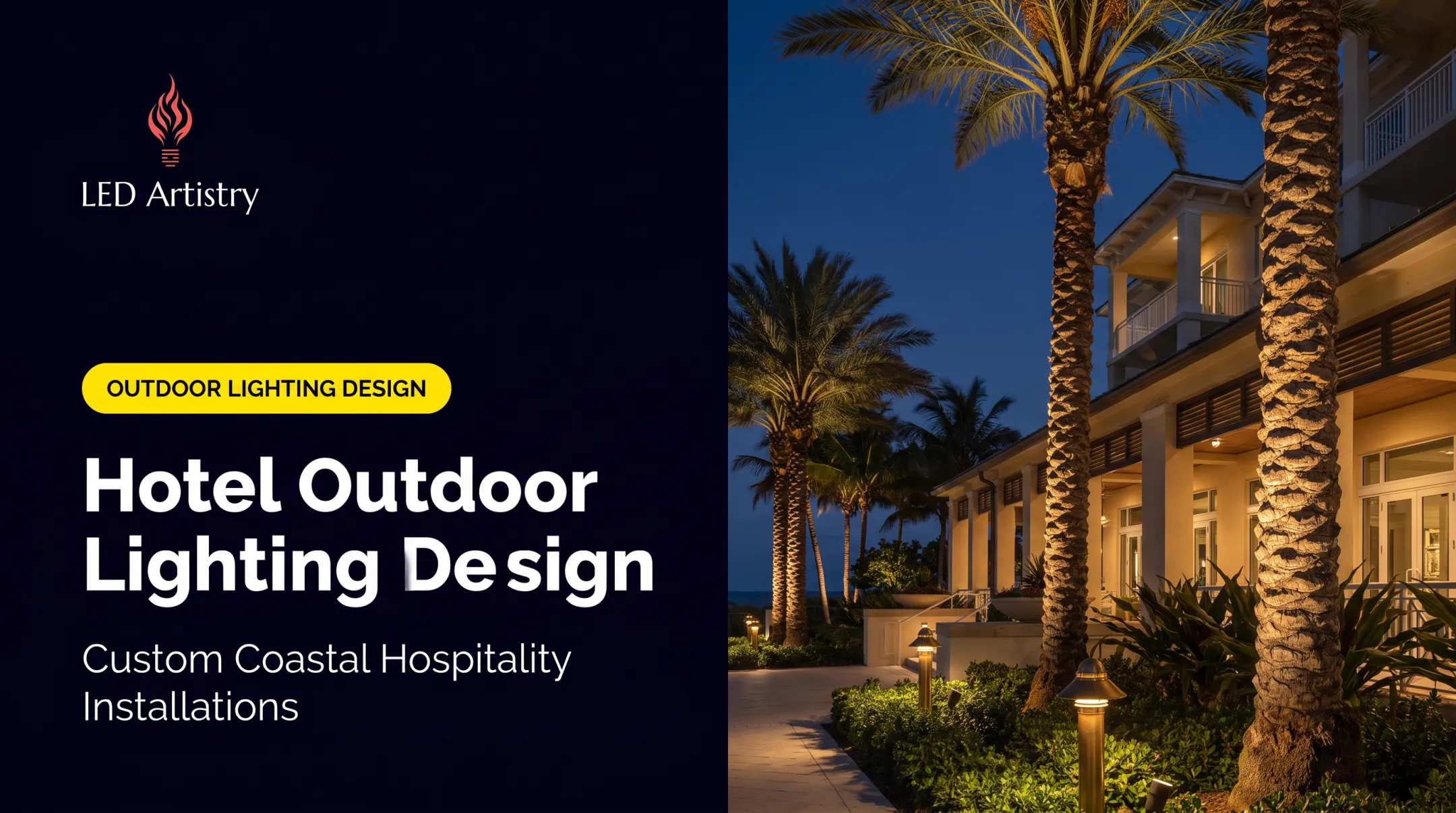
- Accent – uplighting or silhouetting on palms, architecture, or water features to highlight specific focal points
Layering means each fixture has a job. That's different from adding fixtures until everything looks bright.
Fewer, Well-Aimed Fixtures Beat More Fixtures
A well-placed 6-watt fixture aimed correctly often replaces two or three poorly aimed ones. You cut total wattage and get a cleaner look on architecture, pools, docks, and outdoor living spaces common across Tampa Bay properties.

Test Before You Commit
LED Artistry's free nighttime demonstration sets up temporary, full-scale fixtures at a property around dusk. Homeowners see actual beam angles, brightness, and shadow effects in real time, then adjust before anything is installed permanently.
That step prevents the common mistake of designing on paper or in a rendering, then discovering the system is over-built once it's live. It's far cheaper to pull a fixture from a demo setup than to rewire a permanent installation later.
Most Energy-Efficient Landscape Lighting Options Available Today
| Fixture Type | Best For | Efficiency Notes |
|---|---|---|
| LED path lights | Walkways, driveways | Roughly 80 lm/W in published examples |
| LED spotlights/uplights | Trees, architecture | Precise beam control minimizes wasted light |
| LED well lights | Flush-mounted accent lighting | 41-77 lm/W depending on configuration |
| Solar accent lights | Supplemental garden accents | No wiring, but inconsistent output |
Low-voltage LED fixtures paired with smart controls are the most efficient overall option.
They use far less power than older halogen landscape lighting and put light only where the beam is aimed. Astronomical timers, photocells, and zone dimming trim runtime and output so empty yards are not lit at full brightness all night.
What makes low-voltage LED the efficiency leader:
- Draws a fraction of the energy of traditional halogen fixtures
- Controls beam spread so less light is wasted upward or off-target
- Pairs with timers and dimming zones that match real use patterns
- Holds brightness longer, which means fewer replacements over time
Solar lights still work for small, no-wiring garden accents when the spot gets strong sun. Output drops on cloudy stretches and shorter winter days, so they are a weak choice for security paths or steady architectural lighting.
Long-Term Savings and Maintenance Benefits
LED lifespan dwarfs halogen. Halogen bulbs rated around 2,000 hours can fail in under six months when voltage runs high. Marine-grade LEDs are rated for up to 50,000 hours of use.
Beyond replacement frequency, LEDs run cooler. ENERGY STAR notes that incandescent and halogen sources release roughly 90% of their energy as heat, while LEDs produce very little heat by comparison. Less heat means less thermal stress on housings, seals, and drivers over time.
LED Artistry backs installed systems with a 20-year warranty and an annual 10-point inspection. That visit typically covers:
- Lens cleaning
- Voltage testing at every fixture
- Connection checks
- Re-aiming after seasonal growth or storms
Ongoing maintenance protects day-one efficiency gains so corrosion and fixture drift do not quietly erase them.
Common Mistakes That Waste Energy
A few common missteps can wipe out the efficiency gains of LED landscape lighting:
- Over-lighting – adding fixtures until a yard looks "bright enough" instead of designing with intention—more wattage, little visual gain
- Skipping timers and sensors – leaving lights running through daylight hours, wasting energy for no visual benefit
- Cheap, non-weather-rated fixtures – standard aluminum can corrode within 18 months near the coast, and weak housings can erase LED savings through thermal stress in about 14 months
LED Artistry has seen homeowners replace budget systems as many as three times, spending more in the long run than a single durable, marine-grade installation would have cost upfront.
Frequently Asked Questions
Is it cheaper to leave LED lights on or turn them off?
Turning LEDs off when you don’t need them still costs less over time, even though they draw little power while on. Timers and sensors—especially automated schedules—are the most cost-effective approach.
What are the most energy-efficient landscape lighting options?
Low-voltage LED fixtures paired with smart controls—photocells or astronomical timers—deliver strong brightness at minimal power draw and hold up well outdoors.
How much can I save by switching to LED landscape lighting?
LED fixtures typically use 81% to 90% less input wattage than halogen or incandescent at matched brightness, based on DOE benchmark comparisons.
How long do energy-efficient LED landscape lights last?
Quality LEDs in marine-grade fixtures are often rated up to 50,000 hours. In Florida, humidity and salt air still shorten system life if housings aren’t corrosion-resistant—regardless of the diode rating.
Do solar landscape lights work well in Florida?
Solar can supplement accent lighting in sunny spots, but it's less reliable for consistent brightness or security than wired low-voltage LED, especially during cloudy stretches or shorter winter days.
Can I retrofit my existing landscape lighting to be more energy-efficient?
Many low-voltage systems can be upgraded with LED bulbs, smart transformers, and controls. A professional evaluation, such as LED Artistry's free nighttime demo, helps determine what's reusable before retrofitting.