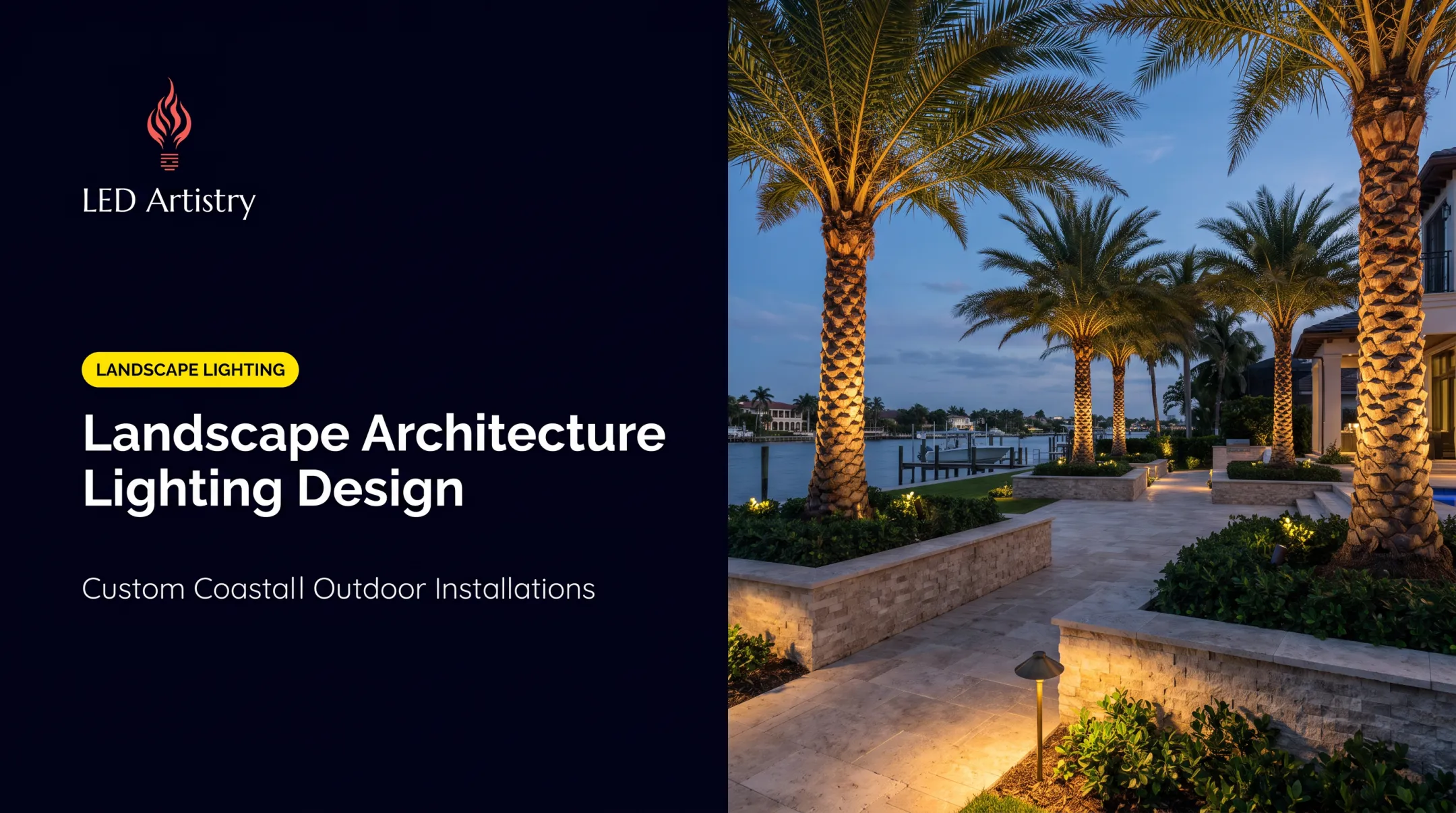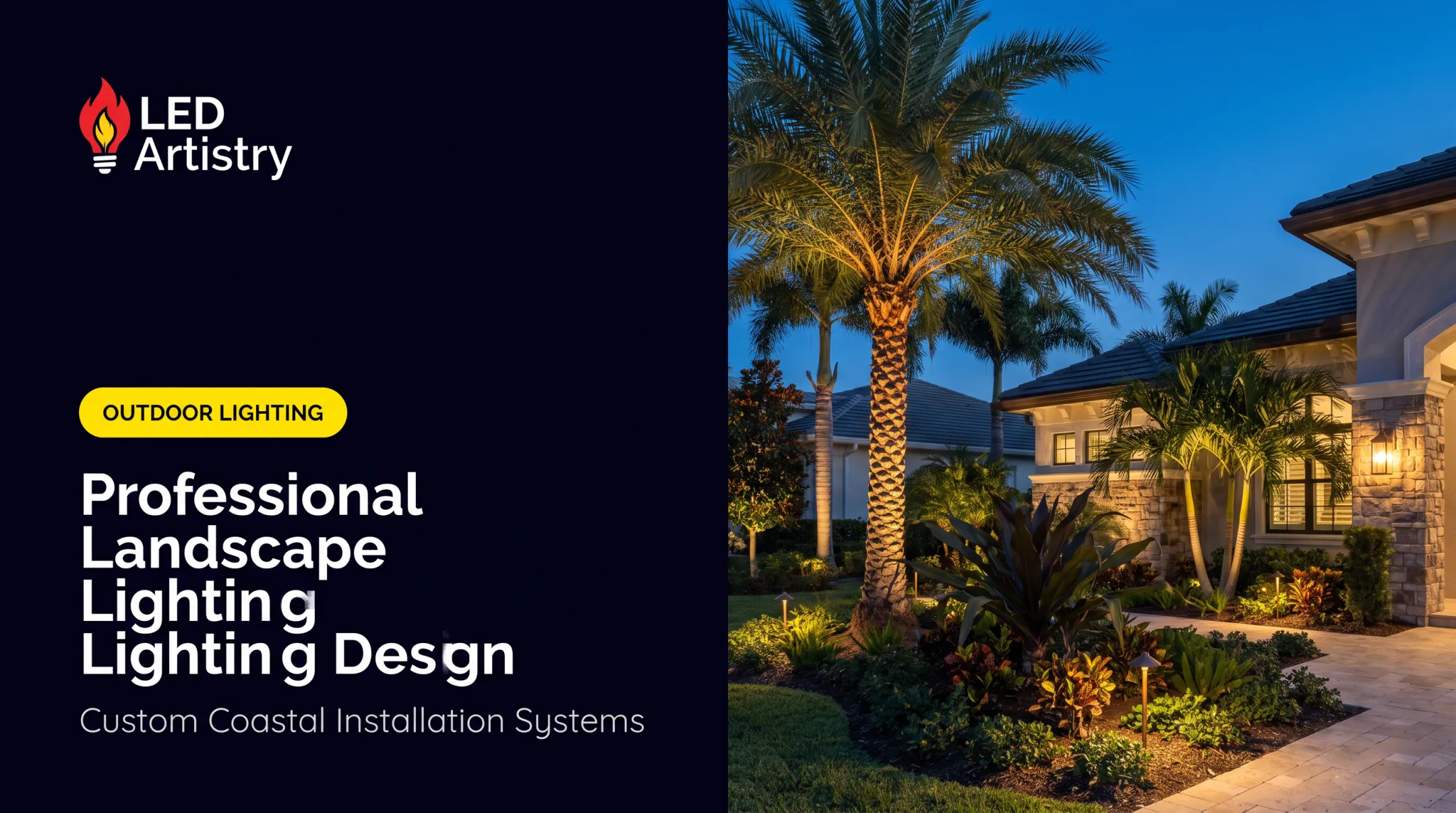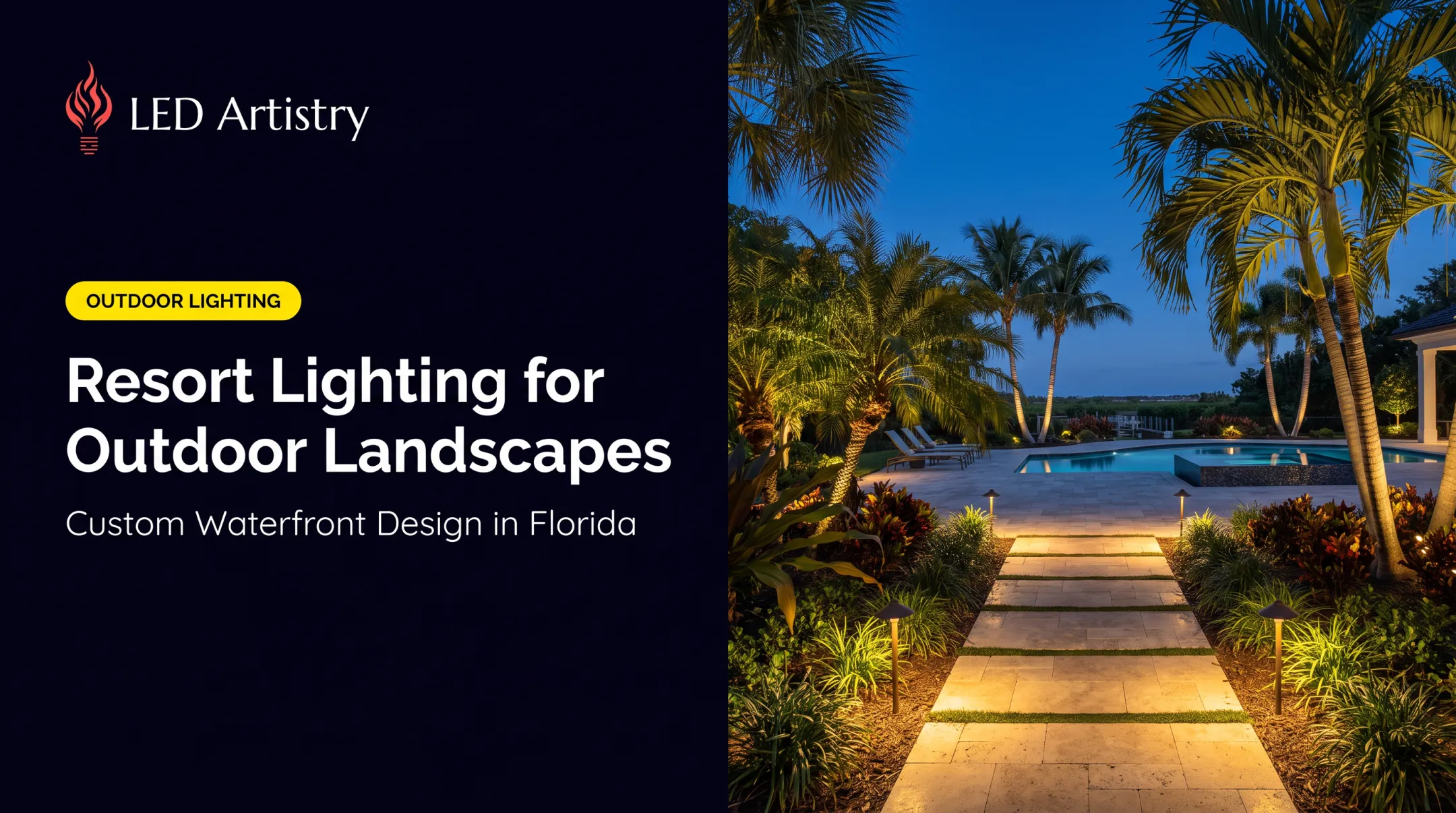

Many homeowners still default to big-box floodlights or solar stakes from the local hardware store. The problem? Florida's heat, humidity, and salt air chew through cheap fixtures fast. Solar lights fade within a season, and plastic housings crack under UV exposure.
This guide covers what's actually working in 2026: the trends, the fixture types, how to lay out a system properly, and ideas for gardens, pools, docks, and outdoor living spaces.
Key Takeaways
- Layer path, accent, and ambient light for the most functional, dynamic garden design
- Warm, low-glare LEDs beat harsh floodlights and dated fixtures as the 2026 standard
- Low-voltage, marine-grade systems last longest in Florida’s coastal climate
- A nighttime demo shows real placement before you commit to anything permanent
What Are the Trends for Outdoor Lighting in 2026?
Outdoor lighting in 2026 favors warmer tones, quieter hardware, and controls you can run from a phone. These are the shifts shaping residential landscape designs right now.
Warm, Tunable Light Replaces Cool White
Cool white and multicolor lighting are on the way out. Newer fixtures use tunable white from 2700K to 6500K, so you can dial in a warm, inviting glow instead of the stark blue-white tone that dominated a decade ago.
Selectable 2700K or 3000K settings with adjustable beam spreads from 15 to 60 degrees are now common on landscape lines from makers such as Kichler and WAC.

Smart, App-Controlled Systems
Homeowners increasingly expect onboard dimming plus app control for scheduling, zones, and light levels. Systems like FX Luminaire's Luxor support zoning and scene-building from a phone, so you can dim the patio for dinner while keeping perimeter lights on for security.
Hidden Fixtures Over Visible Lanterns
The industry is moving away from bulky, noticeable hardware toward compact fixtures that disappear into the landscape. Instead of a lantern sitting on a post, expect small uplights tucked into mulch beds where the effect is visible, not the fixture.
Moonlighting for Natural Glow
Mount a fixture high in a tree and light filters through branches and leaves, much like real moonlight. The technique suits mature canopies that need a soft overhead glow without harsh glare from ground-level spots.
Energy Costs Are Pushing Efficiency
Florida residential electricity averaged 15.17 cents per kWh in May 2026, up from 14.97 cents the year before. With rates climbing, efficient LED systems help keep nightly operating costs manageable.
What Are Some Common Types of Outdoor Lighting?
Most outdoor garden lighting falls into a few practical categories. Each one handles a different job, from safe footing to focal points and broader coverage.
Path and Walkway Lighting
Low-profile path lights guide foot traffic along garden borders and walkways. Kichler recommends spacing fixtures 10-14 feet apart and using 85-150 lumens for residential paths, enough to define the route without turning your yard into a runway.
Accent and Spotlighting
Spotlights highlight trees, statues, or architectural features from below, adding depth after dark. A 10-15-degree beam works well for a tree trunk or column; wider trees call for a 35-degree flood.
Wash and Flood Lighting
Wash and flood lights provide broader illumination for driveways, security zones, and large garden beds. Wash lighting spreads light evenly across a surface with minimal hot spots, unlike a single harsh floodlight.
Deck, Step, and Post Cap Lighting
Integrated lighting on stairs, railings, and fence posts improves nighttime safety and gives elevation changes a finished look. This matters most on pool decks and docks where a missed step has real consequences.

Best Outdoor Garden Lighting Ideas for 2026
Here's where these trends translate into actual design choices homeowners are adopting this year:
- Custom low-voltage landscape lighting — layered LED systems sized to Florida plantings, paths, and architecture so every zone has a clear job after dark
- Moonlighting from mature trees — placing fixtures 20-30 feet up in live oaks and broad canopies for a soft, dappled glow across lawns and patios
- Uplighting palms, shrubs, and ornamental grasses — adds texture and depth once the sun goes down
- Pond, fountain, or water feature lighting — turns water into a nighttime focal point instead of a dark blur
- Waterfront, dock, and pool cage lighting — built with marine-grade brass, copper, or 316 stainless steel to withstand salt air and humidity
- Fire pit and seating area accent lighting — extends outdoor entertaining well past sunset
A nighttime walkthrough with temporary fixtures is still the clearest way to test these layers on your own property before anything is buried.
For coastal and waterfront homes, material choice is critical. Solid brass and copper form a protective patina instead of corroding like cheaper aluminum.
Fixtures rated IP67 stay dust-tight and moisture-resistant near pools, docks, and salt air.

How to Layout Landscape Lighting
How to Lay Out Landscape Lighting
Getting the layout right separates a garden that looks designed from one that looks like it has lights scattered on it. Start with the basics:
- Sketch the property first. Mark focal points, walkways, entry points, and mature trees before placing a single fixture.
- Layer your lighting. Combine path, accent, and ambient sources instead of asking one fixture type to do everything.
- Space fixtures to avoid hot spots. Clustering lights too close creates glare; too much distance leaves dark gaps.
- Angle spotlights thoughtfully. Aim accent fixtures for natural-looking highlights instead of flat, direct beams.
Voltage matters here too. A 12-gauge wire generally handles runs up to 100 feet with loads of 100 watts or less. Longer runs call for 10-gauge wire to avoid dimming at the far end of the circuit. That voltage drop is one reason DIY kits often disappoint: the far fixture ends up noticeably dimmer than the one closest to the transformer.

Outdated Lighting Fixtures to Avoid in 2026
These fixture styles and specs are falling out of favor in new garden installs:
- Bright white or blue-toned floodlights: Warm, soft tones flatter landscaping instead of washing it out
- Oversized, ornate lantern fixtures: Sleek, minimalist housings now dominate new installs
- Exposed wiring and single-purpose floods: Integrated low-voltage systems with buried, conduit-protected wiring look cleaner and last longer
Halogen is fading for the same reason. A typical 50-watt halogen bulb swaps for an LED at 5–7 watts—about an 85% cut in energy use—and the LED often runs 50,000+ hours versus roughly 2,000 for halogen.
Why Professional Design Matters
DIY kits and solar stakes can't account for how a property actually behaves at night. Professional designers assess plant growth, sightlines, shadow patterns, and how a layout will look five years from now, not just on installation day.
LED Artistry backs its installations with a 20-year warranty and ongoing maintenance support. That typically includes:
- Seasonal voltage checks
- Fixture realignment as trees grow
- Cleaning lens surfaces of hard-water deposits
Compare that to a bag of solar lights that needs replacing every season.
The free nighttime demo makes those design choices concrete. A designer visits your property near sunset, sets up temporary fixtures, and lets you compare beam angles and color temperatures like 2700K versus 3000K in real time. You adjust the plan before a single wire gets buried—no DIY guesswork required.
Frequently Asked Questions
What are the best lights for an outdoor garden?
Warm-white, low-voltage LED fixtures made from brass, copper, or marine-grade aluminum offer the best mix of durability and natural-looking ambiance, especially in Florida's humid climate.
What are good outdoor garden lighting ideas?
Standout options for 2026 include moonlighting from mature trees, path lighting along walkways, and accent uplighting on palms, statues, or architectural features.
What light fixtures are out of style?
Cool-white or blue-toned floodlights and oversized, ornate lantern fixtures are both losing favor to warmer tones and compact, minimalist designs.
How do I lay out landscape lighting?
Start by sketching your property and marking focal points and walkways. Then layer path, accent, and ambient lighting rather than relying on a single fixture type throughout.
What are some common types of outdoor lighting?
The main categories are path lighting, accent/spotlighting, wash/flood lighting, and deck, step, or post cap lighting—each aimed at safety, navigation, or visual focus.
What are the trends for outdoor lighting in 2026?
Expect warm, tunable LED color temperatures, smart app-based controls, hidden fixture designs, and moonlighting techniques for a natural, layered glow across gardens.