
Outdoor lighting has become one of the most impactful exterior upgrades homeowners can make. According to the National Association of Realtors, typical landscape lighting projects cost around $6,800, recovering about 59% of that investment at resale, with beauty and improved livability cited as the top motivations for homeowners nationally surveyed in 2023.
This guide breaks down the best driveway lighting ideas, how to choose fixtures wisely, and when to bring in a professional.
TL;DR
- Driveway lighting blends safety, security, and curb appeal in one upgrade
- Strong options include bollards, well lights, post lights, path lights, and motion sensors
- Choose fixtures based on lumens, spacing, and weatherproofing, not just brightness
- Drive-over fixtures need documented load ratings, not just an IP rating
- Professional low-voltage design solves glare and spacing issues that DIY kits often miss
Overview of Driveway Lighting in Modern Landscaping
Driveway lighting covers several fixture types:
- Path lights
- Bollards
- In-ground well lights
- Gate and post lights
- Uplighting for nearby trees or landscaping
In landscape and architectural lighting design, driveway fixtures serve double duty. They guide vehicles and pedestrians safely while reinforcing your home's architectural style after dark. A well-lit driveway also signals an occupied, cared-for property, a deterrent that matters as much as any security camera.
Below, we cover the six driveway lighting ideas homeowners request most often, along with placement guidance for each.
Top Driveway Lighting Ideas for Every Home
Before choosing fixtures, weigh four factors: visibility needs, style compatibility with your home, weather durability, and installation complexity. The ideas below cover the most common driveway layouts—and the lumen ranges and spacing that usually make them work.
Bollard Lights Along the Driveway Edge
Bollard lights are upright, post-style fixtures spaced along the driveway border. On longer, straight runs they create an even visual rhythm drivers can follow at night. They mark the edge clearly and read as permanent hardscape, not temporary stake lights—especially on modern or transitional homes. In coastal Florida, specify corrosion-resistant finishes so posts hold up to humidity and salt air.
| Best For | Placement Tips | Estimated Lumens Needed |
|---|---|---|
| Long, straight driveways; modern or transitional homes | Space 10-14 feet apart along one or both edges | 85-150 lumens per fixture |

In-Ground / Well Lights for a Sleek Look
Flush-mounted in-ground lights sit level with paver or concrete, so the driveway stays clean-looking by day with almost no visible hardware. Only use drive-over-rated fixtures in tire paths. Kichler's VLO in-ground accent, for example, offers selectable outputs and a static load rating up to 4,600 lb with IP67 protection. Skip decorative well lights under vehicles unless the load rating is documented.
| Best For | Placement Tips | Estimated Lumens Needed |
|---|---|---|
| Flat driveways, paver surfaces, tire-path crossings | Confirm drive-over rating before installing under vehicle paths | 350-850 lumens depending on beam angle and role |
Gate and Entrance Post Lighting
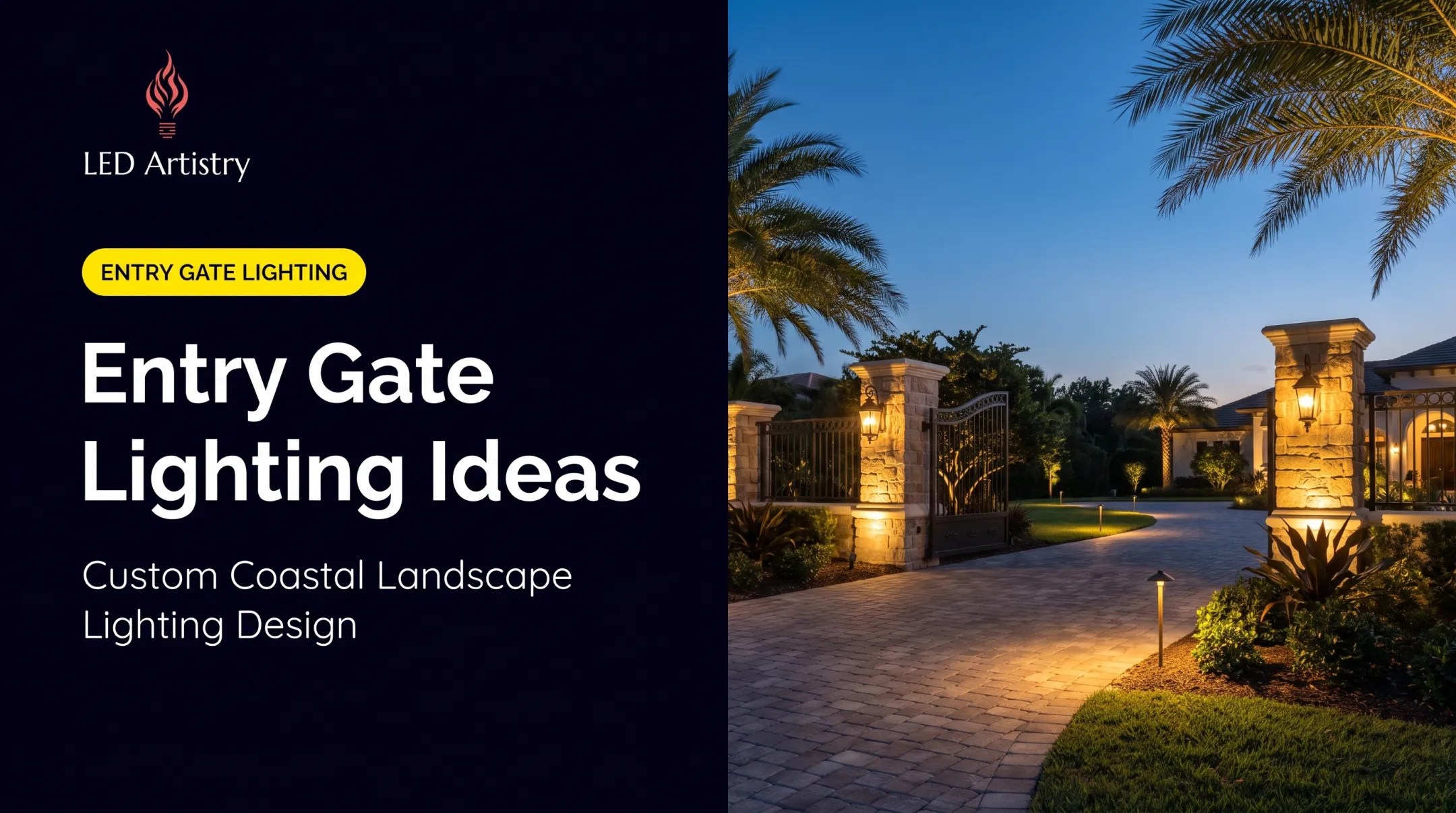
Gate and entrance post lights frame the arrival point and signal where the property begins. A modest fixture on a stucco pillar, stone gate, or mailbox post is often enough. Aim light at the latch, house numbers, and walking surface—not into oncoming drivers' eyes. You get clearer wayfinding and a quieter security presence at the entry.
| Best For | Placement Tips | Estimated Lumens Needed |
|---|---|---|
| Gated entries, mailbox posts, formal driveway entrances | Mount at post-cap height; aim to illuminate the latch and address, not oncoming drivers | ~150 lumens per fixture (3W LED example) |
Tree and Landscape Uplighting Near the Driveway
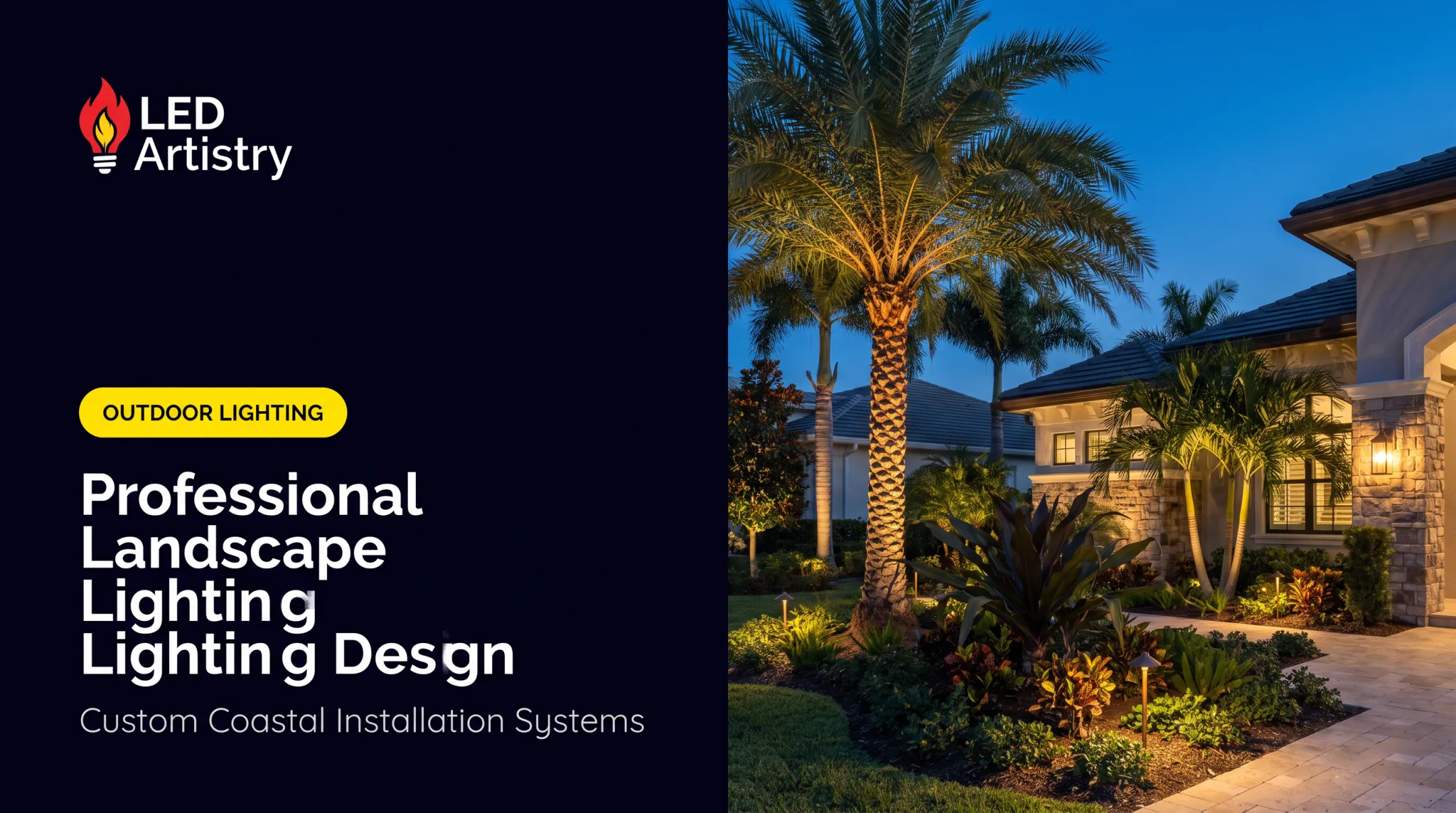
Uplighting trees, palms, or shrubs along the drive adds depth path lights alone can't deliver. Light hits trunks and canopies at different heights, so the edge of the property feels layered instead of flat. This approach suits Florida landscaping especially well—oaks, palms, and dense shrub lines take to soft uplight without glare on the pavement.
| Best For | Placement Tips | Estimated Lumens Needed |
|---|---|---|
| Mature trees, palms, and landscape borders along the drive | Place fixtures at the base, aimed at the trunk or lower canopy | 80-120 lumens for small trees; 140-180 for medium; up to 270 for larger specimens (CAST Lighting tree guide) |

Path Lights for Curved or Long Driveways
Staked path lights are the flexible workhorse for curved or long driveways. They guide cars and pedestrians without flooding the whole run in bright light. They usually cost less than in-ground fixtures and span styles from lantern-topped to minimalist disc. Test spacing at night before you lock fixture locations—optics vary more than catalog photos suggest.
| Best For | Placement Tips | Estimated Lumens Needed |
|---|---|---|
| Curved, long, or unlit driveways needing guidance | Space 6-14 feet apart depending on fixture optics; test at night before finalizing | 85-150 lumens per Kichler's residential guidance |
Motion-Sensor Security Lighting
Motion-activated fixtures near garage doors or the driveway entry add a security trigger without leaving bright floods on all night. They stay dim or off until movement, then ramp up when someone approaches. Mount them to cover the approach path, not the public street, and match output to the fixtures already on the drive so the jump in brightness feels controlled. Many models also tie into smart-home monitoring.
| Best For | Placement Tips | Estimated Lumens Needed |
|---|---|---|
| Garage approaches, driveway entry points, side gates | Mount with a 110-degree detection range aimed at the approach, not the street | No universal lumen standard; match output to surrounding fixtures |
| Spacing, load ratings, and lumen targets work best when they're planned as one low-voltage system—something a design-build lighting contractor can mock up on-site before anything is buried or mounted. |
How to Choose the Right Driveway Lighting Setup
Over-lighting is the most common mistake homeowners make. Flooding a driveway with cool-white, high-lumen fixtures creates glare and harsh shadows instead of better visibility. It also flattens the landscape depth you're trying to enhance.
Watch for these pitfalls:
- Mismatched fixture styles: bright modern bollards next to dim traditional lanterns look unfinished
- Ignoring glare balance: brighter isn't always safer; shielded, aimed fixtures beat raw wattage
- Skipping weatherproofing: non-rated fixtures fail fast in humidity, salt air, or heavy rain
- Overcrowding fixtures: too many lights creates a distracting "runway" effect
Weigh these factors before locking in a design:
- Brightness (lumens): match output to fixture role, not maximum available wattage
- Placement spacing: typically 6-14 feet depending on fixture type and optics
- Energy efficiency: LED and zone dimming reduce long-term operating costs
- Climate durability: IP65 minimum, IP67-68 for coastal or high-moisture areas
- Architectural match: fixture finish and style should echo your home's exterior

DIY Installation vs. Professional Custom Design
DIY solar or plug-in kits have obvious appeal: lower upfront cost and quick setup. But they come with tradeoffs.
DIY kits:
- Lower cost, faster installation
- Limited customization and beam control
- Wiring risks when voltage drop or poor connections aren't handled correctly
- Fixtures often lack drive-over or marine-grade ratings
Professional low-voltage systems:
- Custom zoning, dimming, and voltage-drop calculations for long runs
- Access to drive-over-rated well lights with documented load capacity
- Sealed, corrosion-resistant fixtures built for coastal humidity and salt air
One advantage of working with a professional installer: you can preview the design before committing to anything permanent.
That's the approach we take at LED Artistry. Our free nighttime demo places temporary, professional-grade fixtures on your driveway and landscaping before any trenching happens.
You'll see the actual beam spread, color temperature, and placement under real nighttime conditions, then adjust angles or brightness on the spot. Every driveway system we install uses marine-grade brass, copper, or aluminum fixtures rated IP67 or higher, built for Tampa Bay and Florida's west coast climate and backed by a 20-year warranty.

Final Thoughts
The best driveway lighting balances safety, style, and durability for your specific property—not one trending fixture alone.
Before choosing fixtures, walk your driveway at night. Note dark spots, glare sources, and architectural features worth highlighting. Match those findings to the fixture types above instead of copying a look that was built for someone else's property.
Ready to see your driveway lit up before committing to anything? Schedule a free nighttime demo with LED Artistry and visualize your options in real time.
Frequently Asked Questions
What are the best types of lights for a driveway?
Bollards, path lights, in-ground well lights, and gate/post lights are the top options. The right mix depends on your driveway's length, curves, and whether you want fixtures visible during the day.
How do I light up the end of my driveway?
Use post lights or gate lighting to mark the entrance clearly, paired with uplighting near entrance markers or landscaping. This creates a defined arrival point without glare.
How many lumens should a driveway light be?
Path and bollard lights typically use 85-150 lumens, while in-ground well lights range from 350-850 lumens depending on beam angle. Motion-sensor security lights don't follow a fixed lumen standard.
How far apart should driveway lights be spaced?
Most path and bollard lights are spaced 6-14 feet apart, depending on fixture optics and driveway length. Always test spacing at night before finalizing placement.
Do driveway lights need to be professionally installed?
Simple DIY setups can cover short, basic paths, but professional low-voltage systems offer better durability, voltage-drop management, and drive-over-rated fixtures. Complex layouts or coastal climates benefit most from professional design and installation.
How much does it cost to install driveway lighting?
Professional installation generally runs $300-$550 per fixture, including labor and wiring. Total cost depends on fixture count, type, and driveway length, so a custom quote is the most accurate way to budget.