
Most people don't think about lighting until it feels "off"—too dim to feel safe, too harsh to relax in, or too expensive to keep running. This guide breaks down the types of lighting used in and around buildings, how light affects the people inside and around them, and what it takes to plan a system that actually works, indoors and out.
Key Takeaways
- Lighting shapes safety, mood, focus, and energy costs in every building
- Layer ambient, task, accent, and decorative light so each area has a clear job
- Coordinate natural and artificial light so they support each other, not compete
- Exterior and architectural lighting extends usable hours and strengthens curb appeal after dark
- A nighttime demonstration before install catches design issues before they get expensive
What Are the Main Types of Lighting Used on Buildings?
Good lighting design stacks several layers that work together. The Illuminating Engineering Society (IES) breaks lighting into functional categories that apply to nearly every building, inside or out.
Interior categories:
- Ambient/general lighting provides the foundational visibility layer. IES describes it as lighting used to "unify, even, or flatten" a space for general illumination and wayfinding.
- Task lighting supports specific activities like reading, cooking, or working at a desk.
- Accent lighting highlights objects, textures, or architectural details, directing the eye and adding drama.
- Decorative lighting contributes character through the fixtures themselves: chandeliers, sconces, or string lights.
Exterior-specific categories:
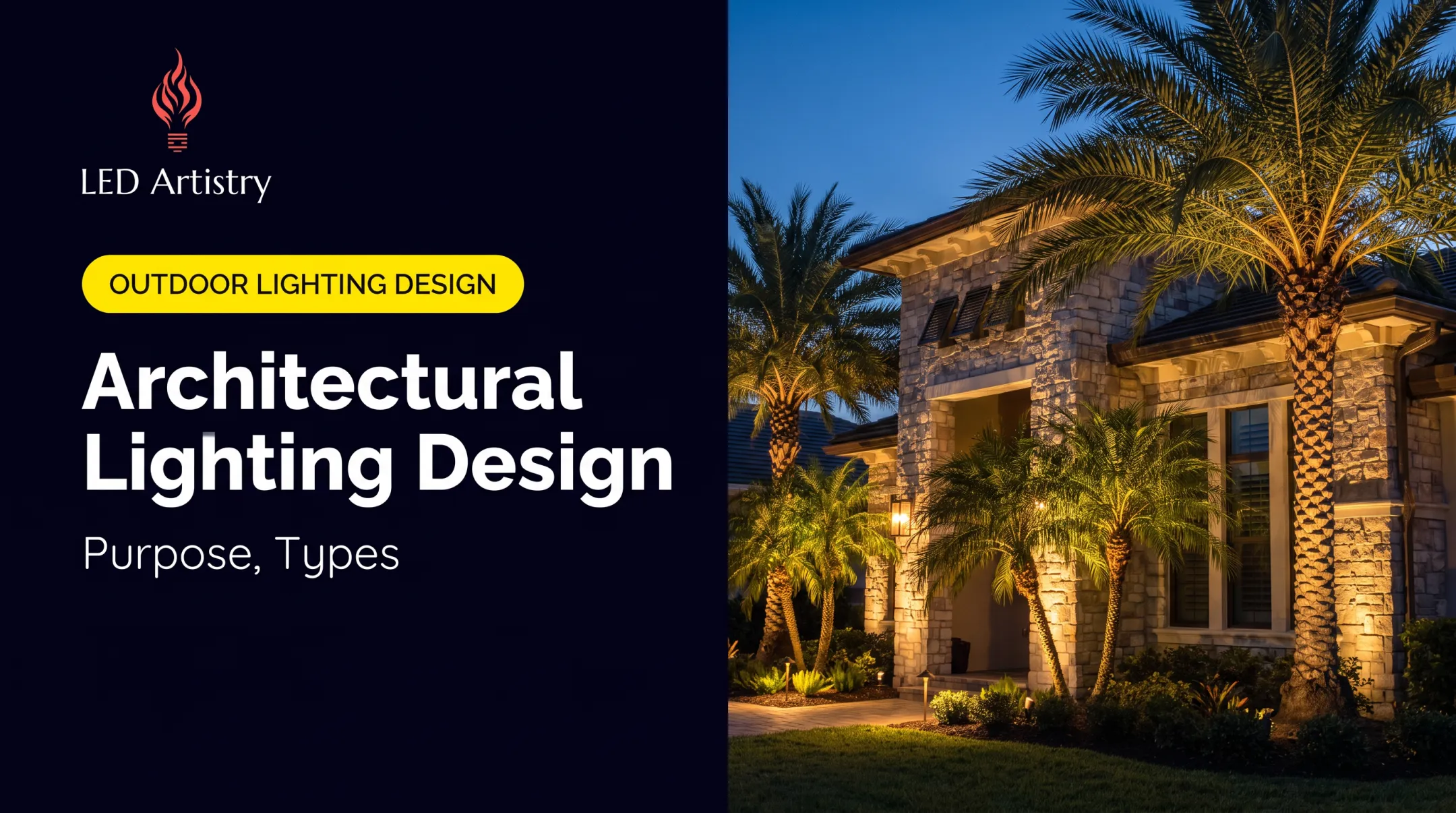
- Architectural/facade lighting highlights a building's structure and materials.
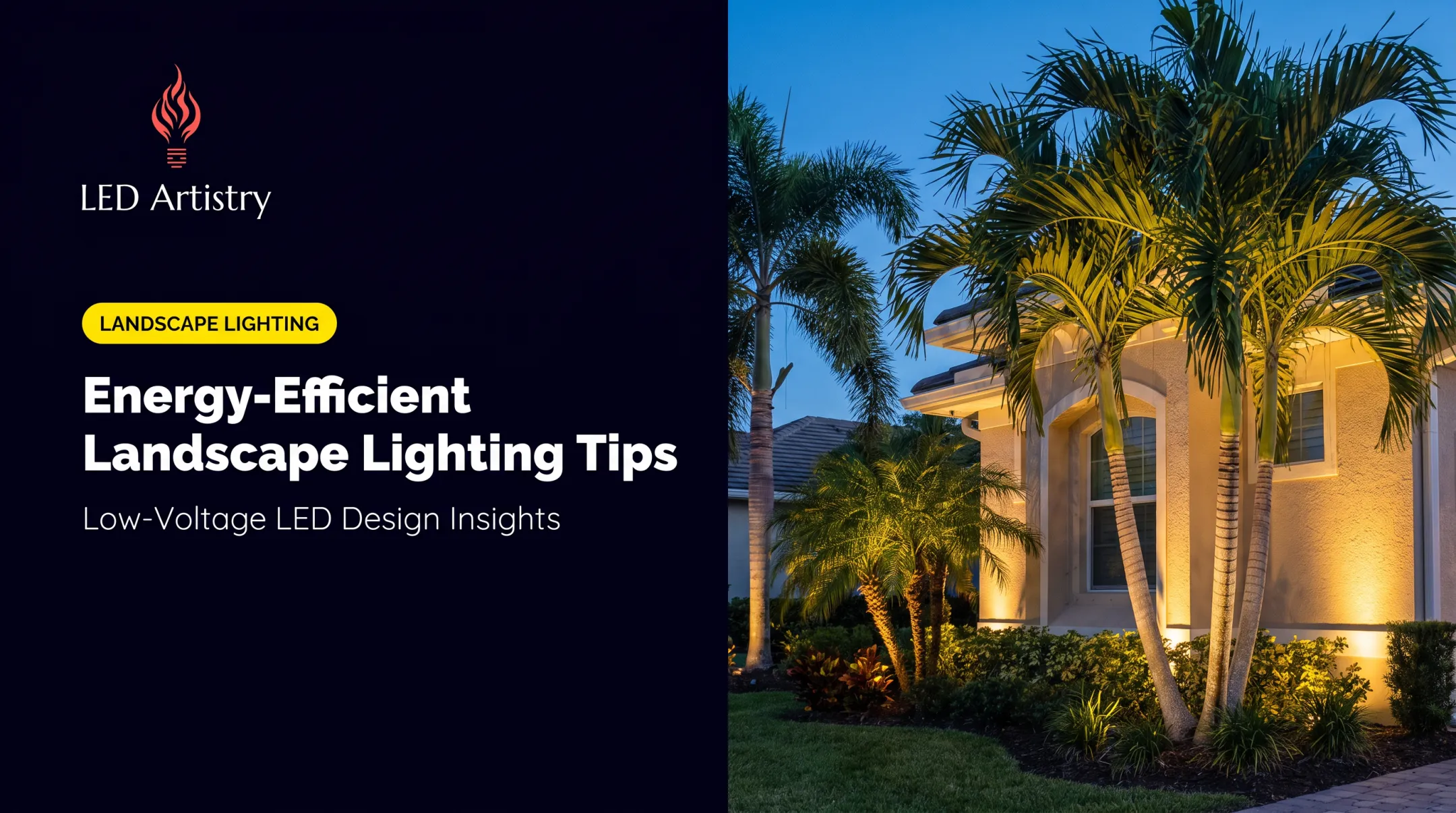
- Landscape lighting keeps outdoor spaces cohesive and inviting after dark.
- Security/wall-mounted lighting covers entry points, paths, and perimeters.

What Are the Lights on a Building Called?
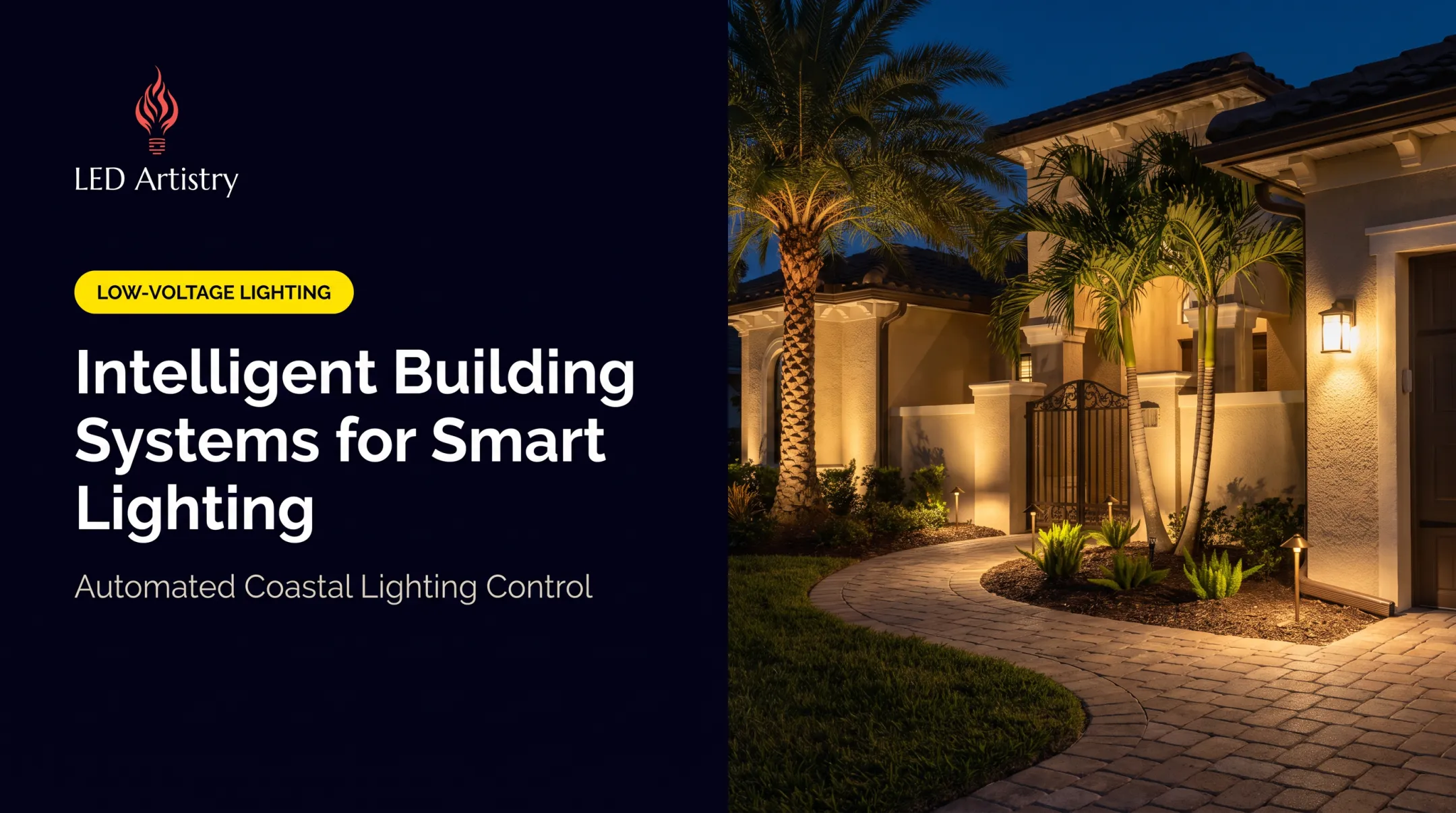
The hardware itself goes by several names. LED Artistry, which designs and installs exterior systems across Tampa Bay, typically calls the installed units fixtures: wall sconces beside doorways or on columns, and floodlights for driveways or yards.
Across the industry, you'll also hear "luminaires" (the formal term for a complete light fixture) and "wall packs" (commercial wall-mounted units). Names vary by supplier, but the job stays the same: control where light goes and how much of it.
The Effects of Lighting on Buildings and Their Occupants
Lighting shapes how a space is perceived and how people feel inside it.
Architecture and Perception
Light draws attention to texture, depth, and form. A stone facade lit from below reads completely differently than one lit flat from above. Shadow is just as important as brightness here.
Mood, Focus, and Wellbeing
The connection between lighting and psychological wellbeing isn't anecdotal. A workplace study comparing 46 employees under improved lighting to 23 controls found a 36.8% improvement in self-reported concentration, compared to just 1.7% in the control group. Participants also reported gains in vitality, mental health, and reduced daytime sleepiness.
Daylight matters too. Office workers with significant daylight exposure reported better sleep quality and more physical activity than those in windowless spaces, according to a case-control study of 49 office workers.

Safety and Security
Well-planned lighting also protects people and property:
- Interior wayfinding lighting reduces trip hazards near stairs and transitions
- Exterior perimeter lighting deters intrusion and improves visibility
- Path and entry lighting helps occupants and guests navigate after dark
Research on outdoor environments has linked standard nighttime lighting with higher feelings of unsafety, with improved LED lighting associated with greater perceived security.
Around pools, patios, and docks, those gains become practical. Lighting steps, wet surfaces, gates, and pool edges helps people move confidently after dark. Low-glare, shielded fixtures limit reflections on water while keeping walkways visible.
Professional lighting on a pool cage or outdoor living area often extends how late the space stays usable, so evenings outdoors last well past sunset.
Natural vs. Artificial Light: Finding the Right Balance
No artificial lighting plan works well in isolation from daylight. Window placement, orientation, and skylights all determine how much natural light a space receives throughout the day, and how much artificial light needs to compensate.
That balance shifts after sunset and in shaded zones. Color temperature and bulb choice decide whether the artificial layer feels natural beside remaining daylight—or harsh against it.
Why Color Temperature Matters
Color temperature is measured on the Kelvin scale. Lower numbers look warmer and more amber; higher numbers look cooler and bluer. This isn't just a style choice. It changes how a space feels:
- 2700K–3000K: warm, inviting, flattering to stone, wood, and landscaping — typical for residential exteriors
- 4000K–5000K: crisp, white, functional — common for commercial parking lots and security zones where visibility and camera performance matter more than ambiance
Bulb Types Compared
| Bulb Type | Lumens (approx.) | Wattage | Rated Life (3 hrs/day) |
|---|---|---|---|
| Incandescent | 840 | 60W | 0.9 years |
| Halogen | 700 | 43W | 0.9 years |
| CFL | 870 | 13W | 11 years |
| LED | 800 | 9W | 13.1 years |
Data from GE's lighting comparison. LEDs use a fraction of the energy and last more than 14 times longer than incandescent or halogen bulbs, making them the practical default when you layer artificial light onto a daylight-aware design.

Energy Efficiency and Smart Lighting Considerations
Lighting is one of the biggest controllable line items on a utility bill, not only a design choice. According to the GSA, lighting accounts for more than 30% of U.S. commercial building electricity use.
Switching to LED changes that equation quickly. ENERGY STAR notes LED products deliver the same brightness as traditional bulbs while using up to 90% less energy than incandescent bulbs. At a national scale, LED adoption generated 1.3 quadrillion Btu in annual energy savings and $14.7 billion in consumer cost savings in a single year, per Department of Energy data.
Smart Controls Add Another Layer of Savings
Motion sensors, timers, and dimmers are proven savings tools. A Lawrence Berkeley National Laboratory meta-analysis found:
- Occupancy sensors: 24% average savings
- Daylighting controls: 28% average savings
- Combined/multiple approaches: up to 38% savings
In residential and commercial exterior systems, that often means astronomical timers that track sunset and sunrise by season, zone dimming, and motion-triggered brightness. Lower-traffic zones can hold at roughly 30% output and jump to 100% when movement is detected.

Designing Exterior and Architectural Lighting for Florida Properties
Florida's coastal climate, humidity, salt exposure, and wildlife regulations shape how an outdoor lighting system needs to be built from the start.
Why a Nighttime Demo Changes the Outcome
You can't fully judge lighting from a daytime sketch or a catalog photo. LED Artistry's approach centers on a complimentary nighttime demonstration. After an initial consultation covering the property's architecture, walkways, and desired ambiance, the team brings temporary fixtures on-site after dark.
They test beam spreads, from narrow 15-degree spots to wide 60-degree floods, and adjust angles and brightness based on live feedback before anything permanent goes in.
This matters because lighting mistakes are expensive to undo. Seeing the actual effect at night, on your actual property, removes the guesswork.
Materials Built for Salt Air and Humidity
Coastal exposure destroys cheap fixtures fast. Corrosion, UV fading, and salt spray are constant threats near water. That's why marine-grade materials, like solid brass, copper, and marine-grade aluminum, hold up where standard aluminum pits and flakes over time.
For waterfront, dock, and pool cage installations, ingress protection ratings matter just as much:
- IP65+ for general coastal exposure
- IP67 for fixtures facing temporary immersion
- IP68 for continuous submersion or high-surge conditions

Warranties and Maintenance Support
A lighting system is a long-term investment, so the backing matters. Warranty coverage that includes fixtures, transformers, and workmanship (some backed for 20 years) gives property owners confidence the system will keep performing.
Ongoing maintenance catches small issues before they become costly repairs. That includes cleaning lenses, checking connections, and re-aiming fixtures after storms or plant growth.
Frequently Asked Questions
What are the effects of lighting on buildings?
Lighting shapes how architecture is perceived, influences occupant mood and focus, and improves both interior and exterior safety. Well-designed systems also extend how long outdoor spaces stay usable after dark.
What are the main types of lighting used on buildings?
The core categories are ambient (general illumination), task (activity-specific), accent (highlighting features), and decorative (aesthetic fixtures). Exterior lighting adds architectural, landscape, and security categories.
What are the lights on buildings called?
Common terms include fixtures, luminaires, sconces, floodlights, and wall packs. The exact term often depends on the fixture's location and purpose. Wall-mounted units near entrances are typically called sconces.
How much does outdoor architectural lighting typically cost?
Cost depends on property size, fixture type, and system complexity, with installed fixtures commonly ranging from $300 to $550 each. A design consultation gives the most accurate estimate for your specific property.
Can lighting design improve energy efficiency in a building?
Yes. LED fixtures use significantly less energy than incandescent or halogen options, and smart controls like sensors and timers can cut consumption further, sometimes by 30% or more.
How long do outdoor LED lighting systems last?
Professional-grade LED fixtures typically last 40,000 to 50,000 hours, translating to 15 or more years of use. Warranties covering fixtures and components, sometimes up to 20 years, add long-term protection.