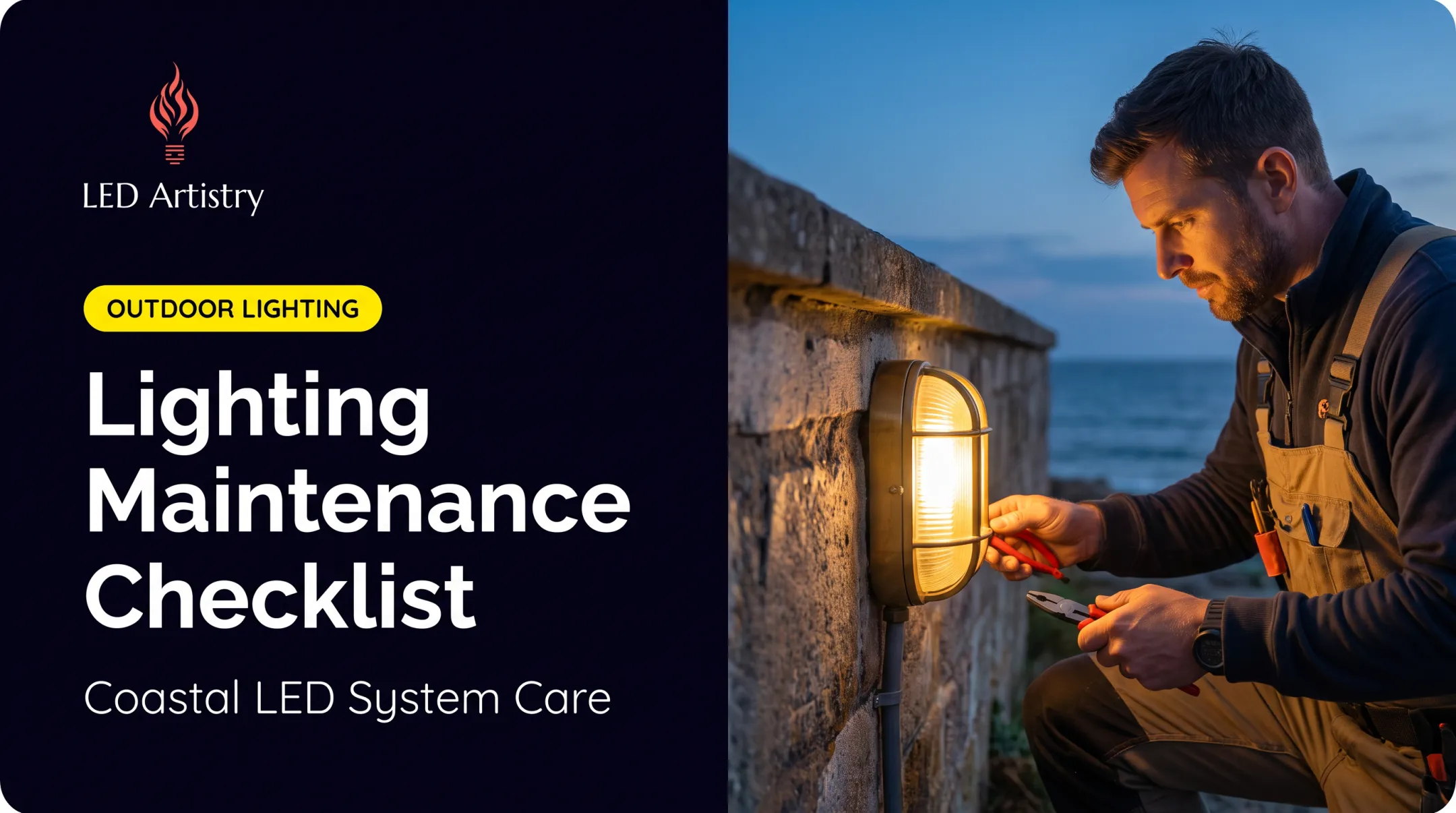

Skip maintenance and you'll notice it: dimming output, corroded housings, exposed wiring, and fixtures that need full replacement years before they should. None of that is cheap to fix after the fact.
This guide covers why maintenance matters, the different types of service your system might need, warning signs to watch for, a seasonal schedule built for Florida's climate, and mistakes to avoid along the way.
TL;DR
- Routine care (cleaning, trimming, wiring checks) prevents most major lighting failures
- Watch for dimming, flickering, corrosion, or wiring damage as early warning signs
- Florida's coastal conditions demand more frequent inspections than inland climates
- A structured seasonal schedule plus periodic professional check-ups extends system life
- LED Artistry maintains the systems it installs, backed by a 20-year warranty
Why Maintenance of Outdoor Lighting Is Important
Consistent maintenance protects how your lighting looks, how safe it is, and how long it lasts. Skip it, and all three slip—along with your repair budget.
Performance takes the first hit. Dirt, salt film, and fixture misalignment reduce brightness and create uneven coverage across your property. A system that once lit your entire landscape evenly starts developing dark patches.
Lifespan is next. Quality LED fixtures are typically rated for 50,000 hours or more of operation, according to FX Luminaire, with LEDs gradually dimming rather than failing outright. That rating assumes reasonable care.
LED Artistry has seen permanent pitting develop on high-end metallic finishes within 24 months in neglected coastal installations. Salt deposits and hard-water buildup can cut light output by as much as 30% in a single season.
Safety is the part homeowners underestimate. Water-damaged electrical equipment can remain a fire and shock risk even after it dries out. The Electrical Safety Foundation International specifically flags saltwater exposure as damaging because it's both corrosive and conductive—a real concern for any Tampa Bay property near the coast.
Cost is where neglect really bites. A diagnostic service call typically starts around $150, while complex repairs involving transformers or extensive wiring faults can run $300 to $600. Compare that to trenching and rewiring an entire system after years of unnoticed corrosion — a bill that easily reaches into the thousands.

Types of Maintenance for Outdoor Lighting
Not every fixture needs the same level of attention. Maintenance generally falls into three categories.
Routine / Preventive Maintenance
This is the upkeep homeowners can handle themselves between professional visits:
- Wiping down lenses and housings to remove salt film, pollen, and hard-water deposits
- Checking for loose connections or shifted fixtures
- Inspecting seals for visible cracks or gaps
- Trimming vegetation blocking light paths
This level is usually enough for newer, well-installed systems that still seal and aim correctly.
Corrective / Reactive Maintenance
This kicks in after something's already wrong: a fixture goes dark, lights flicker, or storm damage shows up overnight. The risk here is relying on this approach alone. Hidden wiring corrosion or moisture intrusion can worsen unnoticed for months until a bigger, more expensive failure hits.
Professional / Overhaul Maintenance
Deeper servicing covers voltage testing at every fixture, transformer inspection, and rewiring aging circuits. This is typically needed:
- After major storms
- For systems more than 10 years old
- When DIY fixes stop holding
LED Artistry recommends full fixture replacement once a system passes the decade mark, largely because rubber seals on older halogen-style fixtures can fail after roughly seven years. For systems it installs, LED Artistry also provides ongoing maintenance and service support backed by a 20-year warranty.
How to Check If Your Outdoor Lighting Needs Maintenance
Catching problems early beats discovering a dead zone in your yard the night of a dinner party. Walk the property and check these four areas.
Performance or Output Changes
- Dimming, flickering, or inconsistent brightness across fixtures
- Uneven illumination compared to when the system was first installed
- Color shifts or delayed start-up when lights turn on
Visible Wear or Damage
- Cracked lenses, rust, corrosion, or cloudy fixture covers
- White, chalky residue or pitting on housings (common in coastal exposure)
- Signs of water intrusion inside fixture housings
Wiring and Electrical Warning Signs
- Exposed, frayed, or discolored wiring ("black wire syndrome" from moisture corroding copper inside non-waterproof connectors)
- Tripped breakers or GFCI outlets tied to the lighting circuit
- A transformer that runs hot or buzzes loudly (call a pro immediately)
Recurring Issues
- Bulbs burning out faster than their rated lifespan
- Fixtures that keep shifting position or losing alignment after storms
- An entire zone going dark, often pointing to a cut line or failed connection

Outdoor Lighting Maintenance Schedule (Seasonal Guidelines)
Tampa Bay's hurricane season and constant salt-air exposure call for a tighter schedule than you'd need inland. The Atlantic hurricane season runs June 1 through November 30, with activity peaking mid-August through mid-October. Plan your storm-season checks accordingly.
| Frequency | Tasks |
|---|---|
| Monthly | Visual check for burnt-out bulbs and obvious damage; wipe down lenses |
| Quarterly | Clean fixtures thoroughly, trim vegetation, inspect wiring and connections |
| After storms | Check for water intrusion, loose fixtures, and dislodged wiring before re-energizing anything |
| Annually | Professional inspection: transformer testing, voltage checks at every fixture, overall system performance |
Waterfront, dock, and pool cage installations face constant moisture exposure and generally need more frequent checks: semi-annual professional visits rather than a once-a-year review.
For properties within five miles of the water, a freshwater rinse every 30 days helps remove salt buildup between formal service visits.

Common Mistakes to Avoid
A few habits shorten fixture life:
- Ignoring small issues: a dim fixture today is a dead zone in six months
- Taping splices with standard electrical tape instead of waterproof connectors
- Skipping post-storm checks: floodwater can hide damaged or live wiring—inspect powered-off first
- Mixing bulb types or wattages during replacement, which stresses transformers unevenly
- Assuming IP67 fixtures need no maintenance: seals block water, but lenses and connections still need checks
Conclusion
In Florida's coastal climate, outdoor lighting maintenance is what keeps a system looking sharp for 15 years instead of needing full replacement in five. Balancing DIY routine care with periodic professional servicing protects both your safety and your investment.
A local expert who knows Tampa Bay's salt air, humidity, and storm seasons makes that balance easier. LED Artistry maintains the systems it installs, so homeowners across Tampa, Clearwater, and Pinellas County get lasting performance and fewer surprise repairs.
Frequently Asked Questions
How long should outdoor lights last?
Quality LED fixtures are typically rated for 50,000 hours or more of operation. Proper maintenance and marine-grade materials help fixtures reach that full lifespan instead of failing early from corrosion or neglect.
Do outdoor lights need to be sealed?
Yes — sealed fixtures with proper gaskets and IP67 or IP68 ratings prevent moisture from reaching internal components. This is especially critical in humid coastal areas where salt air accelerates corrosion.
How often should I clean my outdoor light fixtures?
A quarterly cleaning schedule works for most properties, but homes within a few miles of the coast benefit from monthly cleaning or a periodic freshwater rinse to remove salt buildup.
Can I do outdoor lighting maintenance myself, or do I need a professional?
Simple tasks like cleaning lenses, clearing debris, and checking for obvious damage are safe for homeowners. Voltage testing, transformer work, and wiring repairs should go to a licensed professional.
What causes outdoor lights to flicker or dim over time?
Loose connections, corroded wiring, voltage drop across a long fixture run, and aging LED drivers are the usual culprits. A quick professional voltage check usually identifies the source.
How does Florida's climate affect outdoor lighting maintenance needs?
Salt air, high humidity, and hurricane season accelerate corrosion and wiring damage compared to inland climates. Coastal and waterfront properties typically need more frequent inspections than sheltered inland homes.