
Beyond the maintenance headache, older lighting drives up energy bills, casts harsh or uneven light, and can leave walkways, docks, and entrances poorly lit at night. Many homeowners struggle with fixtures that flicker, burn out constantly, or simply don't hold up against coastal conditions.
This guide walks through how to upgrade to LED, what to choose for different outdoor areas, the latest lighting technology, and why DIY bulb swaps often fall short outdoors.
Key Takeaways
- LEDs cut energy use versus incandescent bulbs and last years longer
- Enclosed and older fixtures need compatibility checks before an LED upgrade
- Low-voltage landscape systems need professional design, not a simple bulb swap
- A free nighttime demo lets you preview the design before you commit
How to Upgrade Your Lighting to LED: A Step-by-Step Process
Step 1: Audit Your Existing Fixtures
Start by identifying which fixtures still run on incandescent, halogen, or outdated CFL bulbs. Prioritize high-use areas first: entryways, patios, pool decks, and walkways.
A proper audit goes beyond checking bulb type. It examines the whole system: voltage at each fixture, wire connections, and transformer condition. Catching those issues early prevents bigger repairs later.
Step 2: Match Wattage to Lumens
Old wattage ratings don't translate directly to LEDs. Use lumens, not watts, to compare brightness. The Department of Energy's lighting guidance offers this benchmark:
| Old Incandescent | Lumens | LED Wattage Equivalent |
|---|---|---|
| 40W | 450 lm | 4.5–7W |
| 60W | 800 lm | 5.9–10.5W |
| 75W | 1,100 lm | 9.5–14W |
| 100W | 1,600 lm | 10.5–18W |

Step 3: Check Dimmer and Fixture Compatibility
Mismatched dimmers cause flickering, buzzing, or uneven brightness. Many LEDs aren't dimmable at all, and some require specific dimmer types like low-voltage or reverse-phase models.
For outdoor systems, this check extends to the transformer too. A magnetic transformer running well below 10% capacity can create problems with older mechanical timers.
Step 4: Choose the Right Color Temperature
Color temperature shapes how a space feels after dark:
- 2700K (warm white): Best for patios, pools, and facades with wood, stone, or stucco finishes
- 3000K: Works for covered entertaining areas or modern architecture with gray stone or slate
- 4000K+ (cool white): Reserve for security zones, garages, or task lighting. It looks harsh across an entire residential property
Most professional landscape installations lean toward 2700K for a natural, flattering glow.

Step 5: Consider a Low-Voltage System for Outdoor Areas
Simple bulb swaps work for porch lights. Landscape and architectural lighting is a different animal. Low-voltage systems convert standard 120V household power down to 12V, requiring:
- Transformer sizing based on total fixture wattage (with a buffer for future additions)
- Voltage-drop calculations across cable runs
- Direct-burial, marine-grade wiring
- Confirmed end-fixture voltage above 10V
This is where a design professional earns their keep.
Residential vs. Commercial Upgrade Considerations
Residential upgrades typically chase ambiance: a warm glow on a pool cage, soft path lighting to a front door.
Commercial upgrades prioritize visibility and brand identity. Think illuminated signage at a restaurant, HOA entrances lit for safety, or a hotel facade designed to stand out at night.
Both need proper design, but the goals differ.
Choosing the Right LED Upgrades for Different Outdoor Areas
Landscape and Architectural Lighting
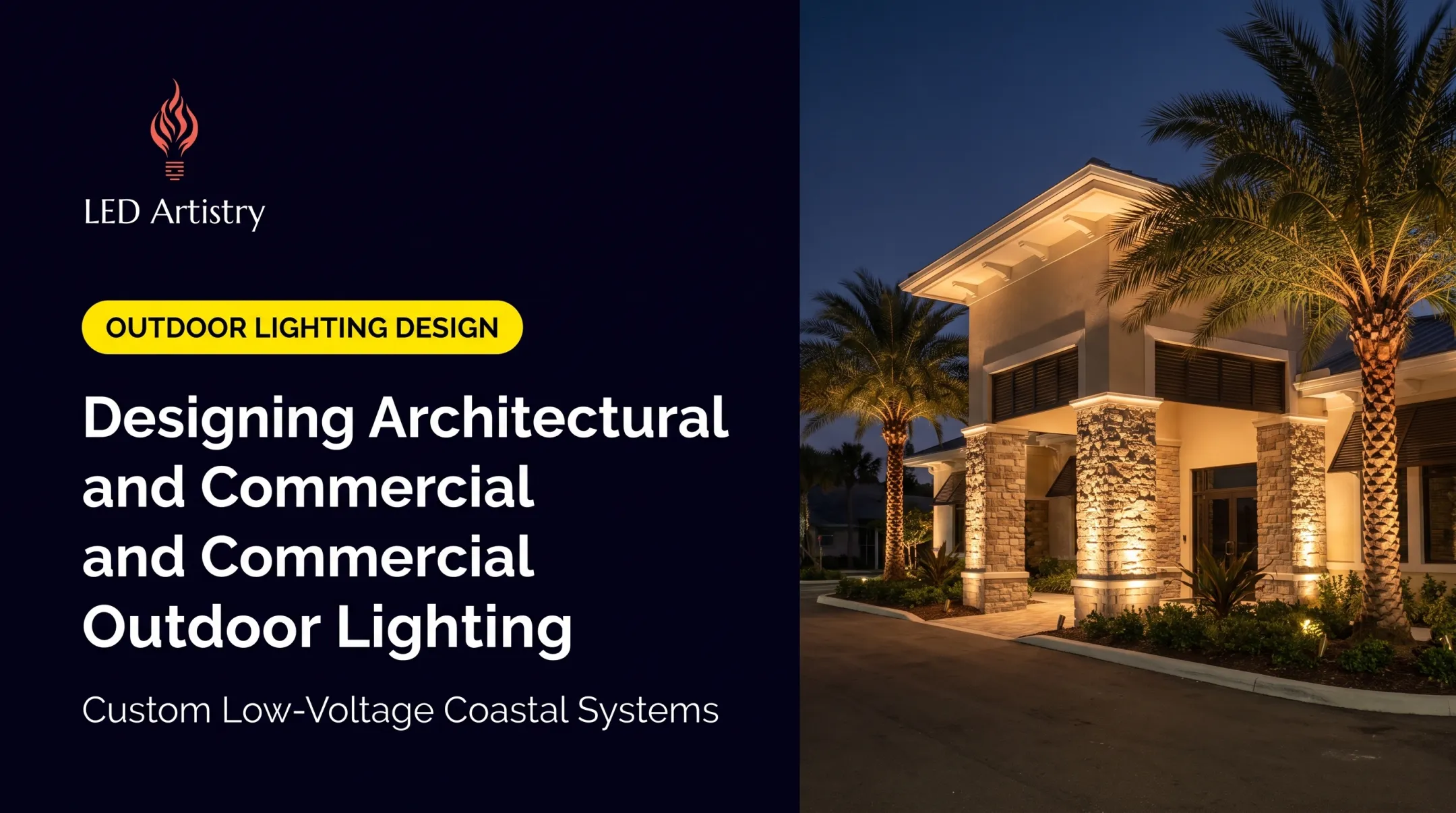
Uplighting palms, oak trees, and building facades creates depth rather than flat, one-note brightness. Placement depends on the subject:
- Dense trees get wider washes from farther back
- Sparse or textured trees benefit from tighter beams closer to the base
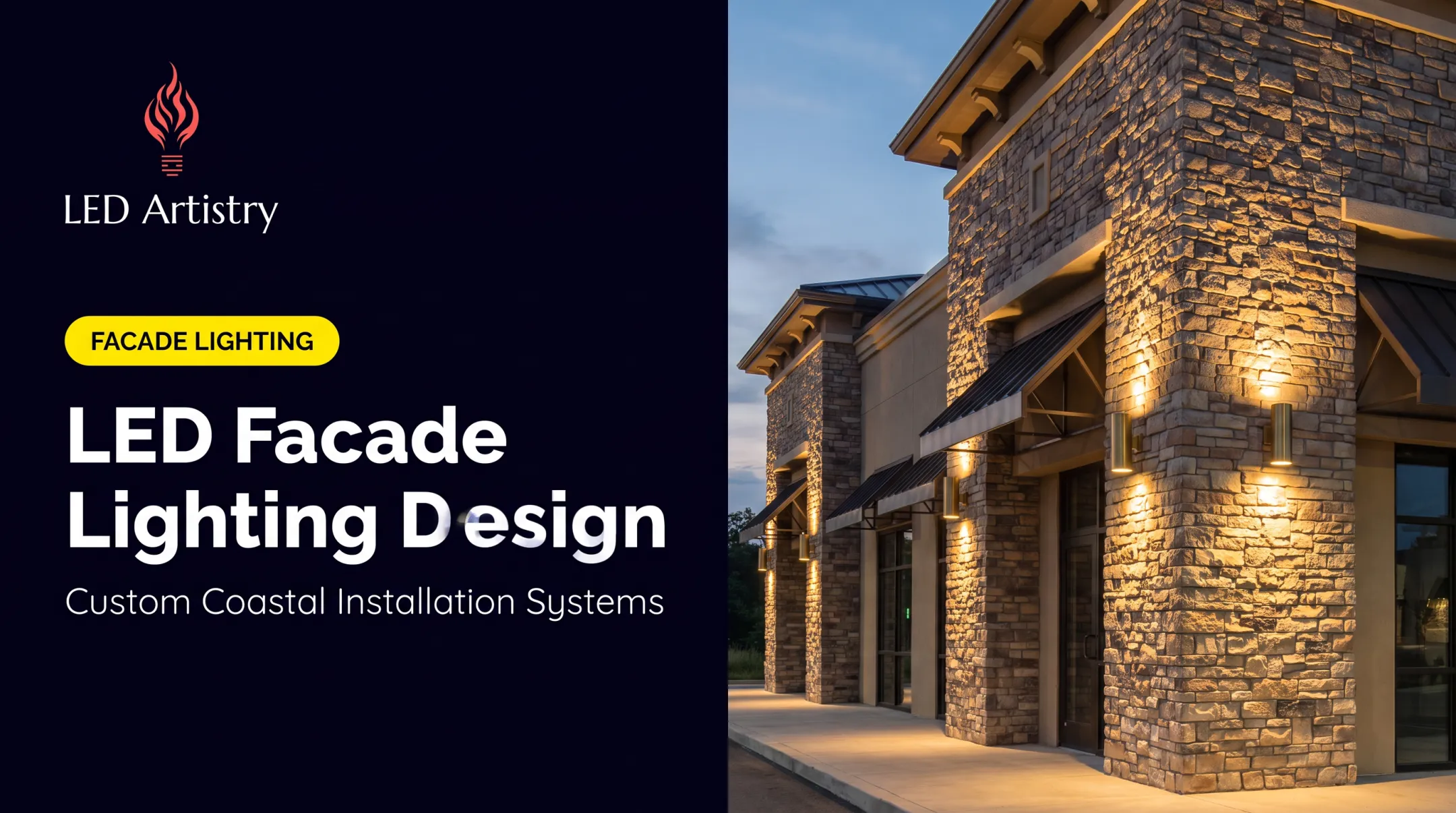
- Wall grazing (2–6 inches from surface) highlights texture on brick or stone
- Wall washing (2–3 feet back) creates a soft, even glow on broad facades
Pool Cages and Outdoor Living Spaces
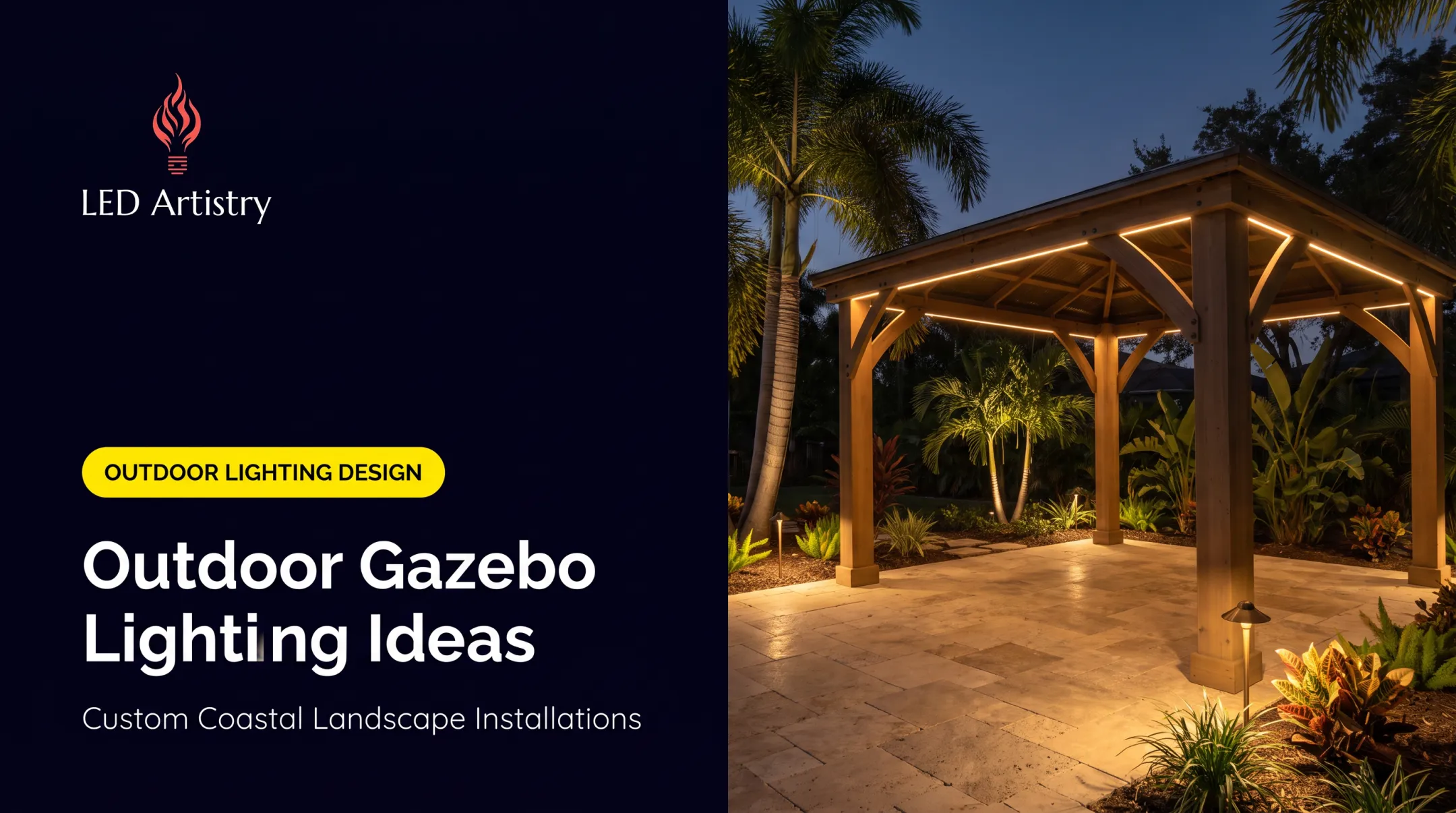
Warm 2700K–3000K lighting extends usable hours around pools, lanais, and patios well past sunset. It softens pool reflections and avoids the clinical look that cooler light creates in resort-style settings.
Waterfront, Dock, and Seawall Lighting
Coastal exposure demands marine-grade materials. Solid brass and copper develop a protective patina instead of corroding, making them a better long-term choice than powder-coated aluminum, which can pit or peel within a few seasons near saltwater.

IP67-rated fixtures with sealed components handle humidity and spray without failing prematurely.
Driveways, Walkways, and Entrances
Path lighting improves visibility and reduces trip hazards while still adding curb appeal. Florida's House Bill 837 references a 1.8 foot-candle standard for parking areas, which can also help establish a legal presumption against certain liability claims for property owners.
Getting these choices right the first time matters. LED Artistry's process (consultation, custom design, a free nighttime demo, professional installation, and ongoing support) is built around avoiding costly redesigns down the line.
What Happens If You Install an LED Bulb in a Non-LED Fixture
LED bulbs dropped into incompatible fixtures can overheat, flicker, buzz, or fail well before their expected lifespan. The Department of Energy notes that fully enclosed fixtures trap heat, raising operating temperatures and shortening the life of some LED products.
That said, most standard fixtures can accept LED bulbs safely once you've checked:
- Wattage and socket compatibility (MR16, G4, etc.)
- Dimmer compatibility, if applicable
- Whether the fixture is rated for enclosed use
Rule of thumb: older sealed housings built for halogen often trap heat that degrades LED electronics faster than expected. For larger outdoor or architectural systems, a professional compatibility check beats trial-and-error swapping — especially when transformers, buried wiring, and multiple zones are involved.
What Is the Latest Lighting Technology for Outdoor Spaces
Outdoor lighting has moved well past basic on/off fixtures. Control, coastal durability, and longer system life now define the category.
Current advances include:
- App-based tunable white that shifts color temperature (2700K to 6500K) and brightness by time of day, with millions of color options on some products (2024 Green Building & Design report)
- Marine-grade low-voltage systems built for coastal exposure, still best practice for Florida waterfront and near-shore properties
- Stronger fixture durability, with some installers (including LED Artistry) offering 20-year warranties on installed systems
Smart platforms like Lutron and Control4 let homeowners set preset scenes ("Late Night Swim," "Party Mode," "Security") and control zones independently. You can dim accent lighting while keeping pool areas at full brightness.

Why a Professional Upgrade Beats DIY for Outdoor LED Systems
Swapping a bulb indoors is simple. Outdoor and landscape systems are not.
Professional design accounts for:
- Weatherproof, direct-burial wiring rated for Florida's climate
- Voltage-drop management across long cable runs
- Marine-grade materials for coastal corrosion resistance
- Proper transformer sizing and zone dimming
LED Artistry's free nighttime demonstration lets Tampa Bay property owners see actual beam spreads, color temperatures, and fixture placement before any permanent wiring goes in.
Adjustments happen on the spot, whether that means shifting a spotlight a few inches or testing 2700K against 3000K, so there are no surprises after installation.
After install day, ongoing maintenance and a 20-year warranty deliver long-term assurance a store-bought LED bulb can't match. A documented annual inspection catches loose connections and compromised seals before they become outages.
Frequently Asked Questions
How do you upgrade your lighting?
Start by auditing existing fixtures, matching lumens to your desired brightness rather than old wattage, and deciding which areas need immediate attention. For outdoor or landscape systems, professional design ensures the wiring and transformer are sized correctly from the start.
How do I upgrade to LED lights?
Check fixture and dimmer compatibility first, since mismatches cause flickering or buzzing. Then choose a color temperature suited to the space: warm 2700K–3000K for most outdoor living and architectural areas, cooler tones only for task or security zones.
What is the latest lighting technology?
Tunable white systems and smartphone-app controls let you adjust brightness and color temperature by time of day. For coastal properties, marine-grade low-voltage systems remain the current standard for durability.
What happens if you install an LED bulb in a non-LED light fixture?
It can overheat, flicker, or fail early, particularly in fully enclosed fixtures that trap heat. Most standard fixtures accept LEDs safely once wattage and dimmer compatibility are confirmed.
How much can LED upgrades save on energy bills?
According to ENERGY STAR, LEDs provide the same brightness as traditional bulbs while using up to 90% less energy. Actual savings depend on your specific fixtures and usage.
Is it worth hiring a professional for outdoor LED lighting upgrades?
Yes, especially for landscape, waterfront, or architectural systems. Professionals handle voltage-drop calculations, weatherproofing, and material selection that a basic bulb swap can't address, backed by warranty support for long-term peace of mind.